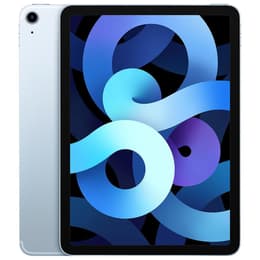



iPad Air 4 (2020, A14 series) Vs Xiaomi Pad 6 (11.0", 2023)

iPad Air 4 (2020, A14 series)
Starting at

Refurbished price:273.00

Versus €679.00 new

See options
Xiaomi Pad 6 (11.0", 2023)
Starting at

Refurbished price:235.39

Versus €699.00 new

See options

Ratings

The iPad Air 2020, also known as the 4th generation iPad Air, is a tablet released in September 2020, operating on Apple's iPadOS platform. The Xiaomi Pad 6, launched in April 2023, runs on Android with Xiaomi's MIUI for Pad interface. These two tablets offer distinct experiences, primarily differing in their operating systems, display refresh rates, and the generational gap in their core processing capabilities.

Scores

Durability

When considering the longevity of these devices, several factors come into play, including software support and physical durability.

  • Software Updates: The iPad Air 2020 benefits from Apple's extended software support, typically receiving major iPadOS updates for five to six years or more from its release, with some users reporting continued support even for iPadOS 26. The Xiaomi Pad 6, being an Android tablet, shipped with Android 13 and MIUI 14, and is generally expected to receive two major Android version updates and three years of security patches. Some reports indicate potential updates to HyperOS 2, extending support to Android 15 by late 2025.
  • Expected Lifespan: The iPad Air 2020's consistent performance and long-term software updates contribute to a practical lifespan that often exceeds its initial release window, allowing it to remain functional and secure for many years. The Xiaomi Pad 6, while newer, has a less defined long-term software update commitment, which can influence its perceived usable lifespan for users who prioritize the latest OS features and security.
  • Build Quality: Both devices feature robust builds. The iPad Air 2020 incorporates a durable design with an aluminum unibody. The Xiaomi Pad 6 also boasts a premium metal unibody design with Gorilla Glass 3 for display protection, contributing to its overall durability.

Year of Release

2020

2023

Compatible with latest Update

Yes

No

OS

iPadOS

Android

Performance

The performance of a tablet is crucial for daily tasks, from browsing to demanding applications and gaming.

  • Processing Power: The iPad Air 2020 is equipped with a powerful processor that continues to handle demanding applications, multitasking, and graphic-intensive games smoothly, even several years after its release. Users report a fluid experience for tasks like video editing. The Xiaomi Pad 6 features a capable processor that delivers smooth performance for everyday use, including web browsing, media consumption, and moderate gaming. While generally responsive, some users have noted minor stutters when running multiple floating windows simultaneously.
  • Multitasking and Responsiveness: The iPad Air 2020, typically with 3GB or 4GB of RAM, offers efficient multitasking within iPadOS, allowing users to switch between apps and run several simultaneously without significant slowdowns. The Xiaomi Pad 6 is available with 6GB or 8GB of LPDDR5 RAM, providing ample capacity for multitasking and ensuring a responsive user experience across various applications.
  • Battery Performance: The iPad Air 2020 is known for its excellent battery life, often lasting through a full day of varied use. The Xiaomi Pad 6, with its 8840 mAh battery, offers substantial endurance, with users reporting 10 to 16 hours of screen-on time for mixed usage, and it supports 33W fast charging.

Memory (GB)

4 GB

6 GB

Screen quality

The display is a primary interaction point for tablets, influencing everything from content consumption to productivity.

  • Display Technology and Resolution: The iPad Air 2020 features a 10.9-inch Liquid Retina IPS LCD display with a resolution of 2360x1640 pixels, resulting in a pixel density of 264 ppi. This provides clear and sharp visuals for most content. The Xiaomi Pad 6 comes with a slightly larger 11-inch IPS LCD display, offering a higher resolution of 2880x1800 pixels and a pixel density of 309 ppi, which translates to a very sharp and detailed image.
  • Brightness and Color: The iPad Air 2020's display offers 500 nits of brightness, P3 wide color support, and True Tone technology for adaptive white balance, providing vibrant and accurate colors suitable for various lighting conditions. The Xiaomi Pad 6 has a peak brightness of 550 nits and supports Dolby Vision and HDR10, enhancing the viewing experience with improved contrast and color depth, particularly for compatible media.
  • Refresh Rate: A key differentiator is the refresh rate. The iPad Air 2020 features a standard 60Hz refresh rate. In contrast, the Xiaomi Pad 6 boasts a 144Hz variable refresh rate, which can dynamically adjust to 90Hz or 60Hz to conserve battery. This higher refresh rate contributes to noticeably smoother scrolling and more fluid animations, particularly in supported applications and games.

Resolution

2360 x 1640

1800 x 2880

Screen type

Liquid Retina display

IPS LCD

Pixel density

264ppp

310ppp

Audiovisual

While tablets are not typically primary photography devices, their cameras are useful for video calls, document scanning, and occasional photos, alongside their audio capabilities for media.

  • Camera System: The iPad Air 2020 includes a 12MP rear camera capable of 4K video recording and a 7MP front-facing FaceTime HD camera. The Xiaomi Pad 6 features a 13MP f/2.2 rear camera that also supports 4K video recording at 30 frames per second, and an 8MP front camera for video calls and selfies, capable of 1080p video at 30 frames per second.
  • Video and Photography Performance: Both tablets offer competent camera performance for their class. The iPad Air 2020's cameras provide clear images and video suitable for general use. The Xiaomi Pad 6's cameras are noted for decent performance in good lighting, with the front camera being particularly well-placed for landscape video conferencing.
  • Audio Experience: The iPad Air 2020 features stereo speakers that provide a good audio experience, especially in landscape orientation. The Xiaomi Pad 6 excels in audio with a quad-speaker setup that supports Dolby Atmos, delivering immersive stereo sound with impressive volume and bass. It also includes four microphones for clear audio pickup during calls and recordings.

Miscellaneous

Beyond core specifications, various practical features contribute to the overall user experience and device utility.

  • Connectivity and Ports: Both tablets support Wi-Fi 6 for fast wireless internet access. The iPad Air 2020 uses Bluetooth 5.0, while the Xiaomi Pad 6 features Bluetooth 5.2. Both devices utilize a USB-C port for charging and data transfer, with the iPad Air 2020 offering up to 5Gbps and the Xiaomi Pad 6's USB-C 3.2 Gen1 port also supporting 5Gbps data transfer and external display output. Neither device offers cellular connectivity in their base models.
  • Biometrics and Accessories: The iPad Air 2020 integrates Touch ID into its power button for secure and convenient authentication. The Xiaomi Pad 6 relies on software-based face unlock or traditional PIN/pattern methods, as it does not include a fingerprint sensor. Both tablets support their respective brand's active styluses: the iPad Air 2020 works with the Apple Pencil 2nd Generation, and the Xiaomi Pad 6 supports the Xiaomi Smart Pen 2nd Generation.
  • Physical Design: The iPad Air 2020 measures 247.6 x 178.5 x 6.1 mm and weighs 458 grams. The Xiaomi Pad 6 is slightly larger and heavier at 253.95 x 165.18 x 6.51 mm and 490 grams. Both feature a slim profile and a premium metal build.

Weight

460 g

490 g

Width

17.85 cm

16,52 cm

Height

24.76 cm

25,4 cm

Depth

0.61 cm

0,65 cm

Screen size (in)

10.9

11.0

Network

Wi-Fi + 4G

Wi-Fi

Carrier compatibility

Unlocked

Without SIM Port

The iPad Air 2020 and the Xiaomi Pad 6 each present a compelling package, catering to different user preferences and priorities. User feedback for the iPad Air 2020 often praises its enduring performance, the reliability of iPadOS, and Apple's commitment to long-term software updates, making it a device that holds up well over time. Some common criticisms include its standard 60Hz display, which can feel less fluid compared to newer tablets, and its older design compared to more recent iPad models.

For the Xiaomi Pad 6, users frequently highlight its impressive 144Hz high-refresh-rate display, robust quad-speaker audio system, and solid build quality as significant advantages. Its capable performance for its segment is also a strong point. However, some users express concerns about the less clear long-term OS update policy from Xiaomi and the absence of a fingerprint sensor, relying instead on face unlock or traditional security methods. The lack of a cellular connectivity option is also a consideration for some.

Users prioritizing a tablet with a proven track record of extensive software support, a mature app ecosystem, and consistent performance for demanding creative tasks may find the iPad Air 2020 well-suited to their needs. Conversely, individuals who value a high-refresh-rate display for smoother visuals, superior audio for media consumption, and a capable Android experience may lean towards the Xiaomi Pad 6. Both devices offer a quality-assured refurbished option, providing an eco-friendly alternative for consumers.


See all articles

Our recent comparisons