

iPad Air 4 (2020, A14 series) Vs iPad Pro (2021, M1 series)

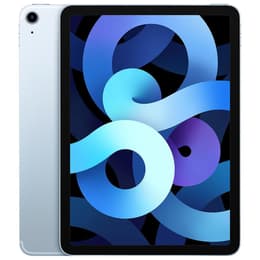
iPad Air 4 (2020, A14 series)
Starting at

Refurbished price:273.00

Versus €679.00 new

See options
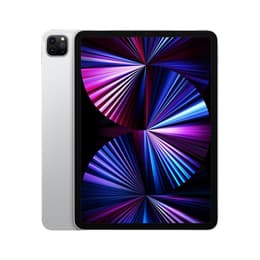
iPad Pro (2021, M1 series)
Starting at

Refurbished price:452.00

Versus €909.00 new

See options

Ratings

The iPad Air (4th generation), released in late 2020, and the iPad Pro (5th generation), launched in 2021, represent distinct tiers within Apple's tablet lineup. While both devices share a modern design language and run on iPadOS, the iPad Pro 2021 introduces a significantly more powerful processor and advanced display technologies, particularly in its larger variant, setting it apart from the capable iPad Air 2020.

Scores

Durability

When considering the longevity of these tablets, several factors come into play, including their release timelines, expected software support, and physical durability.

  • Release Timeline and OS Support: The iPad Air 2020, featuring the A14 Bionic chip, was released in October 2020. The iPad Pro 2021, equipped with the M1 chip, followed in May 2021. Given Apple's history of providing extensive software updates, the iPad Pro 2021 is expected to receive iPadOS updates for approximately one year longer than the iPad Air 2020 due to its later release and more advanced processor.
  • Software Longevity: Both devices are designed to handle current iPadOS features and applications smoothly. Users of the iPad Air 2020 report that it continues to perform well with recent software versions, indicating a robust practical lifespan for everyday tasks. The iPad Pro 2021, with its M1 chip, offers greater headroom for future demanding applications and operating system advancements.
  • Repairability and Build: Both models feature a durable aluminum enclosure and are generally considered repairable, though professional service is often recommended for internal components. The overall build quality of both devices is high, designed to withstand typical daily use.

Year of Release

2020

2021

Compatible with latest Update

Yes

Yes

OS

iPadOS

iPadOS

Maximum Operating System supported

iPadOS 18

iPadOS 18

Performance

The core difference in performance between these two tablets lies in their internal processing capabilities, which impacts everything from app responsiveness to handling intensive tasks.

  • Processor Capabilities: The iPad Air 2020 is powered by the A14 Bionic chip, which delivers strong performance for a wide range of applications, including demanding image editing and multitasking. The iPad Pro 2021, however, features the M1 chip, the same processor found in some of Apple's desktop and laptop computers. This results in a substantial increase in processing power, offering desktop-class performance that is noticeably faster for professional-grade applications, complex video editing, and advanced gaming.
  • Multitasking and Responsiveness: Both devices handle everyday multitasking smoothly. However, the iPad Pro 2021's M1 chip, combined with higher RAM configurations (8GB or 16GB compared to the Air's 4GB), allows for more seamless switching between numerous demanding applications and more efficient handling of large files or complex projects.
  • Battery Behavior: Both tablets offer comparable battery life for general use, typically around 10 hours of web browsing or video playback on Wi-Fi. While the iPad Pro's M1 chip is more powerful, its efficiency generally allows it to maintain similar endurance to the iPad Air for standard tasks, though intensive use may see the Pro's battery drain faster due to its higher performance ceiling.

Memory (GB)

4 GB

8 GB

Processor

Apple A14 Bionic

Apple M1

Screen quality

The visual experience is a key differentiator, with both models offering high-quality displays, but the iPad Pro 2021 introducing more advanced technology.

  • Display Technology and Resolution: The iPad Air 2020 features a 10.9-inch Liquid Retina IPS LCD with a resolution of 2360 x 1640 pixels. The 11-inch iPad Pro 2021 also uses a Liquid Retina IPS LCD, with a slightly higher resolution of 2388 x 1668 pixels. The 12.9-inch iPad Pro 2021, however, boasts a Liquid Retina XDR display with mini-LED technology, offering a resolution of 2732 x 2048 pixels. This advanced display provides superior contrast and brightness.
  • Brightness and Refresh Rate: The iPad Air 2020 has a typical brightness of 500 nits. The 11-inch iPad Pro 2021 increases this to 600 nits. The 12.9-inch iPad Pro 2021's Liquid Retina XDR display can reach 1000 nits of full-screen brightness and up to 1600 nits peak brightness for HDR content, alongside a 1,000,000:1 contrast ratio, delivering a more vibrant and dynamic visual experience. The iPad Pro models also feature ProMotion technology, offering an adaptive refresh rate up to 120Hz for smoother scrolling and more responsive interactions, a feature not present on the iPad Air 2020's 60Hz display.
  • Viewing Experience: Both displays support P3 wide color and True Tone for accurate color representation and comfortable viewing. The fully laminated and anti-reflective coatings on both devices enhance the viewing experience in various lighting conditions.

Resolution

2360 x 1640

2388 x 1668

True Tone

Yes

Yes

Pro-Motion

No

Yes

Screen type

Liquid Retina display

Liquid Retina display

Pixel density

264ppp

264ppp

Brightness

500 nits brightness

600 nits brightness max

Sound quality

Speakers

Stereo speakers

Four speaker audio

Audiovisual

The camera systems on these tablets cater to different user needs, with the iPad Pro 2021 offering a more comprehensive setup for advanced photography and video conferencing.

  • Rear Camera System: The iPad Air 2020 features a single 12MP wide-angle rear camera capable of 4K video recording. The iPad Pro 2021 includes a dual-camera system with a 12MP wide-angle lens and a 10MP ultra-wide lens, along with a LiDAR scanner for enhanced augmented reality (AR) experiences and improved depth sensing. Both can record 4K video at up to 60 frames per second.
  • Front Camera Quality: The iPad Air 2020 has a 7MP front-facing camera suitable for video calls and selfies. The iPad Pro 2021 significantly upgrades this to a 12MP ultra-wide TrueDepth camera, which supports Center Stage, a feature that automatically keeps subjects in the frame during video calls. This makes the iPad Pro particularly well-suited for virtual meetings and content creation.
  • Audio Experience: The iPad Air 2020 features stereo speakers, providing a good audio experience for media consumption. The iPad Pro 2021, however, offers a four-speaker audio system, delivering a richer and more immersive sound, along with five studio-quality microphones for clearer audio input during recordings or calls.

Miscellaneous

Beyond core performance and display, several practical elements differentiate the iPad Air 2020 and iPad Pro 2021, influencing their versatility and user interaction.

  • Connectivity Options: Both tablets support Wi-Fi 6 for fast wireless internet. For cellular connectivity, the iPad Air 2020 supports 4G LTE, while the iPad Pro 2021 offers 5G capabilities, providing faster mobile data speeds where available.
  • Port Types and External Devices: Both devices utilize a USB-C port. However, the iPad Pro 2021's USB-C port is enhanced with Thunderbolt 3 and USB4 support, enabling significantly faster data transfer speeds and compatibility with a wider range of high-bandwidth external accessories, including external displays up to 6K resolution. The iPad Air 2020's USB-C port offers up to 5Gbps data transfer.
  • Authentication and Design: The iPad Air 2020 features Touch ID integrated into the top button for secure authentication. The iPad Pro 2021 uses Face ID for facial recognition. Both tablets share a similar modern, flat-edged design. The iPad Air 2020 is slightly lighter at around 458g, compared to the 11-inch iPad Pro 2021 at 466g.

Weight

460 g

466 g

Width

17.85 cm

17.85 cm

Height

24.76 cm

24.76 cm

Depth

0.61 cm

0.59 cm

Screen size (in)

10.9

11

Network

Wi-Fi + 4G

Wi-Fi

Carrier compatibility

Unlocked

Without SIM Port

Wi-Fi technology

Wi-Fi 6 802.11ax

Wi-Fi 6 802.11ax

Bluetooth Version

Bluetooth 5.0

Bluetooth 5.0

Face ID

No

Yes

Touch ID

Yes

No

Connector

USB Type-C

USB Type-C

User feedback often highlights the iPad Air 2020 as a highly capable and well-rounded tablet, praised for its modern design and strong performance for most everyday and even some demanding tasks. Many users find its A14 Bionic chip more than sufficient, appreciating its balance of features. Common sentiments suggest it's an excellent choice for students, general productivity, and media consumption, with its battery life generally meeting expectations.

The iPad Pro 2021, on the other hand, receives significant acclaim for its raw power, driven by the M1 chip, which users note provides a desktop-like performance experience. The advanced display, especially the Liquid Retina XDR on the 12.9-inch model, is frequently lauded for its visual fidelity, making it a favorite for creative professionals and those who consume high-quality media. However, some users occasionally express that iPadOS, while capable, doesn't always fully leverage the M1's immense power for complex multitasking in the same way a traditional computer operating system might.

Users prioritizing a powerful and versatile tablet for general use, note-taking, and entertainment, with ample performance for most applications, may find the iPad Air 2020 well-suited to their needs. Its integrated Touch ID and slightly lighter build also appeal to those seeking convenience and portability. Conversely, users who require top-tier performance for professional creative work, advanced gaming, or who benefit from the superior display technology and enhanced camera features like Center Stage and LiDAR, will likely lean towards the iPad Pro 2021. The iPad Pro's Thunderbolt port also offers greater expandability for a professional workflow. Both models are available as quality-assured refurbished options, providing an eco-friendly alternative for those seeking these capabilities.


See all articles

Our recent comparisons