
Galaxy Tab S8 Ultra (14.6", 2022) Vs iPad 7 (2019, A10 series)

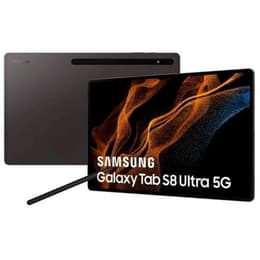
Galaxy Tab S8 Ultra (14.6", 2022)
Starting at

Refurbished price:604.00

Versus €1,249.00 new

See options
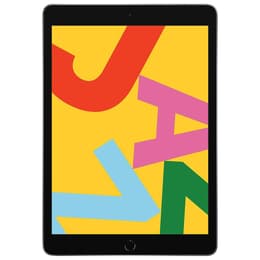
iPad 7 (2019, A10 series)
Starting at

Refurbished price:115.00

Versus €399.00 new

See options

Ratings

The Samsung Galaxy Tab S8 Ultra, released in 2022, and the Apple iPad (7th generation), released in 2019, represent distinct approaches to tablet computing. While both devices offer a portable digital experience, the Tab S8 Ultra is positioned as a high-end Android tablet with a focus on expansive display and advanced features, whereas the iPad (7th generation) serves as an entry-level option within Apple's ecosystem, prioritizing accessibility and core functionality. The primary differentiators lie in their operating systems, display technology, and overall performance capabilities.

Scores

Durability

The longevity of a tablet is significantly influenced by its release date and the manufacturer's commitment to software updates.

  • Release Timeline: The Galaxy Tab S8 Ultra, launched in 2022, benefits from a more recent release, offering a longer potential lifespan for software support compared to the iPad (7th generation), which debuted in 2019.
  • Software Support: Samsung has committed to providing four generations of Android updates and an additional year of security updates for its S-series tablets, including the Tab S8 Ultra. Apple generally provides several years of iPadOS updates, with the iPad (7th generation) supporting iPadOS up to version 18.x. While Apple is known for extended software support, the 2019 iPad is closer to the end of its major OS update cycle than the 2022 Tab S8 Ultra.
  • Practical Lifespan: Users can expect the Galaxy Tab S8 Ultra to receive relevant software and security updates for a longer period into the future. The iPad (7th generation) may continue to receive security updates for some time, but major feature updates for iPadOS are likely to cease sooner. Both devices are built with durable materials, but the newer components and extended software commitment of the Tab S8 Ultra suggest a longer practical lifespan for accessing the latest applications and features.

Year of Release

2022

2019

Compatible with latest Update

Yes

Yes

OS

Android

iPadOS

Performance

The performance of these tablets varies considerably due to their different release years and target markets.

  • Everyday Tasks: The Galaxy Tab S8 Ultra, equipped with a current-generation processor from its 2022 release, handles demanding applications, extensive multitasking, and graphic-intensive games with fluidity and responsiveness. The iPad (7th generation), featuring an A10 Fusion chip from 2019, is capable of managing general web browsing, streaming, and productivity applications, but may exhibit occasional slowdowns with more intensive tasks or when running multiple applications simultaneously.
  • Multitasking Capabilities: The Tab S8 Ultra's robust internal components and larger RAM configurations allow for a seamless multitasking experience, enabling users to run several applications side-by-side without significant performance degradation. The iPad (7th generation) supports iPadOS multitasking features, but its more modest processing power and RAM mean that heavy multitasking can lead to a less responsive experience.
  • Storage Options: Both tablets offer various storage configurations. The Galaxy Tab S8 Ultra provides options up to 512GB of internal storage, with expandable storage via a microSD card slot. The iPad (7th generation) offers up to 128GB of internal storage, which is not expandable.

Memory (GB)

8 GB

3 GB

Screen quality

The visual experience offered by these two tablets differs significantly, primarily due to advancements in display technology and size.

  • Display Technology and Size: The Galaxy Tab S8 Ultra features a large 14.6-inch Super AMOLED display, offering deep blacks, vibrant colors, and excellent contrast. This expansive screen size is well-suited for immersive media consumption and professional productivity. In contrast, the iPad (7th generation) has a 10.2-inch Retina IPS LCD, which provides good color accuracy and clarity for general use, but does not match the contrast or vibrancy of an AMOLED panel.
  • Resolution and Refresh Rate: The Tab S8 Ultra boasts a high resolution of 2960 x 1848 pixels and a 120Hz refresh rate, resulting in sharp images and exceptionally smooth scrolling and animations. The iPad (7th generation) offers a resolution of 2160 x 1620 pixels at 264 ppi, which is clear for its size, but its standard refresh rate means that motion on screen will not be as fluid as on the Tab S8 Ultra.
  • Brightness and Viewing Experience: Both displays offer adequate brightness for indoor use. The Tab S8 Ultra's AMOLED technology generally provides better outdoor visibility due to its superior contrast. The larger screen of the Tab S8 Ultra enhances the viewing experience for movies, detailed work, and split-screen multitasking.

Resolution

1848 x 2960

2160 x 1620

Screen type

Super AMOLED

Retina display

Pixel density

240ppp

264ppp

Audiovisual

The camera systems on these tablets cater to different user expectations and functionalities.

  • Camera System Capabilities: The Galaxy Tab S8 Ultra features a more advanced camera setup, including dual front-facing 12MP cameras (wide and ultrawide) and dual rear cameras (13MP wide and 6MP ultrawide). The iPad (7th generation) includes an 8MP rear camera and a 1.2MP front-facing camera.
  • Photography Performance: For general photography, the Tab S8 Ultra's cameras offer more versatility and better detail, particularly with its ultrawide options and improved low-light performance. The dual front cameras are particularly beneficial for video conferencing, offering a wider field of view and auto-framing features. The iPad (7th generation)'s cameras are suitable for casual photos, document scanning, and video calls in well-lit environments, but its front camera, in particular, is more basic.
  • Video Recording and Audio: The Tab S8 Ultra is capable of recording video at up to 4K resolution at 60 frames per second, providing higher quality video capture. The iPad (7th generation) records video at a lower resolution and frame rate. For audio, the Tab S8 Ultra generally offers a more robust speaker system for media consumption, while both provide adequate microphone quality for calls.

Miscellaneous

Beyond core specifications, several practical elements differentiate these two tablets in daily use.

  • Connectivity Options: The Galaxy Tab S8 Ultra supports modern connectivity standards, including 5G (on cellular models) and Wi-Fi 6E, offering faster and more reliable wireless connections. The iPad (7th generation) supports LTE (on cellular models) and Wi-Fi 802.11ac, which are older but still functional standards.
  • Port Types and Accessories: The Tab S8 Ultra utilizes a USB-C 3.2 port for charging and data transfer, and notably includes the S Pen stylus in the box. The iPad (7th generation) features a Lightning port and supports the first-generation Apple Pencil and Smart Keyboard, both sold separately. The inclusion of the S Pen with the Tab S8 Ultra provides immediate access to its drawing and note-taking capabilities.
  • Dimensions and Handling: The Tab S8 Ultra is a significantly larger device, with a 14.6-inch screen, and weighs around 726 grams. Its thin profile is notable for its size. The iPad (7th generation) is more compact with a 10.2-inch screen and weighs approximately 483-493 grams, making it easier to handle with one hand.
  • Security Features: The Tab S8 Ultra includes an under-display optical fingerprint sensor for biometric security. The iPad (7th generation) uses Touch ID, an integrated fingerprint sensor in the home button.

Weight

726 g

483 g

Screen size (in)

14.6

10.2

Network

Wi-Fi + 5G

Wi-Fi

Carrier compatibility

Unlocked

Without SIM Port

The Samsung Galaxy Tab S8 Ultra and the Apple iPad (7th generation) cater to different user needs and preferences, largely influenced by their respective ecosystems and hardware capabilities. User feedback for the Galaxy Tab S8 Ultra frequently praises its expansive and vibrant display, powerful performance for demanding tasks, and the included S Pen, which enhances productivity and creativity. Some users note its large size, while appreciating the screen real estate for multitasking and media consumption.

Conversely, the iPad (7th generation) is often lauded for its ease of use, reliable performance for everyday activities, and its integration within the Apple ecosystem. Common observations include its suitability for basic web browsing, streaming, and educational purposes. Some users have noted that its camera quality is basic and that the base storage option can be limiting.

Users prioritizing a large, high-quality display, advanced multitasking features, and a powerful Android experience with an included stylus will find the Galaxy Tab S8 Ultra well-suited to their needs. This device is ideal for professionals, artists, or those who consume a lot of media and require a tablet that can handle intensive workloads. On the other hand, users seeking a straightforward, dependable tablet for general use, light productivity, and seamless integration with other Apple devices may lean toward the iPad (7th generation). It remains a solid choice for students or individuals who value simplicity and a consistent user experience.

For those considering either device, exploring quality-assured refurbished options can provide an eco-friendly alternative, offering access to these technologies while supporting sustainable consumption.


See all articles

Our recent comparisons