

iPad 9 (2021, A13 series) Vs iPad Pro (2022, M2 series)

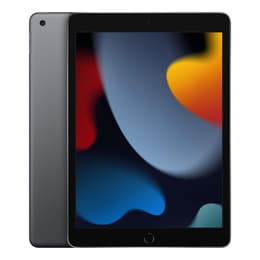
iPad 9 (2021, A13 series)
Starting at

Refurbished price:178.00

Versus €429.00 new

See options
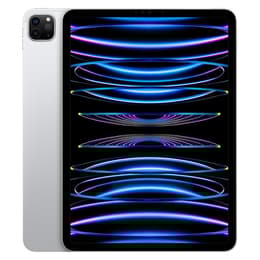
iPad Pro (2022, M2 series)
Starting at

Refurbished price:581.00

Versus €1,079.00 new

See options

Ratings

The iPad (9th generation), released in September 2021, and the iPad Pro (6th generation), launched in October 2022, represent different tiers within Apple's tablet lineup. While both run on iPadOS and offer a versatile tablet experience, the iPad Pro introduces a more advanced processor, a superior display, and enhanced features designed for demanding tasks, setting it apart from the more entry-level iPad.

Scores

Durability

When considering the longevity of these devices, several factors come into play, including their release timelines, software support, and overall build.

  • Release Timeline: The iPad (9th generation) was released in September 2021, while the iPad Pro (6th generation) followed in October 2022. This means the iPad Pro benefits from a later starting point for software updates and overall technological relevance.
  • OS Support Duration: Both devices are expected to receive iPadOS updates for several years, typically 5-6 years from their release. The iPad Pro, being a year newer, will likely receive official software support for a longer period, extending its practical lifespan for users who prioritize the latest features and security updates.
  • Expected Practical Lifespan: While both iPads are built with durable materials, the iPad Pro's more advanced internal components and features like Thunderbolt connectivity may offer a longer period of high-performance utility for professional workflows. The iPad (9th generation) was discontinued in May 2024, which might influence its perceived longevity in terms of future-proofing, though it continues to receive software updates.

Year of Release

2021

2022

Compatible with latest Update

Yes

Yes

OS

iPadOS

iPadOS

Maximum Operating System supported

iPadOS 18

iPadOS 18

Performance

The performance capabilities of these two iPads differ significantly, primarily due to their internal processing power, which impacts everything from app responsiveness to multitasking efficiency.

  • Processor Capabilities: The iPad (9th generation) is equipped with a capable processor that handles everyday tasks, web browsing, and most applications smoothly. The iPad Pro (6th generation), however, features a significantly more powerful processor designed for intensive workloads, offering substantial gains in CPU and GPU performance. This translates to faster app loading, smoother graphics for demanding games, and more efficient handling of complex creative applications.
  • Multitasking and Responsiveness: The iPad (9th generation) comes with 3GB of RAM, which is sufficient for general multitasking. The iPad Pro (6th generation) offers 8GB of RAM for its lower storage configurations and up to 16GB for higher storage models, providing a much more fluid experience when running multiple demanding applications simultaneously or working with large files.
  • Battery Behavior: Both models offer comparable battery life for typical usage, with Apple reporting up to 10 hours of web surfing or video playback on Wi-Fi. Real-world usage reports suggest similar durations, though intensive tasks on the iPad Pro might consume power more quickly due to its higher performance capabilities.

Memory (GB)

3 GB

8 GB

Processor

Apple A13 Bionic

Apple M2

Screen quality

The visual experience is a key differentiator between these two tablets, with the iPad Pro offering a more advanced display technology.

  • Display Technology and Resolution: The iPad (9th generation) features a 10.2-inch Retina IPS LCD display with a resolution of 2160 x 1620 pixels, providing clear and vibrant visuals for general use. The iPad Pro (6th generation) offers two display sizes: an 11-inch Liquid Retina IPS LCD and a 12.9-inch Liquid Retina XDR mini-LED display. Both Pro models feature higher resolutions and the 12.9-inch model, in particular, delivers deeper blacks and higher contrast due to its mini-LED technology.
  • Brightness and Refresh Rate: The iPad (9th generation) has a maximum brightness of 500 nits, suitable for indoor and moderate outdoor use. The iPad Pro (6th generation) 11-inch model reaches 600 nits, while the 12.9-inch Liquid Retina XDR display can achieve up to 1000 nits of full-screen brightness and 1600 nits peak brightness for HDR content, making it significantly brighter and better for viewing in various lighting conditions and for HDR media. The iPad Pro also includes ProMotion technology, offering an adaptive refresh rate up to 120Hz for smoother scrolling and more responsive interactions, compared to the standard 60Hz refresh rate of the iPad (9th generation).
  • Screen Size and Viewing Experience: The 10.2-inch display of the iPad (9th generation) is a comfortable size for portability and everyday tasks. The iPad Pro offers larger 11-inch and 12.9-inch options, providing a more expansive canvas for creative work, media consumption, and multitasking, enhancing the overall viewing experience.

Resolution

2160 x 1620

2388 x 1668

True Tone

Yes

Yes

Pro-Motion

No

Yes

Screen type

Retina display

Liquid Retina XDR

Pixel density

264ppp

264ppp

Brightness

500 nits brightness

600 nits brightness max

Sound quality

Speakers

Stereo speakers

Four speaker audio

Audiovisual

While tablets are not typically primary photography devices, both iPads offer capable camera systems, with the iPad Pro providing more advanced features for both photography and video.

  • Camera System Capabilities: The iPad (9th generation) features an 8MP wide rear camera and a 12MP ultra-wide front camera with Center Stage, which keeps subjects in frame during video calls. The iPad Pro (6th generation) boasts a more comprehensive camera system, including a 12MP wide and 10MP ultra-wide rear camera, along with a LiDAR Scanner for enhanced augmented reality experiences and improved low-light focusing. Its front 12MP ultra-wide camera also supports Center Stage.
  • Photography and Video Performance: The iPad (9th generation) is suitable for casual photos and 1080p HD video recording. The iPad Pro (6th generation) offers higher quality photography with Smart HDR 4 and can record 4K video, including ProRes video recording for professional workflows, providing more detail and flexibility for content creators.
  • Audio Quality: Both devices feature stereo speakers and dual microphones for calls and recording. The iPad Pro typically offers a more robust audio experience with a four-speaker audio system, providing richer sound for media consumption and video conferencing.

Miscellaneous

Beyond core performance and display, several practical elements differentiate these two iPad models, influencing their utility in various scenarios.

  • Connectivity Options: The iPad (9th generation) supports Wi-Fi 5 (802.11ac) and Bluetooth 4.2, with optional LTE connectivity. The iPad Pro (6th generation) features more advanced connectivity with Wi-Fi 6E and Bluetooth 5.3, along with optional 5G cellular capabilities, offering faster and more reliable wireless connections.
  • Port Types: The iPad (9th generation) utilizes a Lightning port for charging and accessories, and retains a 3.5mm headphone jack. The iPad Pro (6th generation) transitions to a versatile Thunderbolt/USB 4 port (USB-C), enabling faster data transfer speeds and broader compatibility with external displays and peripherals, but it lacks a traditional headphone jack.
  • Security and Design: The iPad (9th generation) features Touch ID integrated into the home button for secure authentication. The iPad Pro (6th generation) uses Face ID for facial recognition, offering a different biometric security method. The iPad (9th generation) has a more traditional design with thicker bezels and a home button, while the iPad Pro features a more modern, all-screen design with thinner bezels.

Weight

487 g

466 g

Width

17.41 cm

17.85 cm

Height

25.06 cm

24.76 cm

Depth

0.75 cm

0.59 cm

Screen size (in)

10.2

11

Network

Wi-Fi

Wi-Fi

Carrier compatibility

Without SIM Port

Without SIM Port

Wi-Fi technology

Wi-Fi 6 802.11a/b/g/n/ac

Wi-Fi 6 802.11ax

Bluetooth Version

Bluetooth 4.2

Bluetooth 5.3

Face ID

No

Yes

Touch ID

Yes

No

Connector

Lightning connector

USB Type-C

The iPad (9th generation) and iPad Pro (6th generation) cater to distinct user needs, offering different levels of performance and features. Users often praise the iPad (9th generation) for its reliable performance for everyday tasks, its clear Retina display, and its continued software support, making it a solid choice for general use, education, and media consumption. Its inclusion of a headphone jack and Lightning port is also appreciated by those with existing accessories. Some users, however, note its more traditional design and 60Hz display as areas where it shows its age compared to newer models.

The iPad Pro (6th generation) is frequently lauded for its exceptional processing power, making it highly capable for professional applications, graphic design, video editing, and advanced multitasking. Its Liquid Retina XDR display (on the 12.9-inch model) and ProMotion technology are often highlighted for delivering a superior visual experience, while the advanced camera system and Thunderbolt port are valued by creative professionals. Criticisms, though less common, sometimes point to its advanced features being beyond the needs of average users, and its larger form factor for the 12.9-inch model can be less portable.

Users prioritizing a balance of performance for daily tasks, media consumption, and a familiar design may find the iPad (9th generation) well-suited to their needs. Those who require top-tier performance for demanding creative work, advanced multitasking, and a cutting-edge display will likely lean towards the iPad Pro (6th generation). Both devices offer a quality tablet experience, and considering a quality-assured refurbished option for either model can be an eco-friendly alternative to purchasing new, providing access to these capabilities sustainably.


See all articles

Our recent comparisons