
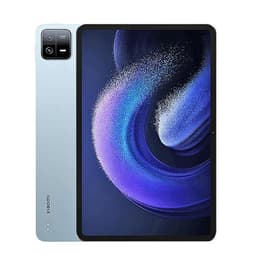


Galaxy Tab A9+ (11.0", 2023) Vs Xiaomi Pad 6 (11.0", 2023)

Galaxy Tab A9+ (11.0", 2023)
Starting at

Refurbished price:135.00

Versus €259.00 new

See options
Xiaomi Pad 6 (11.0", 2023)
Starting at

Refurbished price:235.39

Versus €699.00 new

See options

Ratings

The Samsung Galaxy Tab A9+ and the Xiaomi Pad 6, both released in 2023, represent two distinct approaches to the 11-inch Android tablet market. While sharing a similar form factor, these devices differentiate themselves primarily through their internal processing capabilities, display specifications, and camera systems. Both tablets operate on the Android platform, providing access to a broad ecosystem of applications and user customization options.

Scores

Durability

When considering the practical lifespan of these tablets, several factors come into play, including their release timelines and expected software support.

  • Software Longevity: Both devices launched in 2023, meaning they started their software update cycles at a similar point. Samsung typically provides a commitment of several years of Android operating system updates and security patches for its tablets, often extending to three to four major OS upgrades and four to five years of security updates. Xiaomi's update policy can vary, but generally offers two to three major OS updates and three to four years of security patches for its tablet line. This suggests the Galaxy Tab A9+ may receive software support for a slightly longer duration, potentially offering extended utility.
  • Repairability: As modern tablets, both the Galaxy Tab A9+ and Xiaomi Pad 6 are designed with internal components that typically require specialized tools and expertise for repair. Their construction, while robust, means that user-level repairs are generally not straightforward.
  • Expected Lifespan: With appropriate care and maintenance, both tablets are engineered to provide several years of reliable performance for their intended use cases. The longevity of software support is a key factor in how long users can expect to receive new features and security enhancements.

Year of Release

2023

2023

Compatible with latest Update

Yes

No

OS

Android

Android

Performance

The performance of these two tablets varies significantly, impacting how smoothly they handle different types of tasks and applications.

  • Processing Power: The Galaxy Tab A9+ is equipped with a processor that capably handles everyday activities such as web browsing, video streaming, and casual gaming. It provides a responsive experience for general use. The Xiaomi Pad 6, on the other hand, features a more powerful processor, allowing it to manage demanding applications, intensive multitasking, and graphically rich games with greater fluidity and efficiency.
  • Multitasking and Responsiveness: Both tablets offer various RAM configurations, with higher amounts of RAM contributing to improved multitasking capabilities and overall system responsiveness. The Xiaomi Pad 6's more capable processor, combined with its RAM options, generally provides a snappier experience when switching between multiple applications or running resource-intensive software.
  • Storage Considerations: The Galaxy Tab A9+ offers the flexibility of expandable storage via a microSD card, which can be beneficial for users who need to store large media libraries or numerous documents. The Xiaomi Pad 6 provides ample internal storage options but does not include a slot for expandable memory.
  • Battery Behavior: The Xiaomi Pad 6 incorporates a larger battery capacity compared to the Galaxy Tab A9+. This difference in capacity can translate to longer usage times for many users, particularly those who engage in extended media consumption or productivity tasks away from a power source.

Memory (GB)

4 GB

6 GB

Processor

Qualcomm SM6375 Snapdragon 695 5G

Qualcomm SM8250-AC Snapdragon 870 5G

Screen quality

The visual experience on these tablets is a key differentiator, with distinct display technologies and specifications influencing clarity and smoothness.

  • Display Technology and Resolution: Both tablets feature an 11-inch display. The Galaxy Tab A9+ utilizes an LCD panel with a resolution of 1920 x 1200 pixels, providing clear visuals for general content. The Xiaomi Pad 6, however, boasts an IPS LCD panel with a significantly higher resolution of 2880 x 1800 pixels, resulting in sharper text and more detailed imagery. The Xiaomi Pad 6 also supports HDR10 and Dolby Vision, enhancing color accuracy and contrast for compatible content.
  • Refresh Rate and Smoothness: The Galaxy Tab A9+ offers a 90Hz refresh rate, which provides a smoother scrolling experience and more fluid animations compared to standard 60Hz displays. The Xiaomi Pad 6 elevates this further with a 144Hz refresh rate, delivering an even more seamless and responsive visual experience, particularly noticeable in fast-paced content and navigation.
  • Brightness and Outdoor Visibility: The Xiaomi Pad 6 generally offers a higher peak brightness level than the Galaxy Tab A9+. This increased brightness can improve screen legibility and color vibrancy when using the tablet in brightly lit environments or outdoors.
  • Viewing Experience: For users prioritizing a highly detailed, vibrant, and exceptionally smooth visual experience, especially for media consumption and gaming, the Xiaomi Pad 6's display specifications offer a notable advantage. The Galaxy Tab A9+ provides a competent display for everyday viewing.

Resolution

1200 x 1920

1800 x 2880

Screen type

TFT LCD

IPS LCD

Pixel density

210ppp

310ppp

Audiovisual

The camera systems on these tablets are designed for different levels of utility, impacting photo and video capabilities.

  • Camera System Capabilities: The Galaxy Tab A9+ features an 8-megapixel autofocus camera on the rear and a 5-megapixel camera on the front. The Xiaomi Pad 6 is equipped with a 13-megapixel autofocus camera on the rear and an 8-megapixel camera on the front. This difference in sensor resolution suggests the Xiaomi Pad 6 may capture more detailed photos and offer improved clarity for video calls and selfies.
  • Photography Performance: For everyday photography, both tablets can capture adequate images in well-lit conditions. The Xiaomi Pad 6's higher resolution sensors may provide a slight edge in capturing finer details. Neither tablet is designed to replace a dedicated smartphone camera for advanced photography.
  • Video Recording Quality: Both devices are capable of recording video. The Xiaomi Pad 6, with its higher resolution main camera, may offer better overall video clarity and detail compared to the Galaxy Tab A9+.
  • Audio for Calls and Media: Both tablets are expected to feature multiple speakers for a stereo sound experience, enhancing media consumption. The Xiaomi Pad 6 often emphasizes its audio capabilities, potentially offering a more immersive sound profile with features like Dolby Atmos support, which can enrich the listening experience for movies and music.

Miscellaneous

Beyond core performance and display, several practical elements contribute to the overall user experience of these tablets.

  • Connectivity Options: The Xiaomi Pad 6 supports Wi-Fi 6 and Bluetooth 5.2, offering faster and more stable wireless internet connections and improved efficiency for connecting to accessories compared to the Galaxy Tab A9+'s Wi-Fi 5 and Bluetooth 5.1. The Galaxy Tab A9+ also offers an optional 5G variant for mobile data connectivity.
  • Port Types: The Galaxy Tab A9+ includes a 3.5mm headphone jack, which is absent on the Xiaomi Pad 6. Both tablets utilize a USB-C port for charging and data transfer, providing a modern and reversible connection standard.
  • Build Materials and Handling: Both devices feature an aluminum frame, contributing to a solid feel. The Xiaomi Pad 6 often employs an aluminum unibody design, which can lend a sense of greater rigidity and premium construction. In terms of weight and dimensions, both tablets are similar, making them generally portable and comfortable to handle for extended periods.
  • Biometric Security: Both tablets typically offer standard Android biometric security features, such as face recognition, for convenient unlocking and authentication.

Weight

250 g

490 g

Screen size (in)

11.0

11.0

Network

Wi-Fi

Wi-Fi

Carrier compatibility

Without SIM Port

Without SIM Port

Connector

USB Type-C

USB Type-C

The Samsung Galaxy Tab A9+ and Xiaomi Pad 6 cater to slightly different user needs within the 11-inch Android tablet segment. Common praise for the Galaxy Tab A9+ often highlights its reliable performance for general tasks, the convenience of expandable storage, and the inclusion of a traditional headphone jack. Conversely, frequent criticisms sometimes point to its display resolution and refresh rate not being as high as some competing models.

The Xiaomi Pad 6 is often lauded for its powerful performance, its high-quality, high-refresh-rate display, and its robust build. However, users sometimes note the absence of expandable storage and a 3.5mm headphone jack as potential drawbacks.

Users prioritizing a smooth, high-resolution display for media consumption and gaming, alongside strong performance for demanding applications and intensive multitasking, may find the Xiaomi Pad 6 more suitable. Its more capable processor and superior screen specifications make it well-suited for entertainment and productivity tasks that require more graphical horsepower. Conversely, users who value the flexibility of expandable storage, the convenience of a headphone jack, and reliable performance for everyday tasks without needing top-tier processing power might prefer the Galaxy Tab A9+. It serves as a solid option for browsing, streaming, and light productivity.

Both devices, whether purchased new or as a quality-assured refurbished option, offer a pathway to a capable tablet experience, allowing users to align their choice with their specific priorities and usage patterns.


See all articles

Our recent comparisons