

Compare models
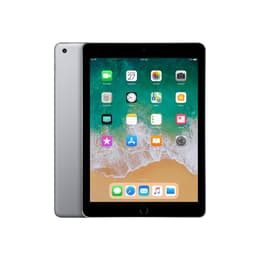
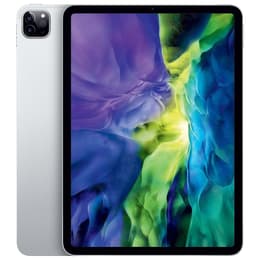
iPad 6 (2018, A10 series) Vs iPad Pro (2020, A12 series)
- 1-year minimum warranty
- Free delivery on all orders
- Free 30-day returns
Differences at a glance
The iPad 6 (2018) and the iPad Pro (2020) represent different tiers of tablet computing from Apple, bridging the gap between accessible everyday tools and more powerful, productivity-focused hardware. While the iPad 6 serves as a foundational device designed for basic tasks and casual media consumption, the iPad Pro (2020) brings advanced hardware capabilities aimed at multitasking, drawing, and portable workflow management. Both tablets operate on Apple's iPadOS ecosystem, though their differing release years and internal architectures influence how they handle modern software features.
Choosing between these two models involves weighing basic usability against expanded capability, particularly when considering quality-assured refurbished options that extend the lifecycle of these electronics through sustainable choices.
Available Models
Colour
Storage
Scores
Durability
When examining longevity, the release timeline and ongoing software support play a major role in how long each device remains practical for daily use.
- Software longevity and update frequency: The iPad Pro (2020) launched two years after the iPad 6, granting it a longer expected timeline for receiving operating system updates and security patches from Apple.
- Repairability and build durability: Both models feature aluminum unibody designs with similar repair complexity scores, requiring professional intervention for screen replacements and internal component servicing.
- Expected practical lifespan: Users can expect several more years of active service from the newer model due to its advanced internal hardware headroom, making it a reliable long-term investment.
Year of Release
2018
2020
Compatible with latest Update
No
Yes
OS
iPadOS
iPadOS
Maximum Operating System supported
iPadOS 17
iPadOS 18
Performance
Performance capabilities vary significantly between these two generations, directly impacting how smoothly apps run and how well the devices handle intensive multitasking.
- Processing power and responsiveness: The iPad Pro (2020) handles demanding applications, video editing software, and intensive mobile games smoothly, whereas the iPad 6 is best suited for web browsing, streaming, and light document editing.
- Storage capacity configurations: The iPad Pro offers much higher maximum storage tiers to accommodate large media libraries and heavy files, while the iPad 6 focuses on standard entry-level storage capacities.
- Multitasking and system memory: Equipped with double the random access memory, the iPad Pro maintains multiple active background applications without requiring frequent reloading compared to the iPad 6.
Processor
Apple A10 Fusion
Apple A12Z Bionic
Screen quality
Display characteristics differ notably in technology, size, and visual smoothness, shaping the overall media consumption and viewing experience.
- Display technology and refresh rate: The iPad Pro features a high refresh rate display that makes scrolling and drawing with a stylus noticeably smoother, while the standard iPad 6 uses a traditional display panel.
- Brightness and outdoor visibility: The iPad Pro achieves higher maximum peak brightness levels, allowing for clearer visibility under bright ambient lighting or outdoor environments.
- Screen dimensions and borders: The iPad Pro offers a larger viewing area with minimized bezels and rounded corners, whereas the iPad 6 retains traditional thick borders surrounding a standard screen size.
Resolution
2048 x 1536
2388 x 1668
True Tone
No
Yes
Pro-Motion
No
Yes
Screen type
Retina display
Liquid Retina display
Pixel density
264ppp
264ppp
Brightness
500 nits brightness
600 nits brightness max
Sound quality
Speakers
Stereo speakers
Four speaker audio
Audiovisual
Audio and visual capture capabilities reflect the distinct intended use cases of each tablet, ranging from casual snapshots to comprehensive multimedia tools.
- Camera system versatility: The iPad Pro includes a multi-lens rear array featuring an ultra-wide sensor and a depth-sensing component, while the iPad 6 relies on a single basic rear camera lens.
- Speaker output and sound staging: The iPad Pro utilizes a four-speaker audio layout that dynamically adjusts sound orientation, offering a richer media consumption experience than the dual-speaker setup on the iPad 6.
- Microphone clarity: Studio-quality microphone arrays on the iPad Pro capture cleaner audio for video calls and voice recordings compared to the standard microphone configuration on the older model.
Miscellaneous
Physical design elements, connectivity standards, and accessory compatibility further distinguish the daily user experience of each tablet.
- Accessory ecosystem integration: The iPad Pro connects magnetically to advanced keyboard accessories and supports charging for second-generation styluses, while the iPad 6 relies on Bluetooth keyboards and older stylus models.
- Port connectivity and data transfer: The iPad Pro utilizes a versatile reversible connector supporting external monitors and high-speed accessories, whereas the iPad 6 uses a traditional proprietary connector.
- Biometric security features: The iPad Pro employs advanced facial recognition technology for secure unlocking, while the iPad 6 retains a physical home button with fingerprint recognition.
Weight
469 g
471 g
Width
16.95 cm
17.85 cm
Height
24 cm
24.76 cm
Depth
0.75 cm
0.59 cm
Screen size (in)
9.7
11
Network
Wi-Fi
Wi-Fi
Carrier compatibility
Without SIM Port
Without SIM Port
Wi-Fi technology
Wi-Fi 6 802.11a/b/g/n/ac
Wi-Fi 6 802.11ax
Bluetooth Version
Bluetooth 4.2
Bluetooth 5.0
Face ID
No
Yes
Touch ID
Yes
No
Connector
Lightning connector
USB Type-C
What the community thinks
Real-world user discussions on community forums highlight distinct patterns of satisfaction for both devices. Owners of the iPad 6 frequently praise its reliable simplicity, lightweight build, and dependability for reading, casual web browsing, and educational use by younger learners. However, some users note occasional slowdowns when running contemporary applications or handling multiple browser tabs simultaneously. On the other hand, iPad Pro (2020) users frequently highlight the fluid display smoothness, robust multitasking capabilities, and capable sound system as major daily advantages, though a few mention that the heavier physical weight is noticeable during extended handheld reading sessions.
Users prioritizing basic media streaming, casual reading, and straightforward daily tasks will find the iPad 6 well-suited to their needs without unnecessary complexity. Conversely, users prioritizing creative drawing, heavy multitasking, document editing, and long-term software support may lean toward the iPad Pro (2020) for its expanded capabilities. Choosing a quality-assured refurbished option provides an eco-friendly way to acquire either device while supporting sustainable electronics consumption. Ultimately, the decision depends on balancing intended daily workflows against the hardware capabilities required to support them effectively.