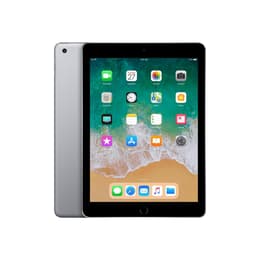
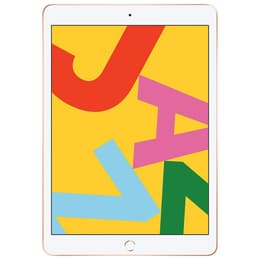


iPad 6 (2018, A10 series) Vs iPad 7 (2019, A10 series)

iPad 6 (2018, A10 series)
Starting at

Refurbished price:82.00

Versus €359.00 new

See options
iPad 7 (2019, A10 series)
Starting at

Refurbished price:115.00

Versus €399.00 new

See options

Ratings

The iPad 2018 (6th generation) and the iPad 2019 (7th generation) are both entry-level tablets from Apple, released in consecutive years. While they share the same core processor, the iPad 2019 introduced a slightly larger display and added support for Apple's Smart Keyboard, enhancing its utility for productivity. Both devices operate on Apple's iPadOS, offering a consistent software experience, though their long-term software support trajectories differ.

Scores

Durability

When considering the practical lifespan of these tablets, their release dates in March 2018 and September 2019, respectively, are key. Apple typically provides 5-7 years of major iPadOS updates for its devices. The iPad 2018 is likely at the end of its major software update cycle, with many users reporting performance degradation on iPadOS 17 and expectations that it will not receive iPadOS 18. The iPad 2019, being a year newer, is anticipated to receive at least one additional major iPadOS update, extending its software longevity.

  • Software Support: The iPad 2019 is expected to receive iPadOS 18, offering a longer period of new features and security updates compared to the iPad 2018, which is likely capped at iPadOS 17.
  • Practical Lifespan: While both devices are built with durable aluminum unibodies, the iPad 2019's extended software support provides a slightly longer practical lifespan for users who prioritize access to the latest software and app compatibility.
  • Repairability: Both models offer similar repairability, falling within Apple's standard ecosystem for parts and service, though the iPad 2018 has been marked as 'obsolete' by Apple, which can limit official repair options and parts availability.

Year of Release

2018

2019

Compatible with latest Update

No

Yes

OS

iPadOS

iPadOS

Maximum Operating System supported

iPadOS 17

iPadOS 18

Performance

Both the iPad 2018 and iPad 2019 are powered by the Apple A10 Fusion chip, suggesting similar processing capabilities for many tasks. However, a notable difference lies in their RAM, with the iPad 2018 featuring 2GB and the iPad 2019 equipped with 3GB. This additional RAM in the newer model can impact multitasking and the smoothness of demanding applications.

  • Everyday Responsiveness: For general web browsing, email, and media consumption, both tablets offer a responsive experience. However, the iPad 2019's extra RAM provides a noticeable advantage when switching between multiple applications or handling more complex tasks, reducing instances of apps reloading.
  • App Performance: While both can run a wide range of applications, the iPad 2019 handles more intensive apps and light gaming with slightly greater fluidity due to its increased memory. Users of the iPad 2018 on newer iPadOS versions have reported occasional sluggishness and app crashes.
  • Battery Behavior: Both models are designed to deliver comparable battery life, typically offering up to 10 hours of web surfing or video playback on a single charge. Real-world usage may vary, but neither device presents a significant advantage in battery longevity over the other.

Memory (GB)

2 GB

3 GB

Processor

Apple A10 Fusion

Apple A10 Fusion

Screen quality

The display experience on these two iPads presents a key distinction, primarily in size, while maintaining similar underlying technology. Both feature Retina IPS LCD displays, known for their clarity and color reproduction.

  • Display Size and Resolution: The iPad 2018 features a 9.7-inch display with a resolution of 2048 x 1536 pixels. The iPad 2019 upgrades to a 10.2-inch display, offering a slightly larger viewing area with a resolution of 2160 x 1620 pixels. Both maintain a pixel density of 264 pixels per inch, ensuring sharp text and images.
  • Brightness and Clarity: Both displays offer a maximum brightness of 500 nits, providing adequate visibility in various indoor lighting conditions. They also feature an oleophobic coating to resist fingerprints.
  • Refresh Rate: Both models utilize a standard 60Hz refresh rate, which is suitable for general use, media consumption, and casual gaming. Neither offers the smoother scrolling experience found on devices with higher refresh rates.

Resolution

2048 x 1536

2160 x 1620

True Tone

No

No

Pro-Motion

No

No

Screen type

Retina display

Retina display

Pixel density

264ppp

264ppp

Brightness

500 nits brightness

500 nits brightness

Sound quality

Speakers

Stereo speakers

Stereo speakers

Audiovisual

The camera systems on the iPad 2018 and iPad 2019 are identical, providing consistent capabilities for photography and video recording. These tablets are equipped with cameras suitable for everyday use rather than advanced photographic endeavors.

  • Rear Camera: Both iPads feature an 8-megapixel rear camera capable of capturing decent photos in good lighting conditions and recording 1080p HD video at 30 frames per second. This is sufficient for document scanning, casual snapshots, and basic video projects.
  • Front Camera: For video calls and selfies, both models include a 1.2-megapixel FaceTime HD front camera. This camera performs adequately for standard video conferencing and quick self-portraits in well-lit environments.
  • Audio Quality: Both devices offer stereo speakers for media consumption and built-in microphones for calls and voice recordings. The audio output is clear for personal listening, and microphone quality is suitable for typical communication needs.

Miscellaneous

Beyond core performance and display, several practical features differentiate these two iPad models, particularly concerning connectivity and accessory support.

  • Connectivity: Both the iPad 2018 and iPad 2019 offer Wi-Fi connectivity (802.11ac with dual-band support) and optional cellular models with LTE. The iPad 2019's cellular models may offer slightly faster LTE options. Both support Bluetooth 4.2 for connecting wireless accessories.
  • Port and Sensors: Each tablet includes a Lightning port for charging and data transfer, along with a 3.5mm headphone jack. For security and convenience, both feature a Touch ID fingerprint sensor integrated into the home button.
  • Accessory Support and Dimensions: A significant differentiator is the iPad 2019's inclusion of a Smart Connector, enabling direct attachment and power for Apple's Smart Keyboard. The iPad 2018 lacks this connector, limiting it to Bluetooth keyboards. The iPad 2019 is also slightly larger and heavier (250.6 x 174.1 x 7.5 mm, 483g Wi-Fi) compared to the iPad 2018 (240 x 169.5 x 7.5 mm, 469g Wi-Fi), a difference primarily due to its larger screen.

Weight

469 g

483 g

Width

16.95 cm

17.41 cm

Height

24 cm

25.06 cm

Depth

0.75 cm

0.75 cm

Screen size (in)

9.7

10.2

Network

Wi-Fi

Wi-Fi

Carrier compatibility

Without SIM Port

Without SIM Port

Wi-Fi technology

Wi-Fi 6 802.11a/b/g/n/ac

Wi-Fi 6 802.11a/b/g/n/ac

Bluetooth Version

Bluetooth 4.2

Bluetooth 4.2

Face ID

No

No

Touch ID

Yes

Yes

Connector

Lightning connector

Lightning connector

User feedback for both the iPad 2018 and iPad 2019 generally highlights their reliability for basic tablet functions. The iPad 2018 is often praised for its continued utility in media consumption and light tasks, even years after its release. However, common criticisms point to its diminishing performance on the latest iPadOS versions and the impending end of major software support, which can lead to a less smooth experience and potential app compatibility issues.

The iPad 2019, while sharing the same processor, benefits from an additional gigabyte of RAM and a slightly larger screen, which users appreciate for a more comfortable viewing experience and improved multitasking. Its support for the Smart Keyboard is a frequently lauded feature, transforming it into a more capable device for light productivity. Some users have noted occasional slowdowns or app crashes, particularly with the base storage model, but overall sentiment suggests it holds up well for its intended use cases.

Users prioritizing a larger display and the convenience of a direct-connect keyboard for tasks like note-taking or email may find the iPad 2019 better suited to their needs. Conversely, individuals primarily seeking a device for casual browsing, video streaming, and basic app usage, and who do not require the latest software updates, might still find the iPad 2018 to be a functional option. For those evaluating either model, considering a quality-assured refurbished option can be an eco-friendly alternative to extend the life cycle of these devices.

See all articles

Our recent comparisons