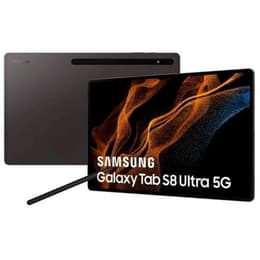
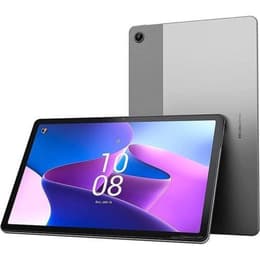


Galaxy Tab S8 Ultra (14.6", 2022) Vs Lenovo Tab M10 Gen 3 (10.1", 2022)

Galaxy Tab S8 Ultra (14.6", 2022)
Starting at

Refurbished price:604.00

Versus €1,249.00 new

See options
Lenovo Tab M10 Gen 3 (10.1", 2022)
Starting at

Refurbished price:141.48

Versus €299.99 new

See options

Ratings

The Samsung Galaxy Tab S8 Ultra and the Lenovo Tab M10 Gen 3, both released in 2022, represent distinct approaches to the Android tablet experience. The Galaxy Tab S8 Ultra is positioned as a large-format, high-performance device, while the Lenovo Tab M10 Gen 3 offers a more compact and accessible option for everyday use. These tablets differ significantly in their display size, processing power, and overall feature sets, catering to varied user needs and expectations.

Scores

Durability

When considering the long-term usability of these tablets, their release timelines and software support policies are key factors. Both devices were launched in 2022, but their expected software longevity varies.

  • Software Updates: The Samsung Galaxy Tab S8 Ultra was released with Android 12 and is expected to receive four major Android OS upgrades and five years of security updates, extending its support until approximately 2026 for OS updates and 2027 for security patches. In contrast, the Lenovo Tab M10 Gen 3 launched with Android 11 and typically receives two major Android OS updates and four years of security updates, meaning its software support window is generally shorter.
  • Physical Durability: The Galaxy Tab S8 Ultra features a robust build with a glass front, aluminum back, and an aluminum frame, utilizing Armor Aluminum for enhanced scratch resistance and rigidity despite its thin profile. It has demonstrated surprising resilience in bend tests. The Lenovo Tab M10 Gen 3 incorporates a metal chassis for a solid feel, with a plastic section for antenna reception.
  • Repairability: The Galaxy Tab S8 Ultra has a repairability score of 5.5 out of 10, indicating a moderate level of ease for repairs. Information regarding the specific repairability score for the Lenovo Tab M10 Gen 3 is less readily available, though screen replacement procedures are documented.

Year of Release

2022

2022

Compatible with latest Update

Yes

No

OS

Android

Android

Performance

The performance capabilities of these two tablets are tailored to different user demands, reflecting their respective hardware configurations.

  • Processing Power: The Galaxy Tab S8 Ultra is equipped with a high-performance current-generation processor, enabling it to handle demanding applications, intensive multitasking, and graphic-rich gaming smoothly. This allows for a responsive user experience even with multiple applications open simultaneously. The Lenovo Tab M10 Gen 3 features a processor designed for everyday tasks, providing adequate performance for web browsing, video streaming, and light gaming. Users may notice some delays when opening apps or during heavy multitasking.
  • Memory and Storage: The Galaxy Tab S8 Ultra offers substantial RAM options, ranging from 8GB to 16GB, which contributes to its strong multitasking capabilities. It comes with internal storage options up to 512GB, expandable via a microSD card. The Lenovo Tab M10 Gen 3 typically comes with 3GB or 4GB of RAM and up to 64GB of internal storage, also expandable with a microSD card. This configuration is suitable for basic usage but may limit the number of applications that can run smoothly in the background.
  • Battery Behavior: The Galaxy Tab S8 Ultra houses a large 11,200 mAh battery, providing ample power for its expansive display and powerful components, often delivering around 6 hours of screen-on time with heavy use and over 10 hours in video playback tests. The Lenovo Tab M10 Gen 3 has a 5100 mAh battery, which, combined with its less power-intensive components, can offer extended usage for media consumption, with some reports indicating over 12 hours of video playback.

Memory (GB)

8 GB

3 GB

Processor

Qualcomm SM8450 Snapdragon 8 Gen 1

Unisoc T610

Screen quality

The visual experience on these tablets is a primary differentiator, largely due to their display technologies and sizes.

  • Display Technology and Size: The Galaxy Tab S8 Ultra features a massive 14.6-inch Super AMOLED display, known for its deep blacks, vibrant colors, and high contrast. This large screen size provides an immersive viewing experience. The Lenovo Tab M10 Gen 3 has a 10.1-inch IPS LCD panel, which offers good color reproduction and viewing angles suitable for general use.
  • Resolution and Clarity: The Galaxy Tab S8 Ultra boasts a high resolution of 2960 x 1848 pixels, resulting in a sharp and detailed image quality. The Lenovo Tab M10 Gen 3 provides a Full HD resolution of 1920 x 1200 pixels, which is clear for its size and sufficient for streaming and reading.
  • Brightness and Refresh Rate: With a 120Hz refresh rate, the Galaxy Tab S8 Ultra delivers exceptionally smooth scrolling and fluid animations, enhancing the overall user interaction. Its display is also bright, making it suitable for various lighting conditions. The Lenovo Tab M10 Gen 3 operates at a standard 60Hz refresh rate and has a typical brightness of 320 nits, which is adequate for indoor use but may be less visible in bright outdoor environments.

Resolution

1848 x 2960

1200 x 1920

Screen type

Super AMOLED

IPS LCD

Pixel density

240ppp

230ppp

Audiovisual

The camera systems on these tablets serve different purposes, with one prioritizing advanced imaging capabilities and the other focusing on functional use.

  • Camera System Configuration: The Galaxy Tab S8 Ultra features a dual rear camera setup with a 13MP wide lens and a 6MP ultrawide lens, alongside a dual front camera system consisting of two 12MP lenses (wide and ultrawide). This comprehensive setup supports high-quality video calls and versatile photography. The Lenovo Tab M10 Gen 3 includes an 8MP autofocus rear camera and a 5MP front camera, suitable for basic photography and video conferencing.
  • Photography and Video Quality: The Galaxy Tab S8 Ultra's cameras are capable of capturing detailed photos and 4K videos, with the front cameras excelling in video calls due to their resolution and noise cancellation features. The Lenovo Tab M10 Gen 3's cameras offer typical tablet quality, providing acceptable images and video for casual use.
  • Audio Experience: Both tablets feature stereo speakers. The Galaxy Tab S8 Ultra is equipped with quad speakers tuned with Dolby Atmos, delivering a rich and immersive audio experience for media consumption. The Lenovo Tab M10 Gen 3 also has stereo speakers with Dolby Atmos, offering clear sound, though some users note a bias towards upper and middle frequencies without strong bass. Both include microphones for calls and recordings.

Miscellaneous

Beyond core specifications, several practical elements contribute to the overall user experience of these tablets.

  • Connectivity and Ports: The Galaxy Tab S8 Ultra supports modern connectivity standards, including Wi-Fi 6E and Bluetooth 5.2, with 5G options available for cellular connectivity. It features a USB Type-C 3.2 port. The Lenovo Tab M10 Gen 3 supports Wi-Fi 5 and Bluetooth 5.0, with LTE variants available. It includes a USB Type-C 2.0 port and retains a 3.5mm headphone jack.
  • Biometric Security and Sensors: The Galaxy Tab S8 Ultra incorporates an in-display optical fingerprint sensor for secure unlocking, along with various other sensors like an accelerometer, gyro sensor, and hall sensor. The Lenovo Tab M10 Gen 3 offers face unlock as its primary biometric security feature and includes an accelerometer and proximity sensor.
  • Physical Design and Handling: The Galaxy Tab S8 Ultra is notably thin at 5.5mm and weighs around 726g, making it a large yet sleek device. Its size can make one-handed use challenging, but it excels in landscape orientation, especially with accessories. The Lenovo Tab M10 Gen 3 is more compact, weighing 460g and measuring 8.5mm thick, offering easier portability and handling for a 10-inch tablet.

Weight

726 g

460 g

Screen size (in)

14.6

10.1

Network

Wi-Fi + 5G

Wi-Fi

Carrier compatibility

Unlocked

Unlocked

Connector

USB Type-C

USB Type-C

The Samsung Galaxy Tab S8 Ultra and the Lenovo Tab M10 Gen 3 cater to distinct user profiles, each excelling in different areas. User feedback for the Galaxy Tab S8 Ultra frequently praises its expansive and vibrant Super AMOLED display, smooth S-Pen integration, and powerful performance for productivity and entertainment. However, some users note its large size can be unwieldy for extended one-handed use. For the Lenovo Tab M10 Gen 3, common positive remarks highlight its solid build quality, good battery life, and clear display for media consumption. Criticisms often point to its more modest performance, which can lead to sluggishness with demanding applications.

Users prioritizing a large, high-resolution display, robust performance for demanding tasks, and a comprehensive feature set including stylus support and advanced multitasking capabilities will find the Galaxy Tab S8 Ultra well-suited to their needs. It is an ideal choice for professionals, artists, or anyone seeking a premium Android tablet experience for both work and immersive media. Conversely, users looking for a more portable, straightforward tablet for everyday activities like web browsing, video streaming, and light productivity will likely prefer the Lenovo Tab M10 Gen 3. It serves as a practical option for students or families seeking a reliable device without the need for top-tier performance. Both tablets are available as quality-assured refurbished options, providing an eco-friendly alternative for consumers.


See all articles

Our recent comparisons