

iPad 9 (2021, A13 series) Vs iPad Pro (2020, A12 series)

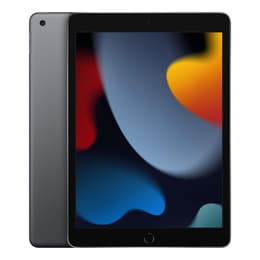
iPad 9 (2021, A13 series)
Starting at

Refurbished price:178.00

Versus €429.00 new

See options
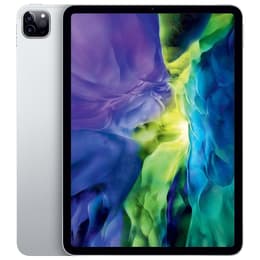
iPad Pro (2020, A12 series)
Starting at

Refurbished price:400.00

Versus €1,019.00 new

See options

Ratings

The iPad (9th generation), released in 2021, and the iPad Pro (2020 model), launched in 2020, represent different tiers within Apple's tablet lineup. While both devices run on iPadOS and offer a versatile tablet experience, the iPad Pro is designed for more demanding tasks and creative professionals, featuring advanced display technology and a more robust performance profile. The standard iPad, conversely, focuses on delivering a capable and accessible experience for everyday use.

Scores

Durability

The longevity of a tablet is influenced by its release timeline and ongoing software support. The iPad (9th generation) was released in September 2021, while the iPad Pro (2020) was released in March 2020. Both devices receive regular iPadOS updates, ensuring access to new features and security enhancements for several years. The iPad (9th generation) was discontinued in May 2024, while the iPad Pro 2020 was succeeded by the M1 iPad Pro in May 2021.

  • Software Support: The iPad (9th generation) is expected to receive software updates for a slightly longer period due to its later release date, potentially extending its functional lifespan by about a year compared to the iPad Pro 2020.
  • Physical Durability: Both models feature an aluminum enclosure, offering a solid build. The iPad Pro 2020 has a more modern, squared-off design, while the iPad (9th generation) retains the classic design with a home button.
  • Repairability: While specific repairability scores can vary, both devices are designed with Apple's ecosystem in mind, meaning repairs often involve authorized service providers.

Year of Release

2021

2020

Compatible with latest Update

Yes

Yes

OS

iPadOS

iPadOS

Maximum Operating System supported

iPadOS 18

iPadOS 18

Performance

Performance differences between these two iPads cater to varying user needs, primarily influenced by their internal processing capabilities and memory configurations.

  • Processing Power: The iPad Pro 2020 offers a higher level of graphical performance, making it well-suited for intensive tasks like advanced video editing, 3D rendering, and high-fidelity gaming. The iPad (9th generation) handles everyday applications, web browsing, and most popular games smoothly, providing a responsive experience for general use.
  • Multitasking and RAM: The iPad Pro 2020 comes with 6GB of RAM, allowing for more applications to run simultaneously without needing to reload, enhancing the multitasking experience. The iPad (9th generation) features 3GB of RAM, sufficient for typical multitasking but potentially leading to more frequent app reloads with many demanding applications.
  • Storage Options: The iPad Pro 2020 offers a wider range of storage capacities, starting at 128GB and going up to 1TB, providing ample space for large files. The iPad (9th generation) is available with 64GB or 256GB of internal storage, suitable for most users.

Memory (GB)

3 GB

6 GB

Processor

Apple A13 Bionic

Apple A12Z Bionic

Screen quality

The display experience is a significant differentiator, with the iPad Pro 2020 offering more advanced technology for visual tasks.

  • Display Technology: The iPad Pro 2020 features a Liquid Retina IPS LCD with ProMotion technology, offering an adaptive refresh rate up to 120Hz for smoother scrolling and more fluid motion. The iPad (9th generation) uses a standard Retina IPS LCD with a 60Hz refresh rate.
  • Resolution and Clarity: Both tablets offer sharp displays with high pixel densities, ensuring clear text and detailed images. The iPad Pro 2020 comes in 11-inch (2388 x 1668 pixels) and 12.9-inch (2732 x 2048 pixels) sizes, while the iPad (9th generation) has a 10.2-inch display (2160 x 1620 pixels).
  • Brightness and Color: The iPad Pro 2020 provides higher peak brightness at 600 nits and supports a wider color gamut (P3), which is beneficial for creative work and outdoor visibility. The iPad (9th generation) offers 500 nits of brightness and includes True Tone technology for automatic color temperature adjustment.

Resolution

2160 x 1620

2388 x 1668

True Tone

Yes

Yes

Pro-Motion

No

Yes

Screen type

Retina display

Liquid Retina display

Pixel density

264ppp

264ppp

Brightness

500 nits brightness

600 nits brightness max

Sound quality

Speakers

Stereo speakers

Four speaker audio

Audiovisual

The camera systems and audio capabilities reflect the different target audiences for these two tablets.

  • Rear Camera System: The iPad Pro 2020 features a dual-camera setup with a 12MP wide lens and a 10MP ultra-wide lens, along with a LiDAR scanner for enhanced augmented reality experiences and improved depth sensing. The iPad (9th generation) has a single 8MP wide rear camera, suitable for basic photography and document scanning.
  • Front Camera and Video Calls: The iPad (9th generation) excels in video conferencing with its 12MP ultra-wide front camera featuring Center Stage, which automatically keeps the user in frame during calls. The iPad Pro 2020 has a 7MP TrueDepth front camera, which supports Face ID and offers good quality for video calls.
  • Audio Experience: The iPad Pro 2020 is equipped with a four-speaker audio system, providing a more immersive stereo sound experience, particularly in landscape orientation. The iPad (9th generation) features stereo speakers, but the sound output is less expansive. Both include multiple microphones for clear audio input.

Miscellaneous

Beyond core performance and display, several practical elements distinguish these two iPad models.

  • Connectivity: The iPad Pro 2020 supports Wi-Fi 6 and Bluetooth 5.0, offering faster and more stable wireless connections, with cellular models supporting Gigabit-class LTE. The iPad (9th generation) uses Wi-Fi 5 and Bluetooth 4.2, with cellular models supporting LTE.
  • Port Type & Accessories: The iPad Pro 2020 features a versatile USB-C port, allowing for connection to a wider range of peripherals and supports the second-generation Apple Pencil and Magic Keyboard. The iPad (9th generation) retains the Lightning connector and supports the first-generation Apple Pencil and Smart Keyboard.
  • Biometrics & Design: The iPad Pro 2020 uses Face ID and has a thinner, lighter design. The iPad (9th generation) utilizes Touch ID and is slightly thicker and heavier.

Weight

487 g

471 g

Width

17.41 cm

17.85 cm

Height

25.06 cm

24.76 cm

Depth

0.75 cm

0.59 cm

Screen size (in)

10.2

11

Network

Wi-Fi

Wi-Fi

Carrier compatibility

Without SIM Port

Without SIM Port

Wi-Fi technology

Wi-Fi 6 802.11a/b/g/n/ac

Wi-Fi 6 802.11ax

Bluetooth Version

Bluetooth 4.2

Bluetooth 5.0

Face ID

No

Yes

Touch ID

Yes

No

Connector

Lightning connector

USB Type-C

User sentiment often highlights the iPad (9th generation) as a reliable and capable device for general use, praised for its solid performance for everyday tasks and its improved front camera with Center Stage, making it a popular choice for students and casual users. Criticisms sometimes point to its older design, thicker bezels, and the retention of the Lightning port. The iPad Pro 2020, on the other hand, is frequently lauded for its powerful performance, advanced ProMotion display, and versatile USB-C connectivity, making it a favorite among creative professionals and power users. Some users have noted that its advanced camera system, while capable, might be underutilized for typical tablet photography.

Users prioritizing a modern design, higher graphical performance for demanding applications, and advanced display features like a 120Hz refresh rate will find the iPad Pro 2020 well-suited to their needs. Those seeking a dependable tablet for web browsing, media consumption, video calls, and light productivity, with a focus on value and a familiar design, may lean toward the iPad (9th generation). Both models offer a robust tablet experience, and choosing between them often comes down to specific workflow requirements and desired features. For those looking for an eco-friendly alternative, both devices are available as quality-assured refurbished options.


See all articles

Our recent comparisons