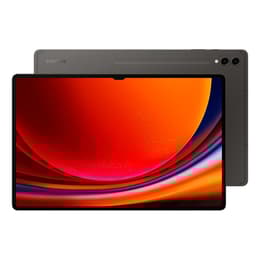
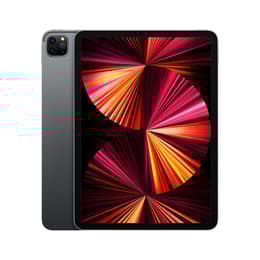


Galaxy Tab S9 Ultra (14.6", 2023) Vs iPad Pro (2021, M1 series)

Galaxy Tab S9 Ultra (14.6", 2023)
Starting at

Refurbished price:754.00

Versus €1,800.00 new

See options
iPad Pro (2021, M1 series)
Starting at

Refurbished price:462.00

Versus €909.00 new

See options

Ratings

The Samsung Galaxy Tab S9 Ultra, released in 2023, and the Apple iPad Pro (M1 Series), launched in 2021, represent two distinct approaches to high-performance tablets. Both devices offer expansive displays and powerful internal components designed for demanding tasks, but they operate on different ecosystems: Android 13 for the Tab S9 Ultra and iPadOS for the iPad Pro. The primary differentiators lie in their screen technology, overall size, and the software experiences they provide.

Scores

Durability

When considering the long-term usability of these tablets, several factors contribute to their expected lifespan, including software support and physical resilience. The Galaxy Tab S9 Ultra, released in August 2023, benefits from a more recent launch, potentially offering a longer period of software updates from Samsung compared to the iPad Pro (M1 Series), which was released in May 2021. Apple typically provides extensive iPadOS support for its devices, often exceeding five years from release. The Galaxy Tab S9 Ultra is expected to receive software support for approximately four years, with a typical lifespan of around five years.

  • Software Longevity: The iPad Pro (M1 Series) generally receives iPadOS updates for an extended period, often 5-6 years or more, providing a longer software lifecycle. The Galaxy Tab S9 Ultra, being newer, is still within its prime update window, with Samsung committing to several years of Android and security updates.
  • Physical Durability: The Galaxy Tab S9 Ultra features an IP68 rating for dust and water resistance, a notable advantage for users in varied environments. Both devices feature robust build materials, with the iPad Pro utilizing an aluminum enclosure. Repairability for the Galaxy Tab S9 Ultra is considered moderate, with screen damage being a common concern due to its large display.
  • Practical Lifespan: Both tablets are built with high-quality components designed for sustained performance. The choice between them for longevity may depend more on the user's preference for operating system updates and specific environmental protection needs.

Year of Release

2023

2021

Compatible with latest Update

Yes

Yes

OS

Android

iPadOS

Performance

Both the Galaxy Tab S9 Ultra and the iPad Pro (M1 Series) deliver exceptional performance, capable of handling intensive applications and multitasking with ease. Their respective processors are designed to offer a fluid user experience across various demanding scenarios.

  • Processing Power: The Galaxy Tab S9 Ultra is equipped with a current-generation processor that allows it to load applications quickly and manage multiple tasks simultaneously without slowdowns. The iPad Pro (M1 Series) features a powerful chip that was a significant leap in performance for tablets at its release, enabling desktop-class application performance and efficient handling of professional workflows.
  • Multitasking and Responsiveness: Users of both tablets will experience smooth transitions between apps and responsive interactions. The Galaxy Tab S9 Ultra's large display is particularly well-suited for running multiple apps side-by-side, and its DeX mode offers a desktop-like interface for enhanced productivity. The iPad Pro's iPadOS is optimized for touch-first multitasking, providing intuitive gestures and split-screen capabilities.
  • Storage and Memory: The Galaxy Tab S9 Ultra offers configurations with up to 16GB of RAM and 1TB of internal storage, with the added flexibility of microSD card expansion. The iPad Pro (M1 Series) also comes with substantial RAM options (up to 16GB) and internal storage up to 2TB, catering to users with extensive storage needs.

Memory (GB)

12 GB

8 GB

Screen quality

The visual experience on both tablets is a highlight, with each offering a large, high-resolution display designed for immersive content consumption and detailed work. However, they employ different display technologies.

  • Display Technology and Clarity: The Galaxy Tab S9 Ultra features a 14.6-inch Dynamic AMOLED 2X display, known for its deep blacks, vibrant colors, and high contrast. The 12.9-inch iPad Pro (M1 Series) boasts a Liquid Retina XDR display with Mini-LED technology, which provides exceptional brightness, precise local dimming for impressive contrast, and vivid HDR content. The 11-inch iPad Pro model uses a Liquid Retina IPS LCD display.
  • Brightness and Refresh Rate: Both tablets offer a smooth 120Hz refresh rate, contributing to fluid scrolling and responsive interactions. The Tab S9 Ultra can reach a peak brightness of 930 nits in auto mode, making it suitable for various indoor lighting conditions. The 12.9-inch iPad Pro excels in brightness, achieving up to 1000 nits full-screen and 1600 nits peak for HDR content, providing excellent visibility even in bright environments.
  • Size and Aspect Ratio: The Galaxy Tab S9 Ultra's 14.6-inch screen offers a significantly larger canvas, with a 16:10 aspect ratio that is well-suited for widescreen video content. The iPad Pro (M1 Series) comes in 11-inch and 12.9-inch options, with a 4:3 aspect ratio that is often preferred for reading and productivity tasks.

Resolution

1848 x 2960

2388 x 1668

Screen type

Dynamic AMOLED 2X

Liquid Retina display

Pixel density

240ppp

264ppp

Audiovisual

While tablets are not typically primary photography devices, both the Galaxy Tab S9 Ultra and the iPad Pro (M1 Series) are equipped with capable camera systems for video calls, document scanning, and casual photography. The focus for these devices often leans towards enhanced video conferencing and augmented reality capabilities.

  • Rear Camera System: The Galaxy Tab S9 Ultra features a dual-camera setup on the rear, consisting of a 13MP main lens and an 8MP ultrawide lens, capable of producing sharp images in good lighting. The iPad Pro (M1 Series) also includes a dual rear camera system with a 12MP main camera, a 10MP ultrawide camera, and a LiDAR scanner, which enhances depth sensing for AR applications and portrait photography.
  • Front Camera and Video Conferencing: The Tab S9 Ultra has dual 12MP front cameras (wide and ultrawide), which are well-suited for high-quality video calls and selfies. The iPad Pro (M1 Series) features a 12MP ultrawide front camera with Center Stage, a feature that automatically keeps the user in frame during video calls by panning and zooming.
  • Video Recording and Audio: Both tablets support 4K video recording with their main rear cameras. The Galaxy Tab S9 Ultra includes quad AKG speakers with Dolby Atmos, providing a rich audio experience. The iPad Pro also features a quad-speaker system, delivering clear and immersive sound for media consumption.

Miscellaneous

Beyond core performance and display, several practical features and design elements differentiate these two high-end tablets, influencing their usability in everyday scenarios.

  • Connectivity and Ports: The Galaxy Tab S9 Ultra supports Wi-Fi 6E and Bluetooth 5.3, with optional 5G connectivity, and includes a USB-C 3.2 port. The iPad Pro (M1 Series) offers Wi-Fi 6 and Bluetooth 5.0, with optional 5G, and features a Thunderbolt/USB4 port (USB-C), providing high-bandwidth connectivity for external accessories and displays.
  • Stylus Integration: The Galaxy Tab S9 Ultra comes with an S Pen included in the box, which is IP68 rated for water and dust resistance, offering a natural writing and drawing experience. The Apple Pencil 2, compatible with the iPad Pro, is sold separately but offers precise input and magnetic attachment for charging.
  • Biometric Authentication and Design: The Tab S9 Ultra incorporates an in-screen fingerprint sensor for secure unlocking. The iPad Pro (M1 Series) utilizes Face ID for biometric authentication. The Galaxy Tab S9 Ultra is notably thin at 5.5mm and weighs 732g, while the 12.9-inch iPad Pro is 6.4mm thick and weighs 682g.

Weight

732 g

466 g

Screen size (in)

14.6

11

Network

Wi-Fi

Wi-Fi

Carrier compatibility

Without SIM Port

Without SIM Port

User feedback for the Galaxy Tab S9 Ultra often highlights its expansive 14.6-inch OLED display as a major draw, providing an immersive experience for media consumption and a generous canvas for creative work. Many users appreciate the included S Pen and the tablet's powerful performance for demanding tasks and multitasking, especially with Samsung's DeX mode. However, some find its large size can make it unwieldy for handheld use, suggesting it's better suited for desk-based activities. Concerns have also been raised about the optimization of some Android applications for such a large tablet screen.

The iPad Pro (M1 Series) is frequently praised for its exceptional performance, driven by its powerful chip, and the stunning Liquid Retina XDR display on the 12.9-inch model. Users often commend the robust app ecosystem available on iPadOS, particularly for creative and professional applications. The Center Stage feature for video calls is also a well-received addition. Criticisms sometimes point to iPadOS limitations when attempting to use the device as a full laptop replacement, and the additional cost of essential accessories like the Apple Pencil and Magic Keyboard.

Users prioritizing a vast, vibrant OLED display and an included stylus for drawing and note-taking, alongside the flexibility of the Android ecosystem and DeX mode, may find the Galaxy Tab S9 Ultra well-suited to their needs. Conversely, those who value the powerful performance of the M1 chip, the extensive app ecosystem of iPadOS, and the exceptional Mini-LED display (on the 12.9-inch model) might lean towards the iPad Pro (M1 Series). Both devices offer a premium tablet experience, and considering a quality-assured refurbished option can be an eco-friendly alternative for acquiring either of these powerful tablets.

See all articles

Our recent comparisons