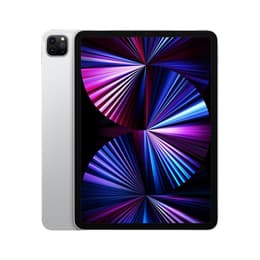


iPad 6 (2018, A10 series) Vs iPad Pro (2021, M1 series)

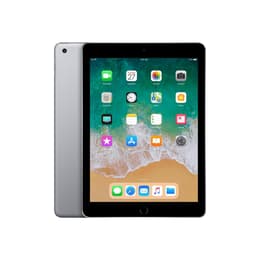
iPad 6 (2018, A10 series)
Starting at

Refurbished price:82.00

Versus €359.00 new

See options
iPad Pro (2021, M1 series)
Starting at

Refurbished price:452.00

Versus €909.00 new

See options

Ratings

The iPad 2018 (6th generation), released in March 2018, and the iPad Pro 2021 (5th generation), released in May 2021, represent distinct tiers within Apple's tablet lineup. While both devices run on iPadOS and offer a versatile tablet experience, the iPad Pro 2021 introduces a significantly more powerful processor, advanced display technology, and enhanced professional features that set it apart from the more entry-level iPad 2018.

Scores

Durability

When considering the longevity of these two tablets, their release timelines and underlying hardware play a significant role in their expected practical lifespan and software support.

  • Release Timeline and OS Support: The iPad 2018, launched in March 2018, has received several major iPadOS updates since its release. The iPad Pro 2021, released in May 2021, benefits from a newer launch date, meaning it will likely receive software updates for a longer period. Users on forums note that older iPads, including the 2018 model, can experience sluggishness with newer iPadOS versions, though some users choose to remain on older, more stable operating systems.
  • Hardware Longevity: The iPad Pro 2021 features a more advanced processor and greater RAM, which provides more headroom for future demanding applications and ensures smoother performance over a longer duration. While the iPad 2018 remains capable for everyday tasks, its hardware is less equipped to handle the increasing demands of modern software in the long term.
  • Repairability: Both models, as Apple devices, generally have similar repairability profiles, with components often requiring specialized tools and expertise for replacement. The availability of parts for older models like the iPad 2018 may become more limited over time compared to the newer iPad Pro 2021.

Year of Release

2018

2021

Compatible with latest Update

No

Yes

OS

iPadOS

iPadOS

Maximum Operating System supported

iPadOS 17

iPadOS 18

Performance

The performance capabilities of the iPad 2018 and iPad Pro 2021 differ substantially, primarily due to their respective internal components, impacting how they handle various tasks from casual browsing to professional workflows.

  • Processor Capabilities: The iPad 2018 is equipped with a capable processor that handles everyday tasks, web browsing, media consumption, and light gaming smoothly. In contrast, the iPad Pro 2021 features a desktop-class processor, delivering a significant leap in performance. This allows it to manage demanding professional applications, intensive multitasking, high-fidelity gaming, and complex tasks like video editing and 3D rendering with ease.
  • Multitasking and Responsiveness: The iPad Pro 2021's advanced processor and increased RAM contribute to superior multitasking capabilities, allowing users to run multiple applications simultaneously without noticeable slowdowns. Users report that the iPad Pro 2021 handles app loading and background processes very fluidly. The iPad 2018, while still functional for basic split-screen use, may show limitations when juggling several resource-intensive apps.
  • Storage Options and Battery Behavior: Both devices offer various storage configurations, with the iPad Pro 2021 providing higher maximum capacities suitable for professional users with large files. In terms of battery, both are designed for all-day use under typical conditions. However, the iPad Pro 2021's more efficient processor can optimize power consumption, potentially leading to better battery life during demanding tasks, though some users report heating and battery drain during high-demand gaming on the iPad Pro 2021.

Memory (GB)

2 GB

8 GB

Processor

Apple A10 Fusion

Apple M1

Screen quality

The visual experience on these two iPads presents a clear distinction, with the iPad Pro 2021 offering a more advanced display technology compared to the iPad 2018.

  • Display Technology and Clarity: The iPad 2018 features a Retina IPS LCD display, providing clear visuals and good color reproduction for general use. The iPad Pro 2021, depending on the model, comes with either a Liquid Retina IPS LCD (11-inch) or a Liquid Retina XDR mini-LED display (12.9-inch). The 12.9-inch Liquid Retina XDR display is a significant upgrade, offering exceptional contrast, deeper blacks, and vibrant colors, akin to OLED technology.
  • Brightness and Refresh Rate: The iPad 2018 offers a bright display suitable for indoor use. The iPad Pro 2021, especially the 12.9-inch model, boasts significantly higher brightness levels, reaching up to 1000 nits full-screen and 1600 nits peak for HDR content, making it excellent for outdoor visibility and HDR media consumption. Furthermore, the iPad Pro 2021 features ProMotion technology, offering an adaptive refresh rate up to 120Hz for smoother scrolling and more responsive interactions, a feature absent on the 60Hz iPad 2018.
  • Screen Size and Lamination: The iPad 2018 has a 9.7-inch display. The iPad Pro 2021 is available in larger 11-inch and 12.9-inch options, providing more screen real estate for productivity and media. A notable difference is that the iPad 2018's display is not fully laminated, meaning there's a small air gap between the glass and the display panel, which can be noticeable when using an Apple Pencil. The iPad Pro 2021 features a fully laminated display, offering a more direct and premium feel.

Resolution

2048 x 1536

2388 x 1668

True Tone

No

Yes

Pro-Motion

No

Yes

Screen type

Retina display

Liquid Retina display

Pixel density

264ppp

264ppp

Brightness

500 nits brightness

600 nits brightness max

Sound quality

Speakers

Stereo speakers

Four speaker audio

Audiovisual

The camera systems and audio capabilities of these two iPad models reflect their different design philosophies, with the iPad Pro 2021 offering a more advanced and versatile setup.

  • Camera System Capabilities: The iPad 2018 features an 8-megapixel rear camera and a 1.2-megapixel front-facing camera, suitable for basic photography, document scanning, and video calls. The iPad Pro 2021 significantly upgrades this with a dual-camera system on the rear (12MP wide and 10MP ultra-wide) and a 12MP ultra-wide front camera. The iPad Pro 2021 also includes a LiDAR scanner, enhancing augmented reality (AR) experiences and improving depth sensing for photography.
  • Photography and Video Performance: The iPad Pro 2021 delivers superior image quality, especially in low-light conditions, and offers more advanced features like Smart HDR. It supports 4K video recording at higher frame rates, while the iPad 2018 records up to 1080p video. The iPad Pro 2021's front camera introduces 'Center Stage,' a feature that automatically keeps the user framed during video calls, which is particularly useful for virtual meetings and presentations.
  • Audio Quality: The iPad 2018 includes stereo speakers. The iPad Pro 2021 features a four-speaker audio system, providing a richer and more immersive sound experience for media consumption. It also incorporates five studio-quality microphones for clearer audio input during calls and recordings.

Miscellaneous

Beyond core performance and display, several practical elements differentiate the iPad 2018 and iPad Pro 2021, influencing their connectivity, accessory compatibility, and overall user experience.

  • Connectivity Options: The iPad 2018 supports Wi-Fi and optional LTE for cellular connectivity. The iPad Pro 2021 offers more advanced connectivity, including Wi-Fi 6E for faster wireless speeds and optional 5G support in cellular models, providing quicker data transfer on the go.
  • Port Types and Accessories: The iPad 2018 uses a Lightning port for charging and data transfer. The iPad Pro 2021 features a USB-C port with Thunderbolt/USB 4 support, offering significantly faster data transfer speeds and broader compatibility with external displays, storage devices, and other high-performance accessories. The iPad 2018 supports the first-generation Apple Pencil, while the iPad Pro 2021 supports the second-generation Apple Pencil, which attaches magnetically and charges wirelessly. The iPad 2018 does not have a Smart Connector for Apple's Smart Keyboard, requiring Bluetooth keyboards, whereas the iPad Pro 2021 is compatible with the Magic Keyboard and Smart Keyboard Folio.
  • Biometric Authentication and Design: The iPad 2018 uses Touch ID for fingerprint authentication. The iPad Pro 2021 employs Face ID for secure facial recognition. In terms of design, the iPad Pro 2021 features a more modern, edge-to-edge display with thinner bezels and a flatter-edged design compared to the iPad 2018's more traditional tablet aesthetic.

Weight

469 g

466 g

Width

16.95 cm

17.85 cm

Height

24 cm

24.76 cm

Depth

0.75 cm

0.59 cm

Screen size (in)

9.7

11

Network

Wi-Fi

Wi-Fi

Carrier compatibility

Without SIM Port

Without SIM Port

Wi-Fi technology

Wi-Fi 6 802.11a/b/g/n/ac

Wi-Fi 6 802.11ax

Bluetooth Version

Bluetooth 4.2

Bluetooth 5.0

Face ID

No

Yes

Touch ID

Yes

No

Connector

Lightning connector

USB Type-C

The iPad 2018 and iPad Pro 2021 cater to different user needs, a distinction often highlighted in user discussions. The iPad 2018 is frequently praised for its enduring value as a capable device for fundamental tasks. Users appreciate its suitability for casual browsing, media consumption, and note-taking, especially for students. Common criticisms often revolve around its aging design and slower performance when faced with more demanding applications or newer iPadOS versions.

Conversely, the iPad Pro 2021 receives widespread acclaim for its exceptional performance, driven by its powerful processor, and its stunning display, particularly the 12.9-inch Liquid Retina XDR model. Users frequently highlight its professional capabilities, making it a strong contender for creative work, intensive multitasking, and as a potential laptop replacement. However, some users note that the full potential of its hardware is not always utilized by current iPadOS software, and its advanced features might be considered overkill for average users.

Users prioritizing a cost-effective device for everyday tasks, light productivity, and media consumption will find the iPad 2018 well-suited to their needs. It remains a solid choice for those seeking a reliable tablet experience without requiring top-tier performance. Users who demand cutting-edge performance for professional applications, advanced creative work, high-end gaming, and a superior visual experience will lean toward the iPad Pro 2021. Its advanced display, powerful processing, and versatile connectivity make it ideal for power users and those looking for a more future-proof device. Both models are available as quality-assured refurbished options, providing an eco-friendly alternative for consumers.


See all articles

Our recent comparisons