
Galaxy Tab S8+ (12.4", 2022) Vs iPad 7 (2019, A10 series)

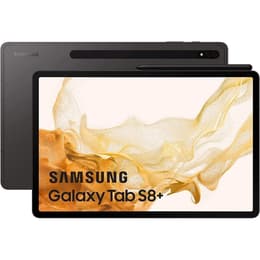
Galaxy Tab S8+ (12.4", 2022)
Starting at

Refurbished price:479.00

Versus €999.00 new

See options
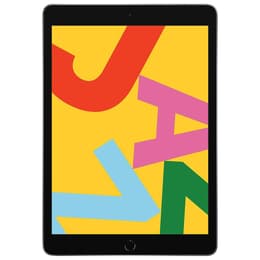
iPad 7 (2019, A10 series)
Starting at

Refurbished price:115.00

Versus €399.00 new

See options

Ratings

The Samsung Galaxy Tab S8 Plus, released in 2022, and the Apple iPad (7th Generation), introduced in 2019, represent distinct tablet offerings from two prominent technology manufacturers. While both devices provide a portable platform for various digital activities, they diverge significantly in their underlying operating systems, display technologies, and overall performance capabilities. The Galaxy Tab S8 Plus operates within the Android ecosystem, known for its customization options, whereas the iPad runs on Apple's iPadOS, recognized for its intuitive interface and robust application environment.

Scores

Durability

The difference in release dates between these two tablets plays a substantial role in their anticipated practical lifespan and ongoing software support. The Galaxy Tab S8 Plus, launched in 2022, benefits from a more recent introduction, offering a longer period for receiving major software updates and essential security patches compared to the 2019 iPad.

  • Software Longevity: The Galaxy Tab S8 Plus is expected to receive major Android operating system upgrades and security updates for several more years, potentially extending its functional life until around 2027 for major OS updates and up to 7 years for security updates. The iPad (7th Gen), having been released in 2019, has received several iPadOS updates and is capable of running iPadOS 18, with security updates for this version extended to April 2026. While it may continue to receive security patches, its major OS update cycle is nearing its conclusion.
  • Repairability: Both tablets feature modern construction that can make user-level repairs challenging. Professional repair services are generally available for both models. However, the newer components and longer production cycle of the Tab S8 Plus might mean parts remain more readily available for a longer duration.
  • Practical Lifespan: Users prioritizing the longest possible software support and access to the latest features will find the Galaxy Tab S8 Plus a more future-proof option due to its newer release date and Samsung's extended update commitment. The iPad (7th Gen) remains a capable device for many tasks, but its older hardware and software support timeline suggest it will reach a point of limited feature compatibility sooner.

Year of Release

2022

2019

Compatible with latest Update

Yes

Yes

OS

Android

iPadOS

Performance

The performance capabilities of the Galaxy Tab S8 Plus and the iPad (7th Gen) exhibit a notable contrast, primarily influenced by their respective release years and the advancements in processing power during that time. The Galaxy Tab S8 Plus delivers a significantly more powerful and efficient experience for demanding applications and multitasking.

  • Processing Power: The Galaxy Tab S8 Plus incorporates a modern, high-performance processor that adeptly handles intensive applications, advanced multitasking scenarios, and graphically rich games with considerable speed and responsiveness. The iPad (7th Gen) utilizes an older processor, which is well-suited for everyday activities such as web browsing, email, and light productivity, but may encounter limitations with more resource-intensive software or extensive simultaneous operations.
  • Multitasking and Responsiveness: With more substantial RAM configurations, the Galaxy Tab S8 Plus excels at managing multiple applications concurrently and transitioning between them smoothly, contributing to a fluid user experience. The iPad (7th Gen) features less RAM, which can result in applications reloading more frequently when switching, potentially impacting the seamlessness of multitasking.
  • Storage Options: The Galaxy Tab S8 Plus offers larger base storage capacities and supports expandable storage via a microSD card, providing flexibility for users with extensive media libraries or large files. The iPad (7th Gen) comes with more restricted internal storage options and does not support expandable storage, necessitating more careful data management or reliance on cloud services.

Memory (GB)

8 GB

3 GB

Screen quality

The visual experience offered by these two tablets presents a clear distinction, largely attributable to their differing display technologies and specifications. The Galaxy Tab S8 Plus provides a more vibrant and fluid visual interaction.

  • Display Technology: The Galaxy Tab S8 Plus features a 12.4-inch Super AMOLED display, renowned for its deep blacks, high contrast ratios, and vibrant color reproduction. In contrast, the iPad (7th Gen) employs a 10.2-inch Retina IPS LCD panel, which delivers good color accuracy and wide viewing angles but does not achieve the same level of contrast or true black representation as an AMOLED screen.
  • Refresh Rate and Smoothness: A key differentiator is the 120Hz refresh rate on the Galaxy Tab S8 Plus, which translates to noticeably smoother scrolling, more fluid animations, and a more responsive feel during interactions. The iPad (7th Gen) operates at a standard 60Hz refresh rate, which is adequate for most tasks but lacks the enhanced fluidity provided by a higher refresh rate display.
  • Resolution and Brightness: The Galaxy Tab S8 Plus boasts a higher resolution display, resulting in sharper text and more detailed images across its larger screen. It also typically achieves higher peak brightness levels, which can improve visibility in bright outdoor environments. The iPad (7th Gen) offers a respectable resolution for its size, providing clear visuals, but its brightness levels are generally lower than those of the Tab S8 Plus.

Resolution

1752 x 2800

2160 x 1620

Screen type

Super AMOLED

Retina display

Pixel density

270ppp

264ppp

Audiovisual

The camera systems and audio capabilities of the Galaxy Tab S8 Plus and the iPad (7th Gen) are designed to meet different user expectations, with the newer Samsung tablet offering more advanced features for both photography and video communication.

  • Camera System: The Galaxy Tab S8 Plus is equipped with a more versatile camera setup, including a higher-resolution main camera and an ultrawide lens on the rear, complemented by a high-resolution ultrawide front camera. This configuration allows for more detailed photos, broader group selfies, and enhanced video call quality. The iPad (7th Gen) features a simpler 8MP rear camera and a lower-resolution 1.2MP front camera, which are sufficient for basic document scanning and casual video calls but offer less detail and flexibility.
  • Video Recording and Microphones: The Galaxy Tab S8 Plus supports higher resolution video recording and often includes features like auto-framing for video calls, improving the communication experience. Its multiple microphones are engineered to capture clearer audio. The iPad (7th Gen) records standard HD video and has a more basic microphone setup, suitable for general use.
  • Speaker Output: The Galaxy Tab S8 Plus typically incorporates a quad-speaker setup tuned by AKG, delivering a richer and more immersive audio experience for media consumption. The iPad (7th Gen) features stereo speakers, which provide clear audio for casual listening but may not offer the same depth or volume as the Tab S8 Plus.

Miscellaneous

Beyond the core performance and display aspects, several practical elements distinguish the Galaxy Tab S8 Plus and the iPad (7th Gen), influencing their daily usability and connectivity options.

  • Connectivity Standards: The Galaxy Tab S8 Plus supports more recent wireless standards such as Wi-Fi 6E and Bluetooth 5.2, facilitating faster and more stable connections with compatible networks and accessories. The iPad (7th Gen) utilizes older Wi-Fi 802.11ac and Bluetooth 4.2 standards, which remain functional but may not offer the same speeds or range.
  • Port Types and Accessories: The Galaxy Tab S8 Plus features a USB-C 3.2 port, a modern and versatile standard for charging, data transfer, and connecting to external displays. Notably, the S Pen stylus is included in the box, enhancing productivity. The iPad (7th Gen) uses Apple's proprietary Lightning port and supports the first-generation Apple Pencil, which is sold separately. The iPad also retains a 3.5mm headphone jack.
  • Biometric Security and Design: The Galaxy Tab S8 Plus often includes an in-display fingerprint sensor for secure and convenient unlocking. Its design is generally thinner and lighter for its screen size, featuring an Armor Aluminum frame. The iPad (7th Gen) employs Touch ID via a physical home button for fingerprint authentication. Its design is more traditional for an iPad, with more prominent bezels.

Weight

567 g

483 g

Screen size (in)

12.4

10.2

Network

Wi-Fi

Wi-Fi

Carrier compatibility

Without SIM Port

Without SIM Port

User sentiment frequently highlights the Samsung Galaxy Tab S8 Plus as a powerful and versatile Android tablet. It is often praised for its expansive and vibrant AMOLED display, the included S Pen, and robust performance suitable for both productivity and entertainment. Users appreciate its capability to handle demanding applications and its modern connectivity. However, some common observations include the Android tablet app ecosystem not always being as optimized as iPadOS for certain professional tasks, and its larger size potentially being less portable for some users.

The iPad (7th Gen), conversely, is often commended for its reliable iPadOS experience, strong application support, and ease of use, making it a popular choice for general media consumption and light productivity. Its seamless integration within the Apple ecosystem is a significant advantage for many users. Criticisms sometimes point to its aging design, the standard 60Hz display, and the older processor showing its limitations with newer, more demanding applications, as well as the relatively limited base storage options.

Users prioritizing a large, high-refresh-rate display, integrated stylus functionality, and top-tier performance for creative work or advanced multitasking will likely find the Galaxy Tab S8 Plus well-suited to their needs. Its newer hardware and longer software support timeline also position it as a more future-proof choice. Conversely, users who value the established iPadOS ecosystem, consistent performance for everyday tasks, and a more compact form factor for casual use may lean toward the iPad (7th Gen). Both devices, when considered as quality-assured refurbished options, offer an eco-friendly alternative for consumers seeking capable tablets.


See all articles

Our recent comparisons