
Google Pixel Fold Vs iPhone 14

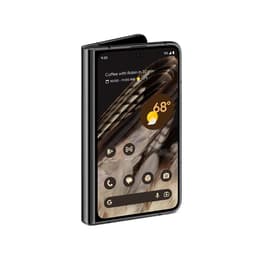
Google Pixel Fold
Google Pixel Fold
Starting at

Refurbished price:499.00

Versus €1,750.29 new

See options
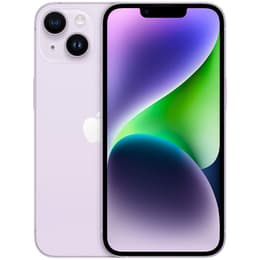
iPhone 14
iPhone 14
Starting at

Refurbished price:293.00

Versus €759.00 new

See options

Ratings

The Google Pixel Fold, released in June 2023, and the iPhone 14, launched in September 2022, represent distinct approaches to modern smartphone design and functionality. While the Pixel Fold offers a unique foldable form factor running on Android, the iPhone 14 maintains a traditional slab design powered by Apple's iOS. These devices cater to different user preferences, primarily differing in their physical design, operating system ecosystems, and core hardware philosophies.

Scores

Durability

When considering the long-term usability of these devices, their release timelines and software support are key factors.

  • Release Timeline and OS Support: The iPhone 14, released in September 2022, benefits from Apple's consistent and generally longer software support, typically receiving iOS updates for 5-6 years from its launch. The Google Pixel Fold, launched in June 2023, runs on Android and is expected to receive 3 years of major OS updates and 5 years of security updates from Google. This means the iPhone 14 may offer a slightly longer period of receiving the latest operating system features.
  • Durability and Build: The iPhone 14 features a Ceramic Shield front cover and an aluminum design, offering IP68 water and dust resistance. The Pixel Fold, while marketed with a durable hinge, has a more complex folding mechanism and an internal display with a plastic protective layer. It also carries an IPX8 water resistance rating, meaning it can withstand submersion but is not officially rated for dust resistance. User feedback for the Pixel Fold has included some concerns regarding its durability.
  • Expected Practical Lifespan: Both devices are built to last, but their differing designs influence their practical longevity. The iPhone 14's traditional form factor may present fewer long-term mechanical concerns compared to a foldable device. However, the Pixel Fold's innovative design offers a larger screen experience that some users might find more valuable over time, provided the hinge and internal display hold up to repeated use.

Performance

The performance of a smartphone is crucial for daily tasks, from app usage to multitasking and gaming.

  • Processor Capabilities: The iPhone 14 is equipped with a capable processor that handles demanding applications and multitasking smoothly, providing a responsive user experience. The Google Pixel Fold features a current-generation processor designed to manage the complexities of its dual-screen interface and advanced AI features, ensuring efficient performance across various tasks.
  • Battery Behavior: The iPhone 14 typically offers all-day battery life for many users, with its battery capacity supporting extended video playback and audio streaming. However, some users have reported faster battery degradation over time. The Pixel Fold, with a larger battery capacity, is designed to power its two displays and offers competitive battery performance, though real-world usage with the larger internal screen can influence overall endurance.
  • Storage and Responsiveness: Both devices offer various storage options, with the iPhone 14 available in 128GB, 256GB, and 512GB configurations, and the Pixel Fold in 256GB and 512GB. Both provide ample space for apps, photos, and media, contributing to a fluid and responsive operating system experience. The choice of storage depends on individual user needs for local data storage.

Memory (GB)

12 GB

6 GB

Screen quality

The display is a primary interaction point, and both devices offer distinct visual experiences.

  • Display Technology and Resolution: The iPhone 14 features a 6.1-inch Super Retina XDR OLED display, providing deep blacks, vibrant colors, and a sharp resolution of 2532 x 1170 pixels at 460 pixels per inch. The Pixel Fold offers a dual-screen setup: a 5.8-inch OLED cover display with a resolution of 2092 x 1080 pixels (408 ppi) and a larger 7.6-inch folding OLED internal display with a resolution of 2208 x 1840 pixels (380 ppi). The internal display of the Pixel Fold offers a significantly larger canvas for content consumption and multitasking.
  • Brightness and Refresh Rate: Both devices provide excellent brightness levels for outdoor visibility, with the iPhone 14 reaching up to 1200 nits peak brightness for HDR content, and the Pixel Fold's cover display reaching 1550 nits peak and its internal display 1450 nits peak. The Pixel Fold's displays both support a 120Hz refresh rate, offering smoother scrolling and more fluid animations. The iPhone 14 has a standard 60Hz refresh rate.
  • Viewing Experience: The iPhone 14 delivers a consistent, high-quality viewing experience on a single, durable screen. The Pixel Fold provides the versatility of a compact smartphone when folded and an expansive tablet-like experience when unfolded, which is particularly beneficial for reading, productivity, and media consumption.

Audiovisual

Both smartphones offer advanced camera systems designed to capture high-quality photos and videos in various conditions.

  • Rear Camera Systems: The iPhone 14 features a dual-camera system with a 12MP main sensor and a 12MP ultrawide sensor, known for its consistent image processing and strong low-light performance. The Google Pixel Fold boasts a triple-camera setup, including a 48MP main sensor, a 10.8MP ultrawide, and a 10.8MP telephoto lens with 5x optical zoom, offering greater versatility for different photographic scenarios, including distant subjects.
  • Front-Facing Cameras: For selfies and video calls, the iPhone 14 includes a 12MP TrueDepth front camera. The Pixel Fold has a 9.5MP front camera on its cover display and an 8MP camera on its internal folding display, providing options for different usage modes.
  • Video Recording and Features: Both devices are capable of recording 4K video at various frame rates. The iPhone 14 includes Cinematic mode for depth-of-field effects in videos. The Pixel Fold leverages Google's computational photography for enhanced image processing across its camera array.

Miscellaneous

Beyond the core features, several practical elements differentiate these two devices.

  • Connectivity and Ports: Both the Pixel Fold and iPhone 14 support 5G cellular networks and modern Wi-Fi standards. The iPhone 14 uses a Lightning port for charging and data transfer, while the Pixel Fold features a more universal USB-C 3.2 Gen 2 port. The iPhone 14 also includes Emergency SOS via satellite for critical situations in remote areas.
  • Biometric Security: The iPhone 14 relies on Face ID for secure facial recognition. The Pixel Fold incorporates a fingerprint sensor for biometric authentication.
  • Design and Handling: The iPhone 14 is a compact and lightweight traditional smartphone, measuring 146.7 x 71.5 x 7.8 mm and weighing 172 grams. The Pixel Fold, due to its foldable nature, is thicker and heavier when folded (139.7 x 79.5 x 12.1 mm, 283 grams) but offers a much larger screen when unfolded (139.7 x 158.7 x 5.8 mm). The Pixel Fold's wider cover screen when folded makes it feel more like a traditional smartphone than some other foldables.

Screen size (in)

7.6

6.1

Network

5G

5G

SIM card

Physical SIM + eSIM

Physical SIM + eSIM

Carrier compatibility

Unlocked

Unlocked

The choice between the Google Pixel Fold and the iPhone 14 largely depends on a user's priorities regarding form factor, operating system preference, and specific feature needs. Users who prioritize a compact, consistently reliable smartphone experience within the Apple ecosystem, with strong software support and a familiar interface, will find the iPhone 14 well-suited to their needs. Its robust build and established performance make it a dependable daily driver.

Conversely, users seeking an innovative device that transforms from a standard smartphone into a larger tablet-like display will lean towards the Google Pixel Fold. Its expansive internal screen is ideal for productivity, media consumption, and multitasking, offering a unique blend of portability and screen real estate. The Pixel Fold also appeals to those who prefer the Android operating system and Google's distinct approach to computational photography. While some early user feedback on foldables has included durability concerns, the Pixel Fold aims to address these with its design.

Ultimately, the decision comes down to whether the versatility of a foldable screen and the Android experience outweigh the traditional, streamlined approach of the iPhone. Both devices offer compelling features for their respective audiences. For those looking for an eco-friendly and quality-assured alternative, considering a refurbished version of either model can be a sustainable choice.