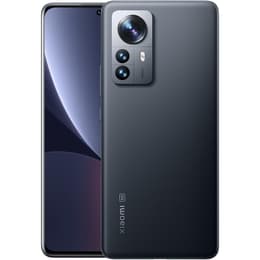


Google Pixel 9 Vs Xiaomi 12T Pro

Google Pixel 9
Google Pixel 9
Starting at

Refurbished price:376.00

Versus €1,066.71 new

See options
Xiaomi 12T Pro
Xiaomi 12T Pro
Starting at

Refurbished price:201.00

Versus €1,199.00 new

See options

Ratings

The Google Pixel 9, released in August 2024, and the Xiaomi 12T Pro, launched in October 2022, represent different approaches to the modern smartphone experience. While the Pixel 9 emphasizes advanced computational photography and long-term software support, the Xiaomi 12T Pro focuses on high-resolution imaging and rapid charging capabilities. Both devices operate on the Android platform, offering a wide ecosystem of applications and customization.

Scores

Durability

The longevity of a smartphone is influenced by its software support, physical durability, and ease of repair. These two devices offer different propositions in these areas.

  • Software Updates: The Google Pixel 9 is designed for extended use, promising seven years of operating system and security updates from its release. The Xiaomi 12T Pro, having launched in 2022 with Android 12, has received several updates, currently running Android 15 with Xiaomi HyperOS 2, but does not offer the same long-term update commitment as the Pixel 9.
  • Physical Durability: The Pixel 9 features Gorilla Glass Victus 2 for screen protection and a frame made from 100% recycled aluminum. The Xiaomi 12T Pro utilizes Corning Gorilla Glass 5 for its display protection and a glass-and-metal body with a matte finish.
  • Repairability: The Xiaomi 12T Pro generally scores well in repairability, with a rating of 7 out of 10, indicating that many components are accessible for repair. The Google Pixel 9, however, received a provisional repairability score of 5 out of 10 from iFixit, noting that its battery is secured with strong adhesive, making removal challenging.

Year of Release

2024

2022

Compatible with latest Update

Yes

Yes

OS

Android

Android

Foldable

No

No

Performance

Both smartphones are equipped with powerful internal components designed to handle demanding tasks, though they come from different generations of mobile processing technology.

  • Processing Power: The Pixel 9, with its newer generation processor, delivers improvements in overall performance, efficiency, and artificial intelligence capabilities, ensuring smooth operation for demanding applications and multitasking. The Xiaomi 12T Pro, powered by a previous generation flagship processor, also offers robust performance, handling graphics-intensive games and multiple applications without significant slowdowns.
  • Multitasking and Storage: The Pixel 9 typically comes with 12GB of RAM, contributing to fluid multitasking. The Xiaomi 12T Pro is available with either 8GB or 12GB of RAM, providing ample capacity for most users. Both devices offer storage options of 128GB and 256GB, with the Xiaomi 12T Pro lacking a microSD card slot for expansion.
  • Battery Performance: The Pixel 9 features a 4700mAh battery, capable of lasting over 24 hours with typical use and up to 100 hours with extreme battery saver modes. The Xiaomi 12T Pro houses a larger 5000mAh battery, which users report can easily last a full day even with heavy usage.

Memory (GB)

12 GB

8 GB

Screen quality

The visual experience on both devices is delivered through high-quality displays, each with distinct characteristics that cater to different preferences.

  • Display Technology and Clarity: The Google Pixel 9 features a 6.3-inch OLED display with a 1080x2424 pixel resolution, offering vibrant colors and deep blacks. The Xiaomi 12T Pro sports a slightly larger 6.67-inch CrystalRes AMOLED display with a 1220x2712 pixel resolution, providing sharp visuals and rich detail.
  • Brightness and Smoothness: The Pixel 9's display can reach impressive peak brightness levels of up to 2700 nits, ensuring excellent visibility even in bright outdoor conditions. It also features an adaptive 120Hz refresh rate for smooth scrolling and responsiveness. The Xiaomi 12T Pro offers a peak brightness of around 900 nits and a 120Hz AdaptiveSync refresh rate, which adjusts dynamically based on content to balance smoothness and power efficiency.
  • Additional Display Features: The Pixel 9 includes Adaptive Touch technology, which adjusts screen sensitivity for various conditions like wet fingers or screen protectors. The Xiaomi 12T Pro's display supports HDR10+ and Dolby Vision, enhancing media consumption, and features a 480Hz touch sampling rate for highly responsive interactions, along with 1920Hz PWM dimming for eye comfort.

Resolution

1080 x 2424

1220 x 2712

Screen type

OLED

AMOLED

Audiovisual

Both smartphones offer advanced camera systems, though they approach photography with different strengths and feature sets.

  • Main Camera Capabilities: The Google Pixel 9 features a dual-camera setup with a 50-megapixel main sensor and a 48-megapixel ultrawide lens that includes macro focus capabilities. The Xiaomi 12T Pro boasts a 200-megapixel main camera with optical image stabilization, utilizing pixel-binning technology to produce detailed 12.5-megapixel or 50-megapixel images, and offers a near-lossless 2x zoom through its high-resolution sensor.
  • Photography Features: The Pixel 9 leverages Google's computational photography with features like Night Sight, Astrophotography, Portrait Mode, Face Unblur, and a rebuilt Panorama mode with Night Sight integration. It also introduces AI-powered features such as 'Add Me' for group photos and various video stabilization modes. The Xiaomi 12T Pro includes a dedicated 8-megapixel ultrawide camera and a 2-megapixel macro lens, alongside features like 200MP ProCut for creative cropping and various long-exposure modes.
  • Video and Audio: The Pixel 9 supports 10-bit HDR video, Cinematic blur, and 4K timelapse, with Video Boost for enhanced quality and upscaling on Pro models. The Xiaomi 12T Pro offers solid video recording capabilities and features dual speakers tuned by Harman Kardon with Dolby Atmos support for an immersive audio experience.

Main camera

50 megapixels

200 megapixels

Front camera

10.5 megapixels

20 megapixels

Miscellaneous

Beyond the core features, several practical elements contribute to the overall user experience and daily usability of these devices.

  • Connectivity and Ports: The Google Pixel 9 supports the latest Wi-Fi 7 standard, Bluetooth 5.3, and 5G connectivity, along with an Ultra-Wideband (UWB) chip. The Xiaomi 12T Pro offers Wi-Fi 6, Bluetooth 5.2, 5G, NFC, and notably includes an IR blaster, a feature less common in modern smartphones. It also supports dual SIM functionality (nano SIM + eSIM or nano SIM + nano SIM).
  • Biometric Security: For secure unlocking, the Pixel 9 incorporates an ultrasonic in-display fingerprint scanner and face recognition. The Xiaomi 12T Pro also features an in-display fingerprint sensor and face unlock capabilities.
  • Design and Handling: The Pixel 9 has dimensions of 152.8 mm in height, 72 mm in width, and 8.5 mm in depth. The Xiaomi 12T Pro is slightly larger and heavier, measuring 163.1 mm in height, 75.9 mm in width, and 8.6 mm in depth, with a weight of 205 grams.

Weight

198 g

204 g

Screen size (in)

6.3

6.67

Network

5G

5G

SIM card

Physical SIM + eSIM

Dual Physical SIM

Carrier compatibility

Unlocked

Unlocked

User feedback for the Google Pixel 9 often highlights its improved battery life compared to previous Pixel generations, with many finding it reliable for a full day's use. Its advanced AI features and computational photography are frequently praised for producing high-quality images. Some criticisms, however, point to its repairability score, particularly the difficulty in battery replacement due to strong adhesive.

The Xiaomi 12T Pro receives commendation for its exceptionally fast 120W wired charging, which can fully charge the device in approximately 20 minutes, and its robust battery life that comfortably lasts a full day. Users appreciate its smooth performance for gaming and multitasking. Common criticisms include the underwhelming performance of its ultrawide and macro cameras compared to the main sensor, and the absence of wireless charging.

Users prioritizing long-term software support, cutting-edge AI camera features, and a more compact design may find the Google Pixel 9 well-suited to their needs. Its extended update promise makes it a compelling choice for those who keep their devices for many years. Conversely, individuals who value extremely fast charging, a larger display, and a high-megapixel main camera for detailed shots might lean towards the Xiaomi 12T Pro. Its strong battery performance also makes it a good option for heavy users. Both devices offer a quality-assured refurbished option, providing an eco-friendly alternative for consumers seeking reliable technology.


See all articles

Our recent comparisons







