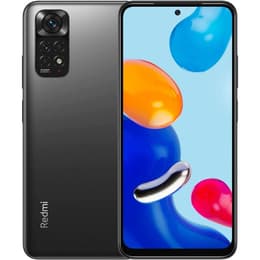



Xiaomi Redmi Note 11 Vs Xiaomi Redmi Note 11 Pro 5G

Xiaomi Redmi Note 11
Starting at

Refurbished price:108.00

Versus €249.99 new

See options
Xiaomi Redmi Note 11 Pro 5G
Starting at

Refurbished price:126.00

Versus €699.00 new

See options

Ratings

The Xiaomi Redmi Note 11 and the Xiaomi Redmi Note 11 Pro 5G, both released in early 2022, are smartphones designed to offer a balanced experience for everyday users. While they share a similar design philosophy and operate on Android with Xiaomi's MIUI interface, the Pro 5G variant introduces enhancements in connectivity, display smoothness, camera capabilities, and charging speed. This comparison will explore their practical differences to help users determine which device aligns best with their needs.

Scores

Durability

When considering the long-term usability of a smartphone, factors like software support and physical resilience are important. Both the Redmi Note 11 and Redmi Note 11 Pro 5G were launched in early 2022, meaning they have a similar starting point for their lifecycle. However, as of March 2026, the Redmi Note 11 series has been added to Xiaomi's End of Life (EOL) list, indicating that regular software and security updates are no longer provided.

  • Software Longevity: Both devices launched with Android 11 and MIUI 13. While they received some updates, their inclusion on the EOL list means users should not expect further official Android version upgrades or consistent security patches.
  • Physical Durability: Both models feature an IP53 rating for dust and splash protection, offering a degree of resistance against everyday elements. User reports suggest a reasonable level of physical resilience for both devices under normal use.
  • Practical Lifespan: Given the cessation of official software updates, the practical lifespan for optimal security and app compatibility for both devices is now limited. Users may find that certain newer applications or features become incompatible over time.

Year of Release

2022

2022

Compatible with latest Update

No

No

OS

Android

Android

Foldable

No

No

Performance

The performance of these devices caters to different levels of user demand, primarily influenced by their internal components and available memory configurations.

  • Everyday Responsiveness: The Redmi Note 11 handles daily tasks like web browsing, social media, and email smoothly. However, some users have noted occasional stutters in the user interface, especially when running at its 90Hz refresh rate or with multiple applications open.
  • Multitasking and Demanding Apps: The Redmi Note 11 Pro 5G offers a more robust experience for multitasking and running more demanding applications. Its more capable processor and generally higher RAM options (up to 8GB compared to 6GB on the standard Note 11) contribute to a more fluid and consistent performance, even with graphically intensive games.
  • Storage and Battery Behavior: Both devices come with a 5000 mAh battery, providing ample power for a full day of moderate use. The Redmi Note 11 supports 33W fast charging, while the Redmi Note 11 Pro 5G features faster 67W charging, significantly reducing charging times.

Memory (GB)

4 GB

6 GB

Screen quality

Both smartphones offer vibrant AMOLED displays, but there are distinct differences in their size, refresh rates, and brightness levels that impact the visual experience.

  • Display Technology and Clarity: Both the Redmi Note 11 and Redmi Note 11 Pro 5G feature AMOLED panels, which deliver deep blacks and rich colors, enhancing media consumption and general viewing. Both offer a Full HD+ resolution, ensuring sharp text and clear images.
  • Smoothness and Brightness: The Redmi Note 11 has a 6.43-inch display with a 90Hz refresh rate, providing a smoother scrolling experience than standard 60Hz screens. It reaches a peak brightness of 1000 nits, offering good visibility outdoors. The Redmi Note 11 Pro 5G, with its larger 6.67-inch display and 120Hz refresh rate, offers an even more fluid visual experience, particularly noticeable in scrolling and gaming. Its peak brightness of 1200 nits further improves outdoor readability.
  • Viewing Experience: Users prioritizing a slightly more compact device might prefer the Redmi Note 11, while those who value a larger, smoother, and brighter screen for immersive viewing and gaming will find the Redmi Note 11 Pro 5G more appealing.

Resolution

1080 x 2400

1080 x 2400

Screen type

AMOLED

Super AMOLED

Audiovisual

The camera systems on both devices are designed for everyday photography, with the Pro 5G model offering a higher-resolution main sensor.

  • Main Camera Capabilities: The Redmi Note 11 features a 50-megapixel main camera, capable of capturing detailed photos in well-lit conditions. The Redmi Note 11 Pro 5G steps up with a 108-megapixel main sensor, which can capture more fine detail, especially in good lighting. Both phones include an 8-megapixel ultrawide camera for broader landscape shots.
  • Low-Light and Video Performance: User feedback indicates that while both perform adequately in good light, low-light photography can be a challenge for both models, with the Redmi Note 11's ultrawide camera being particularly noted for its limitations. Neither device offers 4K video recording, with both maxing out at 1080p resolution.
  • Audio and Selfies: For selfies, the Redmi Note 11 has a 13-megapixel front camera, while the Redmi Note 11 Pro 5G features a 16-megapixel front camera. Both devices are equipped with dual speakers, providing a stereo audio experience, and retain a 3.5mm headphone jack.

Main camera

50 megapixels

108 megapixels

Front camera

13 megapixels

16 megapixels

Miscellaneous

Beyond the core features, several practical elements differentiate these two Xiaomi smartphones, impacting daily convenience and connectivity.

  • Connectivity and Ports: A primary distinction is network support; the Redmi Note 11 is a 4G-only device, while the Redmi Note 11 Pro 5G offers 5G connectivity, enabling faster mobile data speeds in supported areas. Both support Wi-Fi 5 and Bluetooth (5.0 for Note 11, 5.1 for Note 11 Pro 5G). Both devices include a USB-C port for charging and data transfer, and notably, both retain a 3.5mm headphone jack.
  • Biometrics and Build: Both phones feature a side-mounted fingerprint sensor for secure unlocking. The Redmi Note 11 is slightly more compact and lighter, weighing 179 grams with dimensions of 159.9 x 73.9 x 8.1 mm. The Redmi Note 11 Pro 5G is larger and heavier at 202 grams and 164.2 x 76.1 x 8.1 mm. Both utilize a glass front with a plastic frame and back.
  • Additional Features: Both models include an IR blaster, allowing them to function as a universal remote control for home appliances.

Weight

179 g

202 g

Screen size (in)

6.43

6.67

Network

4G

5G

SIM card

Dual Physical SIM

Dual Physical SIM

Carrier compatibility

Unlocked

Unlocked

User feedback for the Redmi Note 11 often highlights its strong battery life, vibrant AMOLED display, and overall suitability for general daily use. Criticisms frequently point to its 4G-only connectivity and a processor that can feel less responsive for demanding applications or high-refresh-rate usage.

The Redmi Note 11 Pro 5G generally receives praise for its 5G capabilities, the smoother 120Hz display, faster charging, and a more capable main camera. Common concerns include its larger size and the absence of optical image stabilization (OIS) for the camera, which some users find impacts video quality.

Users prioritizing a more compact device with solid battery life and sufficient performance for everyday tasks, without a strong need for 5G or intensive gaming, may find the Redmi Note 11 well-suited. For those who require 5G connectivity, a noticeably smoother display experience, faster charging, and a higher-resolution main camera, the Redmi Note 11 Pro 5G presents a compelling option, provided they are comfortable with a larger device. Both models, available as quality-assured refurbished options, offer an eco-friendly alternative for consumers seeking reliable technology.


See all articles

Our recent comparisons





