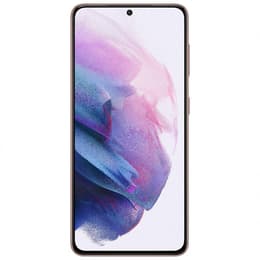


Galaxy S21 5G Vs Google Pixel 9

Galaxy S21 5G
Galaxy S21 5G
Starting at

Refurbished price:161.00

Versus €1,026.00 new

See options
Google Pixel 9
Google Pixel 9
Starting at

Refurbished price:376.00

Versus €1,066.71 new

See options

Ratings

The Samsung Galaxy S21 5G, released in January 2021, and the Google Pixel 9, launched in August 2024, represent different generations of Android smartphones. While both offer a premium mobile experience, the Pixel 9 benefits from more recent advancements in processing power, camera technology, and extended software support. Both devices operate on the Android platform, providing users with a wide ecosystem of applications and customization options.

Scores

Durability

The longevity of a smartphone is influenced by its release timeline, software support, and repairability.

  • Software Support: The Google Pixel 9 offers a significant advantage with a commitment to seven years of OS and security updates, extending its functional lifespan until at least August 2031. In contrast, the Samsung Galaxy S21 5G, released earlier, typically received around four years of major Android OS updates and five years of security updates, meaning its official software support has largely concluded or is nearing its end.
  • Repairability: The Galaxy S21 5G generally received a favorable repairability score of 7.5 out of 10 from some assessments, noting its ease of disassembly, though the battery can be challenging to remove due to strong adhesive. The Pixel 9, with its dual-entry design, aims to simplify common repairs, but its battery also uses strong adhesive, making removal less straightforward. It has received repairability scores ranging from 5/10 to 8.7/10.
  • Practical Lifespan: Users prioritizing long-term software updates and security patches will find the Pixel 9 better suited for extended use. The Galaxy S21 5G remains a capable device, but its software update cycle is winding down, which could impact its security and compatibility with future applications over time.

Year of Release

2021

2024

Compatible with latest Update

Yes

Yes

OS

Android

Android

Foldable

No

No

Performance

Performance in daily use is a key factor, encompassing how smoothly applications run, multitasking capabilities, and overall system responsiveness.

  • Processing Power: The Google Pixel 9 is equipped with a more recent processor, which translates to faster app loading times, smoother transitions between applications, and more efficient handling of demanding tasks like advanced mobile gaming or intensive photo and video editing. The Galaxy S21 5G, while still capable for everyday use, features an older generation processor that may show its age with the most resource-intensive applications.
  • Multitasking and Responsiveness: The Pixel 9 typically comes with 12GB of RAM, providing ample capacity for seamless multitasking and keeping numerous applications open in the background without performance degradation. The Galaxy S21 5G generally includes 8GB of RAM, which is sufficient for most users but may offer less headroom for heavy multitasking compared to the Pixel 9.
  • Battery Behavior: The Pixel 9 features a larger 4700 mAh battery, and user reports indicate significantly improved battery life, often lasting through a full day of heavy use and sometimes up to two days with moderate usage. The Galaxy S21 5G has a 4000 mAh battery, which generally provides a full day of use for many, but heavy users might find themselves needing to recharge before the day ends.

Memory (GB)

8 GB

12 GB

Screen quality

The display is the primary interface for interaction, and differences in technology and specifications can significantly impact the viewing experience.

  • Display Technology and Clarity: Both devices feature vibrant OLED displays, offering deep blacks and excellent contrast. The Galaxy S21 5G has a 6.2-inch Dynamic AMOLED 2X display with a resolution of 1080 x 2400 pixels. The Pixel 9 features a 6.3-inch Actua OLED display with a resolution of 1080 x 2424 pixels, providing comparable clarity.
  • Brightness and Smoothness: The Pixel 9's display offers higher peak brightness, reaching up to 2700 nits, which enhances visibility in bright outdoor conditions. The Galaxy S21 5G has a peak brightness of 1300 nits. Both phones support a 120Hz refresh rate, contributing to smoother scrolling and more fluid animations.
  • Viewing Experience: The slightly larger screen of the Pixel 9 provides a marginally more expansive viewing area. Both displays deliver rich colors and sharp details, suitable for media consumption, browsing, and daily tasks.

Resolution

1080 x 2400

1080 x 2424

Screen type

Dynamic AMOLED 2X

OLED

Audiovisual

Camera capabilities are a major consideration for many users, with both hardware and software playing crucial roles in image and video quality.

  • Rear Camera Systems: The Galaxy S21 5G features a versatile triple-camera setup, including a 12MP wide, 12MP ultrawide, and a 64MP telephoto lens capable of 3x hybrid optical zoom. This dedicated telephoto lens allows for optical magnification. The Google Pixel 9 employs a dual-camera system with a 50MP wide lens and a 48MP ultrawide lens with macro focus. It relies on digital zoom for telephoto capabilities, which may result in less detail at higher magnifications compared to optical zoom.
  • Photography Performance: The Pixel 9 is renowned for its computational photography, delivering consistent and detailed images across various lighting conditions, particularly excelling in low-light scenarios due to its larger sensors and advanced processing. The Galaxy S21 5G also produces high-quality photos with natural results and offers features like Director's View for video recording.
  • Video Recording and Front Camera: Both devices support 4K video recording at 60fps, with the Galaxy S21 5G also offering 8K at 24fps. The Pixel 9 has a 10.5MP front camera with autofocus, while the Galaxy S21 5G has a 10MP front camera.

Main camera

12 megapixels

50 megapixels

Front camera

10 megapixels

10.5 megapixels

Miscellaneous

Beyond core features, several practical elements contribute to the overall user experience and device utility.

  • Connectivity and Ports: Both smartphones support 5G connectivity for fast mobile data. The Pixel 9 includes Wi-Fi 7 and Bluetooth 5.3, offering more current wireless standards compared to the Galaxy S21 5G's Wi-Fi 6 and Bluetooth 5.0. Both utilize a USB-C port for charging and data transfer.
  • Biometric Security: The Pixel 9 features an upgraded ultrasonic fingerprint sensor for faster and more accurate unlocking, alongside face recognition. The Galaxy S21 5G also includes an ultrasonic under-display fingerprint scanner and face recognition.
  • Build Materials and Handling: The Galaxy S21 5G features a glass front and a plastic back, with an aluminum frame, offering a balance of durability and a lighter feel. The Pixel 9 uses Gorilla Glass Victus 2 for both its front and back, paired with an aluminum frame, contributing to a more premium feel and enhanced durability. Both devices carry an IP68 rating for dust and water resistance.

Weight

171 g

198 g

Screen size (in)

6.2

6.3

Network

5G

5G

SIM card

Physical SIM + eSIM

Physical SIM + eSIM

Carrier compatibility

Unlocked

Unlocked

Connector

USB-C

USB-C

The Samsung Galaxy S21 5G and Google Pixel 9 cater to different user priorities, largely due to their respective release dates and design philosophies.

Users often praise the Pixel 9 for its exceptional camera performance, particularly its computational photography capabilities and consistent image quality across various conditions. Its significantly improved battery life and the promise of seven years of software updates are also frequently highlighted as major advantages, ensuring long-term usability and security. Some criticisms for the Pixel 9 include the absence of a dedicated telephoto lens in the base model and its raw performance not always matching the absolute top-tier rivals in benchmarks, though this is often not noticeable in daily use.

The Galaxy S21 5G, despite being an older model, is still appreciated for its vibrant display, capable triple-camera system with optical zoom, and overall smooth performance for general tasks. Common user feedback points to its solid build quality and a balanced form factor. However, its battery life can be a concern for heavy users, and its software support cycle is nearing its conclusion, which is a key consideration for future-proofing.

Users prioritizing the latest software, extended support, and advanced computational photography, especially for everyday shots and low-light conditions, may find the Google Pixel 9 to be a more suitable choice. Those who value a dedicated optical telephoto lens and a slightly more established ecosystem at a potentially lower entry point might still consider the Galaxy S21 5G. For individuals seeking an eco-friendly and quality-assured alternative, exploring refurbished options for either device can provide a sustainable choice that aligns with their needs.


See all articles

Our recent comparisons






