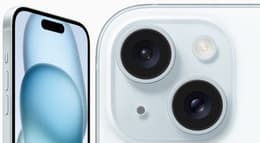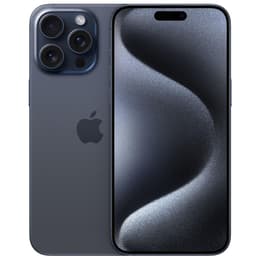
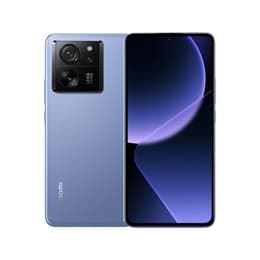


iPhone 15 Pro Max Vs Xiaomi 13T

iPhone 15 Pro Max
iPhone 15 Pro Max
Starting at

Refurbished price:601.25

Versus €1,489.00 new

See options
Xiaomi 13T
Xiaomi 13T
Starting at

Refurbished price:183.00

Versus €630.00 new

See options

Ratings

The iPhone 15 Pro Max, released in September 2023, and the Xiaomi 13T, launched in September 2023, are contemporary smartphones offering distinct user experiences. While the iPhone 15 Pro Max operates on Apple's iOS, the Xiaomi 13T runs on Android with Xiaomi's MIUI overlay. Key differentiators lie in their camera systems, display technologies, and overall ecosystem integration.

Scores

Durability

When considering the long-term usability of these devices, several factors contribute to their expected lifespan, including software support and physical durability.

  • Software Longevity: The iPhone 15 Pro Max, running iOS, typically receives major operating system updates for approximately five to six years from its release, ensuring access to new features and security patches for an extended period. The Xiaomi 13T, launching with Android 13 and MIUI 14, has a commitment to four major Android OS upgrades and five years of security patches, aligning it with industry leaders for Android device support.
  • Repairability: The iPhone 15 Pro Max initially received a repairability score of 4 out of 10 from iFixit, which was later updated to 7 out of 10 due to software changes allowing for part calibration. This indicates some improvements in the ease of repair, though independent repairs can still face challenges. Specific repairability scores for the Xiaomi 13T are not as widely published, but Android devices generally vary.
  • Physical Durability: The iPhone 15 Pro Max features a titanium frame and Ceramic Shield front cover, contributing to its robust build. The Xiaomi 13T includes Corning Gorilla Glass 5 for screen protection and boasts an IP68 rating for water and dust resistance, offering good protection against environmental elements.

Year of Release

2023

2023

Compatible with latest Update

Yes

Yes

OS

iOS

Android

Foldable

No

No

Performance

Both devices are designed to handle modern smartphone tasks efficiently, though they approach performance with different underlying architectures.

  • Processing Power: The iPhone 15 Pro Max is equipped with a current-generation processor that delivers very fast performance, enabling smooth operation for demanding applications, intensive gaming, and seamless multitasking. The Xiaomi 13T features a powerful processor that capably handles various tasks, from casual web browsing to more intensive gaming, without noticeable lag.
  • Battery Behavior: The iPhone 15 Pro Max generally offers excellent battery life, often lasting over a full day of heavy use, with some tests showing over 14 hours of continuous web surfing. The Xiaomi 13T, with its larger battery capacity, provides a full day of mixed usage, though heavy users might find themselves needing to recharge by the evening.
  • Storage and Responsiveness: The iPhone 15 Pro Max offers storage options up to 1TB, providing ample space for extensive media and applications. The Xiaomi 13T typically comes with 256GB of storage, paired with sufficient RAM to ensure responsive multitasking.

Memory (GB)

8 GB

8 GB

Screen quality

The visual experience on both smartphones is a highlight, with each offering vibrant and clear displays tailored for media consumption and daily interaction.

  • Display Technology and Clarity: The iPhone 15 Pro Max features a 6.7-inch Super Retina XDR OLED display, known for its deep blacks, vibrant colors, and high contrast. The Xiaomi 13T also utilizes a 6.67-inch AMOLED display, providing excellent color reproduction and clarity.
  • Brightness and Refresh Rate: The iPhone 15 Pro Max offers a typical brightness of 1000 nits and a peak outdoor brightness of 2000 nits, along with a ProMotion adaptive refresh rate up to 120Hz for smooth scrolling and responsiveness. The Xiaomi 13T boasts a high refresh rate of 144Hz and an impressive peak brightness of 2600 nits, ensuring visibility even in bright outdoor conditions.
  • Viewing Experience: Both displays offer high pixel densities, resulting in sharp text and detailed images. The iPhone's display has a resolution of 2796x1290 pixels, while the Xiaomi 13T features a 2712x1220 pixel resolution, both providing a crisp viewing experience.

Resolution

1290 x 2796

1220 x 2712

Screen type

LTPO Super Retina XDR OLED

AMOLED

Audiovisual

Both devices offer advanced camera systems, each with unique strengths in capturing photos and videos across various scenarios.

  • Rear Camera Systems: The iPhone 15 Pro Max features a versatile triple camera setup, including a 48MP main sensor with optical image stabilization (OIS), a 12MP ultra-wide lens, and a 12MP 5x telephoto lens with a tetraprism design and OIS for extended optical zoom. The Xiaomi 13T also comes with a triple camera system co-engineered with Leica, comprising a 50MP main sensor with OIS, a 12MP ultra-wide lens, and a 50MP telephoto lens offering 2x optical zoom.
  • Photography Performance: The iPhone 15 Pro Max excels in overall photo quality, particularly in low-light conditions, and offers an improved portrait mode with automatic depth capture. Its default output is 24MP, providing more detail. The Xiaomi 13T delivers good low-light performance with its dedicated Night mode and produces excellent portrait shots with natural bokeh.
  • Video and Front Camera: The iPhone 15 Pro Max supports video recording up to 4K at 60 frames per second and includes a 12MP TrueDepth front camera. The Xiaomi 13T records video up to 4K at 30 frames per second and features a 20MP front camera, capable of capturing detailed selfies.

Main camera

48 megapixels

50 megapixels

Front camera

12 megapixels

20 megapixels

Miscellaneous

Beyond core performance, several practical features and design elements differentiate these two smartphones.

  • Connectivity and Ports: The iPhone 15 Pro Max supports 5G connectivity and features a USB-C port, marking a shift from Apple's proprietary Lightning connector. The Xiaomi 13T also offers 5G connectivity and supports Wi-Fi 7 and Bluetooth 5.4, providing advanced wireless capabilities.
  • Biometric Security: The iPhone 15 Pro Max relies on Face ID for secure facial recognition. The Xiaomi 13T incorporates an in-display fingerprint sensor for biometric authentication.
  • Design and Handling: The iPhone 15 Pro Max features a lightweight titanium frame, contributing to its premium feel and reduced weight (221g). It also introduces a customizable Action Button. The Xiaomi 13T has an IP68 rating for water and dust resistance and a glass back, with some users noting it can attract fingerprints. Its dimensions are 162.2 x 75.7 x 8.49mm and it weighs 197g.

Weight

221 g

193 g

Screen size (in)

6.7

6.67

Network

5G

5G

SIM card

Physical SIM + eSIM

Dual Physical SIM

Carrier compatibility

Unlocked

Unlocked

Connector

USB-C (USB 3)

USB-C

The iPhone 15 Pro Max and Xiaomi 13T both stand as capable smartphones, each catering to different user preferences and priorities. User feedback for the iPhone 15 Pro Max frequently praises its exceptional camera capabilities, robust performance for demanding tasks, and extended battery life, often lasting well over a day. Some initial concerns about overheating were largely addressed through software updates. The Xiaomi 13T is often lauded for its bright and smooth AMOLED display with a high refresh rate, its capable camera system co-engineered with Leica, and Xiaomi's commitment to long-term software support. However, some users have noted that its battery life, while generally sufficient for a full day, might be considered average for heavy usage compared to some competitors.

Users who prioritize a highly integrated ecosystem, top-tier video recording features, and a powerful telephoto zoom lens may find the iPhone 15 Pro Max well-suited to their needs. Conversely, individuals seeking a device with a very high refresh rate display, a strong camera system with Leica tuning, and a competitive software update policy within the Android ecosystem might lean towards the Xiaomi 13T. Both devices represent strong options in their respective categories, and choosing between them often comes down to personal preference for operating system, specific camera features, and overall design. For those looking for an eco-friendly alternative, considering a quality-assured refurbished option for either model can be a practical choice.


See all articles

Our recent comparisons