

Google Pixel 8a Vs iPhone 16 Pro

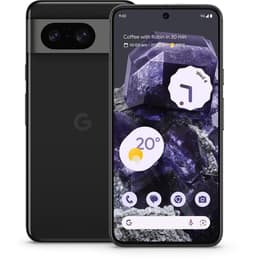
Google Pixel 8a
Google Pixel 8a
Starting at

Refurbished price:229.00

Versus €489.75 new

See options
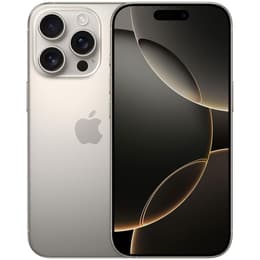
iPhone 16 Pro
iPhone 16 Pro
Starting at

Refurbished price:669.00

Versus €1,239.00 new

See options

Ratings

The Google Pixel 8a, released in May 2024, and the iPhone 16 Pro, launched in September 2024, represent distinct approaches to modern smartphones. While the Pixel 8a offers a user-friendly Android experience with a strong focus on AI-driven features and photography, the iPhone 16 Pro delivers Apple's premium iOS ecosystem with advanced camera capabilities and robust performance. Both devices aim to provide a seamless mobile experience, but they cater to different user preferences through their operating systems and hardware priorities.

Scores

Durability

When considering the long-term usability of these devices, both the Pixel 8a and the iPhone 16 Pro offer substantial software support and varying degrees of physical durability.

  • Software Support: The Google Pixel 8a stands out with an impressive commitment to seven years of OS updates, security patches, and Pixel Feature Drops, extending its software longevity until at least 2031. The iPhone 16 Pro, running on iOS, typically receives 5 to 7 years of major iOS updates and security support, with its support also expected to last until at least 2031.
  • Durability Features: The iPhone 16 Pro features a durable titanium design and Ceramic Shield front cover, along with an IP68 rating for dust and water resistance, allowing submersion up to 6 meters for 30 minutes. The Pixel 8a includes Gorilla Glass 3 for screen protection and carries an IP67 rating, indicating resistance to dust and water immersion up to 1 meter for 30 minutes.
  • Repairability: The iPhone 16 Pro has seen significant improvements in repairability, achieving a score of 7 out of 10 from iFixit, thanks to a dual-entry design for easier access to internal components and an encased battery for safer repairs. The Pixel 8a, however, has a lower repairability score, around 4.5 out of 10, due to the use of strong adhesives and a soldered charging port, making some repairs more challenging.

Year of Release

2024

2024

Compatible with latest Update

Yes

Yes

Foldable

No

No

Performance

The performance of a smartphone is crucial for daily tasks, app responsiveness, and demanding applications, with both devices offering capable hardware.

  • Processing Power: The iPhone 16 Pro is equipped with a current-generation processor that handles demanding applications, complex multitasking, and graphics-intensive gaming with smooth responsiveness. The Pixel 8a features a processor designed to efficiently manage everyday tasks, AI-driven features, and moderate gaming, providing a fluid user experience.
  • Battery Performance: The iPhone 16 Pro offers good battery endurance, with users often reporting it lasts a full day and sometimes into the next afternoon with typical usage. The Pixel 8a's battery capacity generally provides a full day of moderate use, though heavy users might find themselves needing to recharge by the evening. For charging, the iPhone 16 Pro supports faster wired charging and 20W MagSafe wireless charging, while the Pixel 8a supports 18W wired charging and 7.5W Qi wireless charging.
  • Storage Options: The iPhone 16 Pro provides a wide range of storage configurations, from 128 GB up to 1 TB, catering to users with extensive storage needs for media and applications. The Pixel 8a offers 128 GB or 256 GB of internal storage, which is non-expandable, suitable for most users but potentially limiting for those who store large amounts of data.

Memory (GB)

8 GB

8 GB

Screen quality

The visual experience is a key differentiator, and both devices offer vibrant displays with distinct characteristics.

  • Display Technology: Both the iPhone 16 Pro and the Pixel 8a feature OLED displays, which are known for producing deep blacks and high contrast. The iPhone 16 Pro utilizes a Super Retina XDR OLED display, offering enhanced color accuracy and brightness.
  • Visual Clarity: The iPhone 16 Pro boasts a 6.3-inch display with a resolution of 2622 x 1206 pixels, resulting in a pixel density of 460 pixels per inch (PPI), providing sharp and detailed visuals. The Pixel 8a has a 6.1-inch display with a 1080x2400 pixel resolution, offering clear and crisp images for everyday viewing.
  • Brightness & Smoothness: The iPhone 16 Pro features a dynamic refresh rate of up to 120Hz, contributing to smoother scrolling and more fluid animations, along with a peak brightness of 2000 nits for excellent outdoor visibility. The Pixel 8a also offers a 120Hz refresh rate for a smooth visual experience and a peak brightness of 2000 nits, ensuring good visibility in various lighting conditions. The iPhone 16 Pro also features notably thinner display bezels.

Resolution

1080 x 2400

1206 x 2622

Screen type

OLED

LTPO Super Retina XDR OLED

Audiovisual

Photography and videography capabilities are central to modern smartphones, and both devices offer advanced camera systems with different strengths.

  • Photography Capabilities: The iPhone 16 Pro features a versatile triple-camera system, including a 48 MP wide, a 48 MP ultrawide, and a 12 MP telephoto lens with 5x optical zoom, excelling in detail, low-light performance, and color accuracy. The Pixel 8a comes with a dual-camera setup, featuring a 64 MP wide lens with optical image stabilization and a 13 MP ultrawide lens, known for its reliable point-and-shoot performance and Google's advanced computational photography.
  • Video Recording: The iPhone 16 Pro supports 4K video recording at up to 120 frames per second and Dolby Vision, offering high-quality video capture with advanced features. The Pixel 8a records 4K video at 30 or 60 frames per second, providing good quality for everyday video needs, especially in well-lit environments.
  • Audio Experience: Both devices offer stereo speakers for an immersive audio experience. The iPhone 16 Pro includes Dolby Atmos-tuned Spatial Audio. The Pixel 8a provides balanced audio output, suitable for media consumption. Both devices also feature capable microphones for clear calls and recordings.

Main camera

64 megapixels

48 megapixels

Front camera

13 megapixels

12 megapixels

Miscellaneous

Beyond core features, several practical elements contribute to the overall user experience and device utility.

  • Connectivity Options: The iPhone 16 Pro supports the latest Wi-Fi 7 standard, Bluetooth 5.3, and 5G connectivity, ensuring fast and reliable wireless connections. The Pixel 8a also offers 5G connectivity and modern Wi-Fi and Bluetooth standards, providing robust wireless performance for daily use.
  • Port Types: The iPhone 16 Pro utilizes a USB-C port, supporting data transfer speeds of up to 10Gbps. The Pixel 8a also features a USB-C port for charging and data transfer.
  • Biometrics & Design: The iPhone 16 Pro incorporates Face ID for secure facial recognition and authentication, within a design that is 149.6 x 71.5 x 8.25 mm and weighs 199g. The Pixel 8a includes an in-display fingerprint sensor for biometric security, with dimensions of 152.1 x 72.7 x 8.9mm and a weight of 188g. The iPhone 16 Pro features a durable titanium frame, while the Pixel 8a uses a more rounded design with a plastic back and Gorilla Glass 3 front.

Weight

188 g

199 g

Screen size (in)

6.1

6.3

Network

5G

5G

SIM card

Physical SIM + eSIM

eSIM

Carrier compatibility

Unlocked

Unlocked

User feedback for the Google Pixel 8a often praises its exceptional camera performance, particularly its ability to produce consistently good photos with minimal effort, and its long-term software support. Some users, however, have noted that its battery life, while generally sufficient for a day, can be subpar for heavy usage, and its performance, while smooth, may not match the raw power of higher-end devices. The iPhone 16 Pro receives acclaim for its powerful performance, vibrant display with thin bezels, and significant camera upgrades, including enhanced low-light capabilities and advanced video features. Its improved repairability has also been a positive point for many. Criticisms are less common but sometimes point to the battery life not matching the Pro Max variant, and some camera features, like the ultrawide, not always translating to a profoundly different user experience despite spec bumps.

Users prioritizing an extensive software update commitment, a strong point-and-shoot camera with AI editing features, and a more compact Android experience may find the Google Pixel 8a well-suited to their needs. Conversely, individuals who value top-tier processing power, a highly capable and versatile camera system for both photos and videos, a premium build, and the iOS ecosystem will likely lean towards the iPhone 16 Pro. Both devices offer compelling features, and considering a quality-assured refurbished option for either model can provide an eco-friendly alternative for making an informed purchasing decision.


See all articles

Our recent comparisons