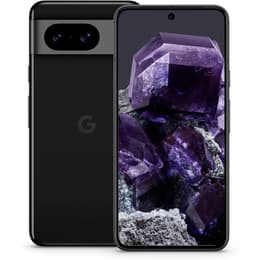
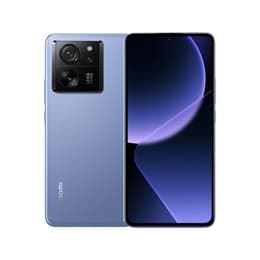


Google Pixel 8 Vs Xiaomi 13T

Google Pixel 8
Google Pixel 8
Starting at

Refurbished price:241.00

Versus €808.26 new

See options
Xiaomi 13T
Xiaomi 13T
Starting at

Refurbished price:183.00

Versus €630.00 new

See options

Ratings

The Google Pixel 8 (released October 2023) and the Xiaomi 13T (released September 2023) are contemporary Android smartphones that offer distinct approaches to mobile technology. While both devices operate on the Android platform, the Pixel 8 emphasizes advanced computational photography and a streamlined user experience, whereas the Xiaomi 13T focuses on a high-refresh-rate display and versatile camera hardware developed in collaboration with Leica.

Scores

Durability

When considering the long-term usability of these devices, their release timelines and software support policies are key factors.

  • Release Timeline: The Xiaomi 13T launched in September 2023, closely followed by the Google Pixel 8 in October 2023. This means both devices are relatively new, offering a similar starting point for their operational lifespan.
  • Software Longevity: The Google Pixel 8 stands out with a commitment to seven years of operating system updates and security patches, providing an extended period of software support. In contrast, the Xiaomi 13T is promised four generations of Android OS upgrades and five years of security patches, which is a notable improvement for Xiaomi devices.
  • Durability Features: Both smartphones feature an IP68 rating for dust and water resistance, indicating a similar level of protection against environmental elements. The Pixel 8 uses Corning Gorilla Glass Victus for screen protection, while the Xiaomi 13T utilizes Corning Gorilla Glass 5. The Pixel 8 has received repairability scores around 6-7 out of 10, suggesting moderate ease of repair for certain components.

Year of Release

2023

2023

Compatible with latest Update

Yes

Yes

OS

Android

Android

Foldable

No

No

Performance

The performance of a smartphone is crucial for daily tasks, from app navigation to demanding applications and gaming.

  • System Responsiveness: The Google Pixel 8 is powered by a current-generation processor designed to handle demanding applications and multitasking smoothly, with a focus on integrating advanced artificial intelligence features for an optimized user experience. The Xiaomi 13T also features a capable processor, enabling efficient performance for everyday use and gaming.
  • Multitasking and Storage: The Pixel 8 typically comes with 8GB of RAM, while the Xiaomi 13T offers configurations with either 8GB or 12GB of RAM, potentially providing more headroom for extensive multitasking on the higher-end Xiaomi model. For internal storage, the Pixel 8 is available in 128GB and 256GB options, and the Xiaomi 13T comes with 256GB of storage. Neither device supports expandable storage.
  • Battery Behavior: The Google Pixel 8 is equipped with a 4575 mAh battery, generally providing about 6 hours of screen-on time with typical usage and lasting approximately 1.5 days on a full charge for many users. The Xiaomi 13T features a larger 5000 mAh battery and supports 67W fast wired charging, capable of reaching a full charge in about 42 minutes.

Memory (GB)

8 GB

8 GB

Screen quality

The display is a primary interface for smartphone interaction, and both devices offer high-quality viewing experiences with some key differences.

  • Display Technology and Clarity: Both the Google Pixel 8 and Xiaomi 13T feature OLED displays, known for deep blacks and vibrant colors. The Pixel 8 has a 6.2-inch FHD+ (2400x1080) display with 428 pixels per inch (ppi). The Xiaomi 13T offers a larger 6.67-inch AMOLED display with a higher QHD+ (2712x1220) resolution and 446 ppi, providing a slightly sharper image.
  • Brightness and Refresh Rate: The Pixel 8's display supports a variable refresh rate of 60-120Hz and can reach a peak brightness of up to 2000 nits for outdoor visibility. The Xiaomi 13T boasts an even higher refresh rate of up to 144Hz for smoother scrolling and animations, and it can achieve an impressive peak brightness of 2600 nits, making it exceptionally bright in various lighting conditions.
  • Viewing Experience: The Pixel 8's slightly smaller screen size contributes to a more compact form factor, which some users may find easier for one-handed use. The Xiaomi 13T's larger display provides a more expansive canvas for media consumption and productivity.

Resolution

1080 x 2400

1220 x 2712

Screen type

OLED

AMOLED

Audiovisual

Both smartphones offer advanced camera systems, each with its own strengths in photography and videography.

  • Main Camera Capabilities: The Google Pixel 8 features a 50MP main camera with a wide f/1.68 aperture and optical image stabilization (OIS), known for its computational photography prowess that enhances detail and color accuracy. The Xiaomi 13T also includes a 50MP main camera with OIS and an f/1.9 aperture, benefiting from Leica's imaging expertise for distinct photographic styles.
  • Versatility in Lenses: The Pixel 8 is equipped with a 12MP ultrawide camera with a 126-degree field of view. The Xiaomi 13T offers a more comprehensive setup, including a 12MP ultrawide lens and a 50MP telephoto lens with 2x optical zoom, providing greater flexibility for different photographic scenarios.
  • Video and Front Camera: For video recording, the Pixel 8 supports up to 4K resolution at 60 frames per second (fps), with potential for 8K at 30fps. The Xiaomi 13T records video at up to 4K at 30fps. Both devices feature capable front-facing cameras: the Pixel 8 has a 10.5MP sensor, and the Xiaomi 13T has a 20MP sensor.

Main camera

50 megapixels

50 megapixels

Front camera

10.5 megapixels

20 megapixels

Miscellaneous

Beyond core performance and display, several practical features contribute to the overall user experience.

  • Connectivity and Ports: Both the Google Pixel 8 and Xiaomi 13T support 5G connectivity for fast mobile data and feature modern Wi-Fi standards (Wi-Fi 6E for Pixel 8, Wi-Fi 6 for Xiaomi 13T) and Bluetooth 5.3. Both devices utilize a USB-C port for charging and data transfer, and neither includes a traditional 3.5mm headphone jack.
  • Biometric Security: For secure unlocking, both smartphones incorporate in-display fingerprint scanners. The Pixel 8 also offers secure face recognition capabilities.
  • Design and Handling: The Pixel 8 has dimensions of 150.5 x 70.8 x 8.9 mm and weighs 187g, presenting a more compact and lighter profile. The Xiaomi 13T is slightly larger and heavier, measuring 162.2 x 75.7 x 8.49mm (glass) or 8.62mm (PU) and weighing 193g or 197g. The Pixel 8 features an aluminum frame, while the Xiaomi 13T may use a plastic frame, which some users have noted.

Weight

187 g

193 g

Screen size (in)

6.2

6.67

Network

5G

5G

SIM card

Physical SIM + eSIM

Dual Physical SIM

Carrier compatibility

Unlocked

Unlocked

Connector

USB-C

USB-C

User feedback often highlights the Google Pixel 8's exceptional camera performance, particularly its computational photography features and consistent image quality across various conditions. Users also appreciate its long-term software support and the clean, intuitive Android experience. Some common criticisms include its battery life, which, while adequate for many, may require a midday top-up for heavy users, and the absence of a telephoto lens on the base model.

The Xiaomi 13T is frequently praised for its vibrant, high-refresh-rate display and its versatile camera system, which benefits from Leica's color science and includes a dedicated telephoto lens. Its fast charging capabilities are also a significant advantage for users who need quick power-ups. Some users have noted that the software experience, while improved, can sometimes feel less refined than a stock Android interface, and the use of a plastic frame on some variants has been mentioned.

Users prioritizing a compact device with industry-leading software support and advanced computational photography will find the Google Pixel 8 well-suited to their needs. Those who value a larger, exceptionally bright, and high-refresh-rate display, along with a more comprehensive camera hardware setup including a telephoto lens and very fast charging, may lean toward the Xiaomi 13T. Both devices offer compelling features for different user preferences, and considering a quality-assured refurbished option for either model can be an eco-friendly alternative.


See all articles

Our recent comparisons






