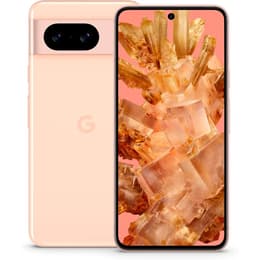


Galaxy S23 Vs Google Pixel 8

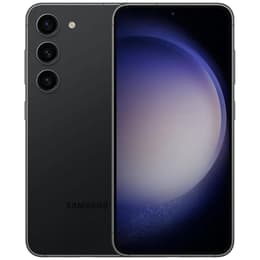
Galaxy S23
Galaxy S23
Starting at

Refurbished price:249.00

Versus €959.00 new

See options
Google Pixel 8
Google Pixel 8
Starting at

Refurbished price:235.00

Versus €999.00 new

See options

Ratings

The Samsung Galaxy S23 and the Google Pixel 8 are both prominent Android smartphones, released in 2023. The Galaxy S23 launched in February, while the Pixel 8 followed in October of the same year. Both devices operate on the Android platform, offering distinct interpretations of the user experience. A key difference lies in their camera philosophies and the duration of software support provided by their respective manufacturers.

Scores

Durability

When considering the long-term usability of a smartphone, factors like software support and repairability are important. The Galaxy S23 and Pixel 8, while both recent releases, offer different commitments in these areas.

  • Software Longevity: The Google Pixel 8 stands out with an extended commitment to software updates, promising seven years of operating system and security updates from its October 2023 release. In contrast, the Samsung Galaxy S23, released in February 2023, typically receives four years of OS updates and five years of security updates. This difference means the Pixel 8 will receive support for a significantly longer period.
  • Repairability: The Google Pixel 8 generally receives moderate repairability scores, with some assessments placing it around 7 out of 10 or 6 out of 10. Google also provides service manuals and replacement parts, which can facilitate repairs. While specific repairability scores for the Galaxy S23 are less commonly highlighted, Samsung Galaxy devices generally rank lower than Pixel phones in terms of ease of repair.
  • Practical Lifespan: Due to its longer software support, the Pixel 8 offers a potentially longer practical lifespan for users who prioritize having the latest Android features and security patches. Both devices feature robust build quality with IP68 water and dust resistance, and Gorilla Glass protection, contributing to their physical durability. The Galaxy S23 uses Gorilla Glass Victus 2, while the Pixel 8 uses Gorilla Glass Victus.

Year of Release

2023

2023

Compatible with latest Update

Yes

Yes

OS

Android

Android

Foldable

No

No

Performance

The performance of a smartphone is crucial for daily tasks, from app usage to demanding games. Both the Galaxy S23 and Pixel 8 deliver capable experiences, though they achieve this through different hardware and software optimizations.

  • Processing Power: The Samsung Galaxy S23 is equipped with a current-generation processor optimized for its ecosystem, providing robust performance for demanding applications and smooth multitasking. Users often report outstanding performance and smooth gaming experiences with this device. The Google Pixel 8 features a current-generation processor designed with a strong emphasis on artificial intelligence and machine learning tasks, which enhances various software features and overall efficiency.
  • Battery Endurance and Charging: The Pixel 8 houses a larger 4575 mAh battery, compared to the Galaxy S23's 3900 mAh capacity. In typical usage, the Pixel 8 generally offers a full day of power, with some reports indicating up to 24 hours of general use. The Galaxy S23 provides up to 22 hours of video playback on a single charge. For charging, the Pixel 8 supports 27W wired charging and 18W wireless charging with a compatible Pixel Stand, or 12W with Qi-certified chargers. The Galaxy S23 supports 25W wired charging and 15W wireless charging.
  • Storage and Responsiveness: Both devices come with 8GB of RAM, ensuring smooth multitasking and app switching. The Galaxy S23 offers storage options up to 512GB, while the Pixel 8 is available with up to 256GB of internal storage. Both phones exhibit high system responsiveness, handling everyday tasks and more intensive applications without significant delays.

Memory (GB)

8 GB

8 GB

Screen quality

The display is a primary interface for any smartphone, and both the Galaxy S23 and Pixel 8 offer high-quality viewing experiences with distinct characteristics.

  • Display Technology and Clarity: The Samsung Galaxy S23 features a 6.1-inch Dynamic AMOLED 2X display, known for its deep blacks and vibrant colors. It offers a resolution of 1080 x 2340 pixels, resulting in a clear and sharp image with approximately 425 pixels per inch. The Google Pixel 8 comes with a slightly larger 6.2-inch Actua OLED display, which also delivers rich colors and excellent contrast. Its resolution is 1080 x 2400 pixels, providing a similar pixel density of around 428 pixels per inch.
  • Brightness and Outdoor Visibility: For outdoor use, the Pixel 8 has an advantage with a peak brightness of up to 2000 nits, making content highly visible even in bright sunlight. The Galaxy S23 also offers strong outdoor performance with a peak brightness of 1750 nits. Both displays support HDR content for an enhanced viewing experience.
  • Refresh Rate and Smoothness: Both smartphones feature adaptive refresh rates that can scale up to 120Hz. This higher refresh rate contributes to smoother scrolling, more fluid animations, and a more responsive feel during interactions and gaming.

Resolution

1080 x 2340

1080 x 2400

Screen type

Dynamic AMOLED 2X

OLED

Audiovisual

The camera systems on both the Galaxy S23 and Pixel 8 are central to their appeal, each offering a distinct approach to photography and videography.

  • Rear Camera Systems: The Samsung Galaxy S23 features a versatile triple-camera setup, including a 50MP main sensor, a 12MP ultrawide lens, and a 10MP telephoto lens capable of 3x optical zoom. This configuration provides flexibility for various shooting scenarios, from wide landscapes to zoomed-in subjects. The Google Pixel 8 employs a dual-camera system, comprising a 50MP main sensor and a 12MP ultrawide lens. It does not include a dedicated telephoto lens, relying on digital zoom and computational photography for distant shots.
  • Photography Performance: The Galaxy S23 is noted for producing vibrant colors and capable night shots. Its dedicated telephoto lens offers clear zoomed images. The Pixel 8 leverages its advanced computational photography to excel in various conditions, particularly in low-light environments, where its main sensor is designed to capture more light. Both devices offer strong everyday photography performance, with differences often coming down to personal preference for image processing.
  • Video Capabilities and Front Camera: The Galaxy S23 supports video recording up to 8K resolution at 30 frames per second, and 4K at 60 frames per second. The Pixel 8 also records 4K video at 60 frames per second, and its updated sensor supports 8K at 30 frames per second. For selfies and video calls, the Galaxy S23 has a 12MP front camera, while the Pixel 8 features a 10.5MP front camera.

Main camera

50 megapixels

50 megapixels

Front camera

12 megapixels

10.5 megapixels

Miscellaneous

Beyond the core specifications, several practical elements contribute to the overall user experience of these smartphones.

  • Connectivity and Ports: Both the Galaxy S23 and Pixel 8 offer modern connectivity options, including 5G for fast mobile data, and Bluetooth 5.3 for efficient wireless accessory connections. The Pixel 8 supports the newer Wi-Fi 7 standard, offering potential benefits in compatible network environments, while the Galaxy S23 supports Wi-Fi 6E. Both devices utilize a USB-C 3.2 port for charging and data transfer, and neither includes a traditional 3.5mm headphone jack.
  • Biometric Security and Sensors: Both smartphones incorporate advanced biometric security. The Galaxy S23 uses an ultrasonic in-display fingerprint sensor, while the Pixel 8 features an optical in-display fingerprint sensor. Both also support secure face recognition for unlocking and authentication. They include a standard array of sensors such as accelerometers, gyroscopes, and compasses for various functionalities.
  • Design, Dimensions, and Materials: The Galaxy S23 is a more compact and lighter device, measuring 146.3 x 70.9 x 7.6 mm and weighing 168g. It features a durable Armor Aluminum frame and Gorilla Glass Victus 2 on both the front and back. The Pixel 8 is slightly larger and heavier at 150.5 x 70.8 x 8.9 mm and 187g, constructed with an aluminum frame and Gorilla Glass Victus for display protection. Both devices carry an IP68 rating for dust and water resistance.

Weight

167 g

187 g

Screen size (in)

6.1

6,2

Network

5G

5G

SIM card

Physical SIM + eSIM

Physical SIM + eSIM

Carrier compatibility

Unlocked

Unlocked

The Samsung Galaxy S23 and Google Pixel 8 both offer compelling smartphone experiences, each with distinct strengths that cater to different user priorities. User feedback often highlights the Galaxy S23's powerful and optimized processor, delivering consistent performance for a wide range of tasks, including intensive gaming. Its versatile camera system, particularly the inclusion of a dedicated telephoto lens, is frequently praised for offering a comprehensive photography toolkit. Some users note its compact design as a significant advantage for one-handed use.

The Google Pixel 8, on the other hand, receives considerable acclaim for its advanced computational photography, which consistently produces high-quality images, especially in challenging lighting conditions. Its long-term software support commitment is a significant draw for users who prioritize extended access to the latest Android features and security updates. The Pixel's emphasis on AI-driven features and a clean Android experience also resonates strongly with its user base. Some discussions point to the Pixel's battery life as generally reliable for a full day, though not always groundbreaking compared to some competitors.

Users prioritizing a compact device with a dedicated telephoto camera and a highly optimized, powerful processor for demanding applications may find the Galaxy S23 well-suited to their needs. Conversely, individuals who value an exceptional computational photography experience, a clean Android interface with extensive AI capabilities, and an industry-leading commitment to software updates will likely lean towards the Google Pixel 8. Both devices represent excellent choices, and considering a quality-assured refurbished option for either model can be a sustainable way to enjoy these advanced features.

See all articles

Our recent comparisons