
Google Pixel 8 Vs iPhone 15

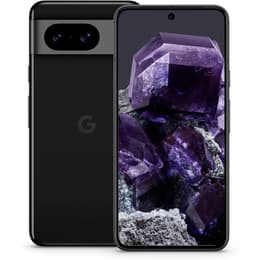
Google Pixel 8
Google Pixel 8
Starting at

Refurbished price:235.00

Versus €999.00 new

See options
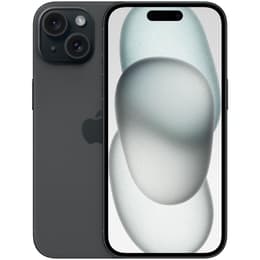
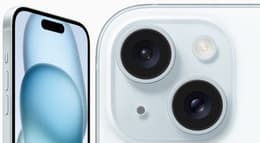
iPhone 15
iPhone 15
Starting at

Refurbished price:399.00

Versus €879.00 new

See options

Ratings

The Google Pixel 8, released in October 2023, and the iPhone 15, launched in September 2023, represent the latest iterations of their respective smartphone lines. While both devices offer premium experiences, they cater to different user preferences through their distinct operating systems and core features. The Pixel 8 emphasizes advanced computational photography and a long software support commitment, whereas the iPhone 15 focuses on a refined user experience, robust ecosystem integration, and a new universal charging port.

Scores

Durability

When considering the long-term usability of these devices, both the Google Pixel 8 and the iPhone 15 offer substantial software support and design considerations for durability.

  • Software Longevity: The Google Pixel 8 stands out with an industry-leading commitment to seven years of OS upgrades, security updates, and feature drops, extending its software support well into 2030. This provides a prolonged period of access to the latest Android features and security protections. The iPhone 15 typically receives iOS updates for approximately five to six years from its release, ensuring a robust software experience for a significant duration.
  • Physical Durability: Both devices feature strong glass on their front and back panels, with the iPhone 15 utilizing Ceramic Shield on the front for enhanced drop performance and a color-infused glass back. The Pixel 8 uses Gorilla Glass Victus. Both phones carry an IP68 rating for dust and water resistance, indicating protection against submersion.
  • Repairability: The Pixel 8 generally receives a repairability score around 7 out of 10, with some sources indicating scores of 5.5 or 6 out of 10, suggesting moderate ease of repair for certain components. The iPhone 15 initially received a repairability score of 4 out of 10, but this was later improved to 7 out of 10 due to changes in Apple's repair policies and software accessibility for parts calibration.

Year of Release

2023

2023

Compatible with latest Update

Yes

Yes

OS

Android

iOS

Foldable

No

No

Performance

Both smartphones deliver smooth performance for daily tasks, but their underlying architectures and battery optimizations lead to different real-world experiences.

  • Processing Power: The Google Pixel 8 handles demanding applications and multitasking efficiently, providing a responsive user experience. The iPhone 15 offers strong performance for gaming and intensive applications, ensuring smooth operation across the iOS ecosystem.
  • Battery Performance: The Pixel 8 typically provides 8-10 hours of screen-on time with mixed usage, and around 6-8 hours for heavy users, often lasting a full day for most individuals. The iPhone 15 is rated for up to 20 hours of video playback and 80 hours of audio playback, with real-world usage often extending through a full day and beyond for many users.
  • Storage and Memory: The Pixel 8 is available with 128GB or 256GB of internal storage and features 8GB of RAM, supporting efficient multitasking. The iPhone 15 offers storage options of 128GB, 256GB, and 512GB, and includes 6GB of RAM, which is optimized for iOS's memory management.

Memory (GB)

8 GB

6 GB

Screen quality

The display on both the Google Pixel 8 and the iPhone 15 offers vibrant visuals, though with some key differences in technology and refresh rates.

  • Display Technology and Clarity: Both devices feature OLED displays, providing deep blacks and high contrast. The Pixel 8 has a 6.2-inch OLED panel with a resolution of 2400x1080 pixels, resulting in a pixel density of approximately 428 pixels per inch. The iPhone 15 features a 6.1-inch Super Retina XDR OLED display with a resolution of 2556x1179 pixels, offering a slightly higher pixel density of around 460 pixels per inch.
  • Brightness and Outdoor Visibility: Both phones offer excellent brightness levels for clear viewing in various lighting conditions. The Pixel 8 can reach a peak brightness of up to 2000 nits, while the iPhone 15 also achieves a peak outdoor brightness of up to 2000 nits, ensuring good visibility even in direct sunlight.
  • Refresh Rate: A notable difference lies in the refresh rate. The Google Pixel 8 features a variable refresh rate that can dynamically adjust between 60Hz and 120Hz, providing smoother scrolling and more fluid animations. The iPhone 15 maintains a standard 60Hz refresh rate.

Resolution

1080 x 2400

1179 x 2556

Screen type

OLED

Super Retina XDR OLED

Audiovisual

Both the Google Pixel 8 and the iPhone 15 are equipped with advanced camera systems designed to capture high-quality photos and videos, each with its own strengths.

  • Rear Camera System: The Google Pixel 8 features a dual-camera setup, including a 50-megapixel main sensor with an f/1.7 aperture and a 12-megapixel ultrawide lens with a 126-degree field of view. The iPhone 15 also has a dual-camera system, featuring a 48-megapixel main sensor with an f/1.6 aperture that can produce 24-megapixel photos by default and offers a 2x telephoto option through sensor cropping, alongside a 12-megapixel ultrawide camera.
  • Photography Performance: The Pixel 8 leverages its computational photography capabilities for detailed images, particularly excelling in low-light conditions and offering advanced editing features. The iPhone 15 delivers sharp, vibrant photos with improved low-light performance and the ability to adjust portrait focus after a photo is taken. Both devices offer strong video recording capabilities, with the iPhone 15 supporting 4K Dolby Vision video recording.
  • Front Camera: Both phones include capable front-facing cameras for selfies and video calls. The iPhone 15 features a 12-megapixel TrueDepth camera.

Main camera

50 megapixels

48 megapixels

Front camera

10.5 megapixels

12 megapixels

Miscellaneous

Beyond their core features, both the Google Pixel 8 and the iPhone 15 offer distinct practical elements that influence daily use and user preference.

  • Connectivity and Ports: The Google Pixel 8 supports Wi-Fi 7, offering advanced wireless speeds, while the iPhone 15 supports Wi-Fi 6. A significant change for the iPhone 15 is the adoption of a USB-C port, aligning with the Pixel 8 and offering universal charging and data transfer capabilities. Both devices support 5G cellular connectivity.
  • Biometric Security: The Pixel 8 incorporates an under-display fingerprint sensor for secure unlocking and authentication. The iPhone 15 relies on Face ID, Apple's facial recognition system, for biometric security.
  • Design and Handling: The iPhone 15 is slightly more compact and lighter, measuring 147.6 x 71.6 x 7.8 mm and weighing 171 grams. The Pixel 8 measures 150.5 x 70.8 x 8.9 mm and weighs 187 grams. These differences can impact one-handed use and pocketability.

Weight

187 g

171 g

Screen size (in)

6,2

6.1

Network

5G

5G

SIM card

Physical SIM + eSIM

eSIM

Carrier compatibility

Unlocked

Unlocked

Connector

USB-C

USB-C (USB 2)

The Google Pixel 8 and iPhone 15 each present compelling options, appealing to different user priorities. User feedback often praises the Pixel 8 for its exceptional camera capabilities, particularly its computational photography features and the long-term software support commitment. Some users, however, have noted mixed experiences with battery life under heavy usage.

The iPhone 15 is frequently lauded for its consistent performance, seamless integration within the Apple ecosystem, and the introduction of the USB-C port. Its display is also a common point of praise, though some users express a desire for a higher refresh rate.

Users prioritizing an extended software update cycle and advanced AI-driven camera features may find the Google Pixel 8 well-suited to their needs. Conversely, individuals who value a highly refined user interface, strong ecosystem integration, and a slightly more compact design might lean towards the iPhone 15. Both devices offer a quality-assured refurbished option, providing a sustainable choice for consumers.

See all articles

Our recent comparisons