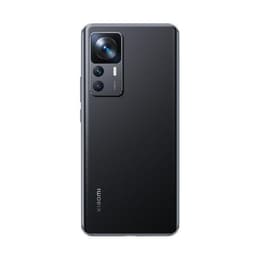
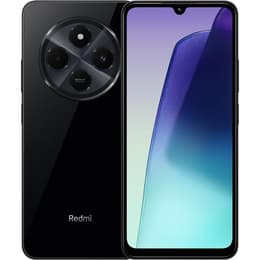


Xiaomi 12T Vs Xiaomi Redmi 14C

Xiaomi 12T
Xiaomi 12T
Starting at

Refurbished price:136.00

Versus €649.00 new

See options
Xiaomi Redmi 14C
Xiaomi Redmi 14C
Starting at

Refurbished price:128.20

Versus €189.00 new

See options

Ratings

The Xiaomi 12T, released in October 2022, and the Xiaomi Redmi 14C, launched in August 2024, are distinct smartphones from Xiaomi's lineup. While the 12T was positioned with a focus on advanced camera capabilities and rapid charging, the Redmi 14C emphasizes a large display and extended software support for its segment. Both devices operate on Android, but they cater to different user expectations regarding performance and display quality.

Scores

Durability

When considering the practical lifespan of these devices, their release timelines and software support policies are key factors.

  • Release Timeline: The Xiaomi 12T was introduced in October 2022, making it an older model compared to the Xiaomi Redmi 14C, which arrived in August 2024. This two-year difference means the Redmi 14C benefits from a more recent starting point for software updates.
  • OS Support Duration: The Xiaomi 12T launched with Android 12 and MIUI 13, with expectations for several major Android updates, potentially reaching Android 15 with HyperOS 2. The Redmi 14C, shipping with Android 14 and HyperOS, is promised two major Android updates and three to four years of security patches, offering a longer guaranteed support window from its release date.
  • Repairability: Both devices are designed with modern smartphone construction, and their repairability scores would typically align with their respective segments, with the newer Redmi 14C potentially benefiting from more readily available parts due to its recent release. Opting for a quality-assured refurbished option for either model can extend its useful life and contribute to a more sustainable choice.

Year of Release

2022

2024

Compatible with latest Update

Yes

Yes

OS

Android

Android

Foldable

No

No

Performance

The performance capabilities of the Xiaomi 12T and Xiaomi Redmi 14C differ significantly, influencing how smoothly they handle various tasks.

  • Processor Capabilities: The Xiaomi 12T is equipped with a more capable processor built on a 5nm architecture, which allows for efficient handling of demanding applications and multitasking. In contrast, the Redmi 14C features a processor designed for essential daily tasks, utilizing a 12nm architecture.
  • System Responsiveness: Users of the Xiaomi 12T can expect a highly responsive experience, with applications loading quickly and smooth transitions between tasks, even with graphically intensive games. The Redmi 14C provides adequate performance for common activities like messaging, browsing, and media playback, though some minor stutters might occur during heavy multitasking.
  • Storage and RAM: The Xiaomi 12T typically comes with 8GB of RAM and faster UFS 3.1 storage, contributing to its overall speed. The Redmi 14C offers various RAM configurations (4GB, 6GB, 8GB) and eMMC 5.1 storage, which is suitable for its intended use but not as fast as the 12T's storage.

Memory (GB)

8 GB

4 GB

Screen quality

The visual experience on these two smartphones is shaped by their distinct display technologies and specifications.

  • Display Technology and Resolution: The Xiaomi 12T features a 6.67-inch AMOLED display with a higher resolution of 1220x2712 pixels (FHD+), resulting in sharp images and vibrant colors with deep blacks. The Xiaomi Redmi 14C sports a larger 6.88-inch IPS LCD panel with an HD+ resolution of 720x1640 pixels, offering a spacious viewing area but with less sharpness compared to the 12T.
  • Brightness and Refresh Rate: Both devices offer a 120Hz refresh rate for smoother scrolling and animations. The Xiaomi 12T provides higher typical brightness levels, reaching up to 900 nits in high brightness mode, which enhances outdoor visibility. The Redmi 14C has a peak brightness of 600 nits, which is sufficient for indoor use but may be less ideal in very bright outdoor conditions.
  • Durability and Eye Comfort: The Xiaomi 12T's display is protected by Corning Gorilla Glass 5. The Redmi 14C includes TÜV Rheinland certifications for low blue light and flicker-free dimming, aiming to provide a more comfortable viewing experience during prolonged use.

Resolution

1220 x 2712

720 x 1640

Screen type

AMOLED

IPS LCD

Audiovisual

The camera systems on the Xiaomi 12T and Xiaomi Redmi 14C offer different capabilities for capturing photos and videos.

  • Rear Camera System: The Xiaomi 12T features a triple-camera setup led by a 108-megapixel main sensor with Optical Image Stabilization (OIS), an 8-megapixel ultra-wide lens, and a 2-megapixel macro lens. This configuration is designed for detailed photos, especially in varied lighting conditions, and offers a wider field of view. The Redmi 14C includes a 50-megapixel main camera, often accompanied by an auxiliary or depth sensor, which performs well in daylight conditions.
  • Photography Performance: The 12T's larger main sensor and OIS contribute to better low-light performance and clearer images of moving subjects. The Redmi 14C captures appealing pictures with good contrast and sharpness in well-lit environments.
  • Video Recording and Front Camera: The Xiaomi 12T can record video at up to 4K resolution at 30 frames per second, and its front camera is a 20-megapixel sensor. The Redmi 14C records video at 1080p at 30 frames per second for both its rear and 13-megapixel front cameras, which is suitable for everyday social content.

Main camera

108 megapixels

50 megapixels

Front camera

20 megapixels

13 megapixels

Miscellaneous

Beyond core performance, several practical elements differentiate the user experience of these two devices.

  • Connectivity and Ports: The Xiaomi 12T supports Wi-Fi 6 (802.11ax) and Bluetooth 5.3, offering faster and more stable wireless connections. The Redmi 14C supports Wi-Fi 5 and Bluetooth 5.4, along with a 3.5mm headphone jack, which the 12T lacks. Both devices feature USB-C for charging and data transfer, and support NFC for contactless payments in many regions.
  • Biometric Security: The Xiaomi 12T incorporates an under-display fingerprint scanner for secure unlocking. The Redmi 14C uses a side-mounted fingerprint sensor and AI face unlock.
  • Build Materials and Audio: The 12T features a Gorilla Glass 5 front and a glass back, with a plastic frame, and includes stereo speakers with Dolby Atmos for an enhanced audio experience. The Redmi 14C typically has a glass-like back and a plastic frame, with a mono bottom-firing speaker. The 12T is also slightly more compact and lighter at 202g compared to the 14C's 204-211g.

Weight

220 g

207 g

Screen size (in)

6.67

6.88

Network

5G

4G

SIM card

Dual Physical SIM

Dual Physical SIM

Carrier compatibility

Unlocked

Unlocked

Connector

USB-C

USB-C

User feedback for the Xiaomi 12T often praises its vibrant AMOLED display, robust performance for gaming and demanding applications, and its impressive 120W fast charging capability, which allows for very quick recharges. Criticisms sometimes point to the inclusion of a less useful macro camera and the absence of 4K video recording at 60 frames per second. Overall, it is seen as a strong performer for its segment, particularly for users who prioritize display quality and charging speed.

The Xiaomi Redmi 14C is frequently commended for its large 120Hz display, which provides a smooth visual experience for browsing and media consumption, and its dependable battery life for moderate daily use. Some users note that while its processor handles everyday tasks adequately, it may not be ideal for heavy multitasking or graphically intensive gaming. The camera performance is generally considered good in daylight but less so in low-light conditions. The presence of a 3.5mm headphone jack is often appreciated.

Users prioritizing a high-resolution AMOLED display, superior processing power for demanding tasks, and extremely fast charging will find the Xiaomi 12T well-suited to their needs. Conversely, users who value a larger screen for media consumption, extended software support from a newer release, and a traditional headphone jack, while performing everyday tasks, may lean toward the Xiaomi Redmi 14C. Both devices are available as quality-assured refurbished options, providing an eco-friendly alternative for consumers.


See all articles

Our recent comparisons


