

Google Pixel 7A Vs iPhone 12

Google Pixel 7A
Google Pixel 7A
Starting at

Refurbished price:172.00

Versus €649.99 new

See options
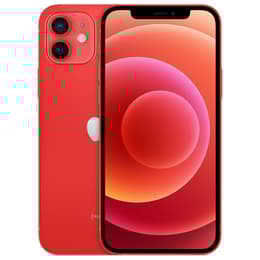
iPhone 12
iPhone 12
Starting at

Refurbished price:174.00

Versus €829.00 new

See options

Ratings

The Google Pixel 7a, released in May 2023, and the Apple iPhone 12, launched in October 2020, represent distinct approaches to smartphone design and user experience. While both are capable devices, they cater to different preferences through their respective Android and iOS operating systems. Key differentiators include their camera philosophies, display refresh rates, and overall ecosystem integration.

Scores

Durability

When considering the long-term usability of these devices, their release timelines and software support are important factors.

  • Release Timeline: The Google Pixel 7a is a more recent device, having been released in May 2023. The iPhone 12, on the other hand, was introduced in October 2020, making it an older model.
  • Software Longevity: The Pixel 7a is expected to receive five years of security updates and three years of major Android OS upgrades from its release date. The iPhone 12 typically receives major iOS updates for five to six years, suggesting support might extend until late 2025 or 2026.
  • Physical Durability: The iPhone 12 features a Ceramic Shield front cover, which Apple claims offers enhanced drop performance, alongside an aluminum frame and glass back. The Pixel 7a uses Gorilla Glass 3 for its display and has an aluminum frame with a plastic back. Both devices offer water and dust resistance, with the iPhone 12 rated IP68 and the Pixel 7a rated IP67.

Year of Release

2023

2020

Compatible with latest Update

Yes

Yes

OS

Android

iOS

Foldable

No

No

Performance

The performance of a smartphone significantly impacts daily usage, from app responsiveness to battery endurance.

  • Processing Power: The Pixel 7a is equipped with a processor optimized for AI tasks and a smooth Android experience, handling daily applications and multitasking effectively. The iPhone 12 features a chip known for its raw speed and efficiency, often feeling snappier in demanding games and applications.
  • Multitasking and Storage: The Pixel 7a comes with 8GB of RAM and 128GB of internal storage. The iPhone 12 offers 4GB of RAM and is available with storage options of 64GB, 128GB, or 256GB.
  • Battery Behavior: The Pixel 7a houses a 4385 mAh battery, and while some early users reported initial battery concerns, these often improved with software updates and adaptive battery optimization, with many users experiencing good all-day endurance. The iPhone 12 has a 2815 mAh battery, and users frequently report needing to charge it by late afternoon with heavy usage, with battery life often cited as a weakness.

Memory (GB)

8 GB

4 GB

Screen quality

The display is a primary interface for users, and both devices offer distinct visual experiences.

  • Display Technology and Size: Both the Pixel 7a and iPhone 12 feature 6.1-inch OLED displays, providing deep blacks and vibrant colors. The iPhone 12's display is marketed as Super Retina XDR OLED.
  • Resolution and Clarity: The Pixel 7a offers a 1080 x 2400 pixel resolution, resulting in sharp visuals. The iPhone 12 has a slightly higher resolution of 1170 x 2532 pixels.
  • Refresh Rate and Brightness: The Pixel 7a features a 90Hz refresh rate, contributing to smoother scrolling and a more fluid visual experience, though this may need to be enabled in settings. The iPhone 12 maintains a standard 60Hz refresh rate. In terms of brightness, the iPhone 12 can reach up to 1200 nits peak brightness for HDR content, while the Pixel 7a offers up to 1000 nits peak brightness. The iPhone 12 is also often praised for its color accuracy.

Resolution

1080 x 2400

1170 x 2532

Screen type

OLED

Super Retina XDR OLED

Audiovisual

Both smartphones offer robust camera systems, though they approach photography with different strengths.

  • Rear Camera System: The Pixel 7a features a dual-camera setup with a 64MP main sensor and a 13MP ultrawide lens. The iPhone 12 also has a dual-camera system, consisting of two 12MP lenses for its main and ultrawide cameras.
  • Photography Performance: The Pixel 7a excels in computational photography, delivering detailed images with good dynamic range, particularly in low-light conditions using its Night Sight mode. The iPhone 12 provides strong still photography with natural color tones and good low-light performance.
  • Video Capabilities: Both devices are capable of recording 4K video at 60 frames per second. The iPhone 12 offers excellent video quality, including Dolby Vision HDR recording, and often shows slight superiority in video stabilization.

Main camera

64 megapixels

12 megapixels

Front camera

13 megapixels

12 megapixels

Miscellaneous

Beyond core features, several practical elements contribute to the overall user experience of these devices.

  • Connectivity and Ports: The Pixel 7a supports 5G, Wi-Fi 6E, and Bluetooth 5.3, featuring a USB-C port for charging and data transfer. The iPhone 12 also supports 5G, Wi-Fi 6, and Bluetooth 5.0, but uses Apple's proprietary Lightning port.
  • Biometric Security: The Pixel 7a includes an under-display fingerprint sensor and face unlock for secure access. The iPhone 12 relies solely on Face ID for biometric authentication.
  • Design and Handling: The iPhone 12 is generally thinner and lighter than the Pixel 7a, which can impact in-hand feel. The iPhone 12 also introduced MagSafe technology for magnetic accessories and wireless charging.

Weight

193 g

164 g

Screen size (in)

6.1

6.1

Network

5G

5G

SIM card

Physical SIM + eSIM

Physical SIM + eSIM

Carrier compatibility

Unlocked

Unlocked

The choice between the Google Pixel 7a and the iPhone 12 ultimately depends on individual priorities and preferences. Users often praise the Pixel 7a for its smoother display, advanced computational photography capabilities, and the flexibility of the Android ecosystem. However, some users initially noted concerns regarding battery life and fingerprint scanner performance, though these issues often saw improvements with software updates.

Conversely, the iPhone 12 is frequently lauded for its robust build quality, seamless integration within the Apple ecosystem, and mature video recording features, along with its color-accurate display. A common criticism, however, is its battery life, which many users find requires frequent charging, and its 60Hz display.

Users prioritizing a modern Android experience with a focus on photography and a higher refresh rate display may find the Pixel 7a well-suited to their needs. Those who value a proven ecosystem, strong video capabilities, and a more compact, lighter design might lean towards the iPhone 12. Both devices offer reliable performance for everyday tasks. For those considering either model, exploring quality-assured refurbished options can provide an eco-friendly alternative to extend the life cycle of these capable smartphones.

See all articles

Our recent comparisons







