


Compare models
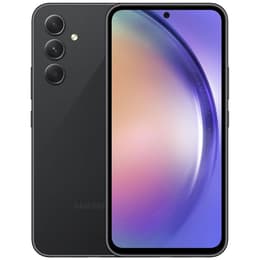
Galaxy A54 Vs Google Pixel 9a
- 1-year minimum warranty
- Free delivery on all orders
- Free 30-day returns
Differences at a glance
The Samsung Galaxy A54 (2023) and the Google Pixel 9a (2025) are mid-range Android smartphones designed to deliver balanced everyday capabilities without the complexity of flagship devices. While both models cater to users looking for reliable performance and modern features, they originate from different release years and run distinct software ecosystems—Samsung's One UI versus Google's clean Android experience. A primary differentiator lies in their software support longevity and core processing architectures, shaping how each device handles daily tasks over time.
Available Models
Colour
Storage (GB)
Scores
Durability
Durability and software support timelines differ between these two models, reflecting their respective release schedules and manufacturer commitments.
- Software Support: The Google Pixel 9a benefits from an extended long-term update policy spanning seven years of operating system and security patches, whereas the Galaxy A54 provides a shorter, though still substantial, five-year support window.
- Build and Protection: Both handsets feature robust water and dust resistance ratings, helping them withstand accidental exposure to moisture during daily travel.
- Expected Lifespan: Users seeking maximum software longevity will find the Pixel's extended update commitment advantageous for multi-year ownership, while the Galaxy model maintains dependable structural resilience.
Year of Release
2023
2025
Compatible with latest Update
Yes
Yes
OS
Android
Android
Foldable
No
No
Performance
Handling daily workloads, multitasking, and power management vary based on internal hardware optimization and battery capacity.
- System Responsiveness: Both devices manage routine applications, web browsing, and switching between multiple active programs smoothly, though the newer processor in the Google Pixel 9a offers extra headroom for demanding mobile games and advanced background tasks.
- Battery Behavior: Each smartphone includes a large cell capacity designed to easily navigate a full day of standard use, with moderate users often reaching into a second day before requiring a recharge.
- Storage Configuration: The Galaxy A54 includes expandable storage via a microSD card slot, whereas the Pixel 9a relies entirely on fixed internal storage variants.
Screen quality
Viewing media, reading text, and interacting with content rely on vibrant display panels equipped with high refresh rates for smooth scrolling.
- Display Technology: Both models utilize high-contrast OLED panels that render deep blacks and vivid colors, paired with high refresh rates for fluid motion during navigation.
- Outdoor Visibility: Peak brightness levels on both screens allow for comfortable legibility under direct sunlight, though peak metrics skew higher on the newer Google release.
- Size and Format: The Galaxy A54 offers a 6.4-inch viewing area, while the Pixel 9a features a slightly more compact 6.3-inch layout, both utilizing punch-hole front camera designs.
Resolution
1080 x 2340
2424 x 1080
Audiovisual
Photography and media recording capabilities focus on versatile multi-lens rear setups backed by optical image stabilization to reduce blur.
- Main Photography: Both devices capture detailed daylight and low-light photographs using primary stabilized sensors, with computational processing enhancing dynamic range.
- Secondary Lenses: The Galaxy A54 features an ultra-wide sensor alongside a dedicated macro lens for close-up shots, while the Pixel 9a pairs its primary shooter with a streamlined ultra-wide option.
- Video and Audio: High-definition video recording up to 4K resolution is supported on both models, accompanied by clear microphone pickup for calls and media creation.
Front camera
32 megapixels
13 megapixels
Miscellaneous
Practical hardware features, physical dimensions, and connectivity standards dictate how each phone feels and connects in daily environments.
- Connectivity: Both models support modern 5G networks, Wi-Fi standards, NFC for contactless payments, and Bluetooth pairing.
- Physical Handling: The Galaxy A54 measures 158.2 x 76.7 x 8.2 mm at 202 grams, compared to the Pixel 9a's 154.7 x 73.2 x 8.9 mm build at 186 grams, resulting in subtle differences in pocket feel and one-handed reach.
- Security Sensors: Secure biometric authentication is handled via responsive under-display optical fingerprint scanners on both handsets.
Weight
202 g
186 g
Screen size (in)
6.4
6.3
Network
5G
5G
SIM card
Dual Physical SIM
Physical SIM + eSIM
Carrier compatibility
Unlocked
Unlocked
Connector
USB-C
USB-C
What the community thinks
Community discussions on platforms like Reddit highlight distinct user preferences for each device. Owners of the Galaxy A54 frequently praise its vibrant display, reliable multi-day battery capacity, and the practical inclusion of expandable storage. Conversely, Pixel 9a users often commend the clean software interface, swift daily processing speeds, and dependable camera performance. Common criticisms for the Samsung model focus on occasional interface stutter during heavy multitasking, while Pixel users occasionally note the lack of storage expansion.
Users prioritizing expandability and media storage flexibility may prefer the Galaxy A54, while users prioritizing long-term software update commitments and streamlined software environments will lean toward the Pixel 9a. For consumers exploring sustainable technology habits, a quality-assured refurbished option provides an eco-friendly alternative that extends device life cycles without requiring new manufacturing resources. Selecting between these two dependable smartphones ultimately depends on which operating system layout and hardware features align best with daily routines.