
iPhone

Compare models
Differences at a glance
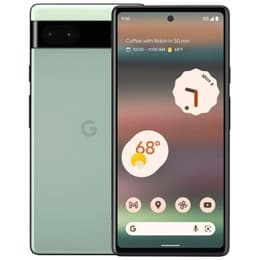
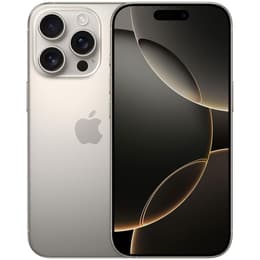
The Google Pixel 6A, released in July 2022, and the iPhone 16 Pro, launched in September 2024, represent distinct approaches to smartphone design and functionality. While the Pixel 6A operates on the Android platform, the iPhone 16 Pro runs on Apple's iOS, offering different user experiences. Key differentiators between these two devices include their release timelines, processing power, and advanced camera systems.
Colour
Storage
The practical lifespan of a smartphone is significantly influenced by its release date and the manufacturer's commitment to software updates. The Google Pixel 6A, released in July 2022, was initially promised three years of OS updates and five years of security updates. As of March 2026, it has received OS updates up to Android 14, with some users reporting Android 16 beta in 2025, and is expected to receive security updates until July 2027. The iPhone 16 Pro, launched in September 2024, came pre-installed with iOS 18 and is currently running iOS 26.4. Apple typically provides a longer period of software support, often extending to five to seven years, meaning the iPhone 16 Pro has a considerably longer remaining software support window.
Year of Release
Compatible with latest Update
Foldable
Performance in smartphones is determined by the efficiency of their internal components, impacting everything from app loading to multitasking. The Google Pixel 6A is equipped with Google's first-generation Tensor processor and 6GB of RAM, providing smooth operation for everyday tasks and handling demanding applications effectively. The iPhone 16 Pro, featuring the Apple A18 Pro chip and 8GB of RAM, offers a significant leap in processing power, resulting in faster CPU and GPU speeds and an improved Neural Engine.
The display is a primary interface for smartphone interaction, and both devices offer distinct visual experiences. The Google Pixel 6A features a 6.1-inch OLED display with a resolution of 1080 x 2400 pixels and a standard 60Hz refresh rate. The iPhone 16 Pro boasts a larger 6.3-inch Super Retina XDR OLED display with a higher resolution of 2622 x 1206 pixels (460 ppi) and ProMotion technology, offering an adaptive refresh rate up to 120Hz.
Resolution
Screen type
Camera capabilities are a significant factor for many smartphone users, and both the Pixel 6A and iPhone 16 Pro offer advanced photographic features. The Google Pixel 6A is equipped with a dual-camera system on the rear, featuring a 12.2 MP main sensor and a 12 MP ultrawide lens, alongside an 8 MP front camera. The iPhone 16 Pro features a more comprehensive triple-camera system, including a 48 MP wide, a 48 MP ultrawide, and a 12 MP telephoto lens with 5x optical zoom, complemented by a LiDAR scanner.
Main camera
Front camera
Beyond core specifications, several practical elements contribute to the overall user experience. The Google Pixel 6A features 5G connectivity, Wi-Fi 6/6E, and Bluetooth 5.2. It uses a USB-C port for charging and data transfer but lacks a headphone jack. Security is handled by an in-display fingerprint sensor. The iPhone 16 Pro supports advanced connectivity with 5G and Wi-Fi 7, along with Bluetooth (likely 5.3 or 5.4). It also utilizes a USB-C port and relies on Face ID for biometric authentication.
Weight
Screen size (in)
Network
SIM card
Carrier compatibility
Connector
The Google Pixel 6A and the iPhone 16 Pro cater to different user priorities, largely due to their release dates and respective ecosystems. Users often praise the Pixel 6A for its exceptional camera performance, particularly its computational photography capabilities that deliver impressive results even with older hardware. Its compact size and smooth Android experience are also frequently highlighted. However, common criticisms include its 60Hz display, which can feel less fluid compared to higher refresh rate screens, and some user dissatisfaction with the in-display fingerprint sensor's reliability. Battery life, while generally good for a day, has also been a point of mixed feedback for heavy users.
The iPhone 16 Pro, as a more recent flagship, receives commendation for its powerful performance, advanced camera system with versatile zoom capabilities, and its vibrant 120Hz ProMotion display. Users appreciate the overall refinement of the iOS experience and the device's premium build quality. Some users have noted that while the battery life is strong, the smaller Pro model might not match the endurance of its larger Max counterpart.
Users prioritizing a highly capable camera for still photography and a streamlined Android experience may find the Pixel 6A well-suited to their needs, especially if they value a more compact form factor. Conversely, those who prioritize cutting-edge performance, a superior display, a versatile camera system with optical zoom, and a longer software support window will likely lean towards the iPhone 16 Pro. Both devices offer compelling features, and considering a quality-assured refurbished option for either can provide an eco-friendly alternative for consumers.