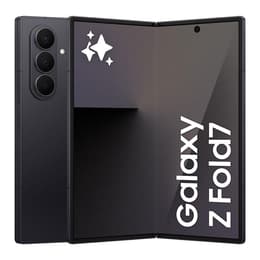



Compare models

Galaxy Z Fold7 Vs Xiaomi Redmi Note 13 4G

  • 1-year minimum warranty
  • Free delivery on all orders
  • Free 30-day returns
Galaxy Z Fold7
Starting at

Refurbished price:€907.00

Versus €2,236.37 new

See options
Xiaomi Redmi Note 13 4G
Starting at

Refurbished price:€180.00

Versus €299.00 new

See options

Differences at a glance

The Samsung Galaxy Z Fold7 (2025) and the Xiaomi Redmi Note 13 4G (2024) represent two fundamentally different approaches to modern mobile technology. While the Galaxy Z Fold7 introduces a cutting-edge book-style foldable design with dual screens and flagship-tier internals, the Xiaomi Redmi Note 13 4G focuses on delivering a reliable, traditional smartphone experience with a standard candybar form factor. These devices serve distinct user requirements, operating system environments, and hardware philosophies.

Available Models

Colour

Storage

Scores

Durability

When examining longevity and durability, both devices offer different structural designs and software support timelines tailored to distinct usage habits.

  • Software Support: The Galaxy Z Fold7 provides extended operating system upgrades spanning multiple years, whereas the Redmi Note 13 4G follows a standard mid-range software update lifecycle.
  • Build and Repairability: The foldable architecture of the Samsung model requires specialized folding glass maintenance, while the traditional glass-and-plastic build of the Xiaomi device aligns with standard smartphone repair procedures.
  • Expected Lifespan: Both models maintain consistent daily reliability over several years, though users investing in quality-assured refurbished options can extend device utility sustainably.

Year of Release

2025

2024

Compatible with latest Update

Yes

Yes

OS

Android

Android

Foldable

Yes

No

Performance

Processing power and system responsiveness vary significantly between these two models due to their differing internal hardware configurations.

  • Multitasking and App Loading: The Galaxy Z Fold7 handles demanding multi-window workflows, heavy 3D gaming, and intensive background tasks smoothly, whereas the Redmi Note 13 4G is optimized for everyday messaging, web browsing, and casual media streaming.
  • Battery Behavior: The Xiaomi device features a large standalone cell that typically comfortably navigates standard daily tasks, while the Samsung model manages power across two distinct displays requiring balanced daily recharging habits for heavy users.
  • Storage Configurations: Both devices offer multiple storage tiers, with the Samsung variant providing higher baseline capacity options for large file storage and extensive app libraries.

Screen quality

Display technology represents one of the most prominent distinctions separating these two smartphones.

  • Panel Technology: The Galaxy Z Fold7 features an expansive inner foldable AMOLED display paired with a functional outer cover screen, while the Redmi Note 13 4G utilizes a single, flat AMOLED panel with vivid color reproduction.
  • Refresh Rate and Clarity: Both devices support high refresh rates for smooth scrolling and responsive touch interactions, complemented by sharp resolutions suited for reading and video playback.
  • Outdoor Visibility: High peak brightness levels on both screens allow for comfortable outdoor viewing under direct sunlight, though the foldable screen format introduces a visible crease along the folding axis.

Resolution

1968x2184

1080 x 2400

Audiovisual

Media capture and audio output capabilities cater to different creative and entertainment preferences.

  • Camera Systems: The Galaxy Z Fold7 incorporates a versatile multi-lens setup featuring high-resolution primary and optical zoom capabilities, while the Redmi Note 13 4G relies on a high-megapixel main sensor supported by basic auxiliary lenses.
  • Low-Light and Video: The Samsung model delivers advanced low-light processing and high-resolution video recording modes, whereas the Xiaomi device handles everyday casual snapshots and standard definition video adequately.
  • Audio Experience: Both devices include stereo speaker configurations suitable for hands-free calling and casual media consumption, though the Xiaomi variant retains a traditional headphone jack connector.

Miscellaneous

Physical dimensions and connectivity standards define how each device integrates into daily routines.

  • Form Factor and Weight: The Xiaomi Redmi Note 13 4G offers a lightweight, slim traditional profile that fits easily into pockets, while the Galaxy Z Fold7 provides a thicker folded profile that opens into a tablet-sized workspace.
  • Connectivity Options: The Samsung device supports modern high-speed cellular networks and advanced wireless standards, whereas the Xiaomi model is limited to traditional wireless bands without next-generation network compatibility.
  • Security Sensors: Both models feature secure biometric authentication methods, utilizing side-mounted or in-display fingerprint sensors alongside facial recognition capabilities.

Weight

215 g

175 g

Screen size (in)

8.0

6.67

Network

5G

4G

SIM card

Dual Physical SIM + eSIM

Dual Physical SIM

Carrier compatibility

Unlocked

Unlocked

Connector

USB-C (USB 3)

USB-C

What the community thinks

User feedback for the Galaxy Z Fold7 frequently highlights praise for its expansive multitasking workspace and versatile dual-screen layout, though some users note the heavier weight and visible screen crease as minor trade-offs. Conversely, users of the Redmi Note 13 4G appreciate its reliable battery endurance, vibrant flat display, and lightweight handling, while noting limitations in intensive gaming performance and low-light photography. Users prioritizing maximum productivity, expansive display real estate, and advanced processing power may prefer the Galaxy Z Fold7, while users focusing on straightforward everyday communication, lightweight ergonomics, and traditional smartphone simplicity will lean toward the Redmi Note 13 4G. Exploring quality-assured refurbished options can provide a sustainable choice for acquiring either device while reducing electronic waste. Ultimately, the choice depends entirely on individual workflow preferences and daily device usage habits.










