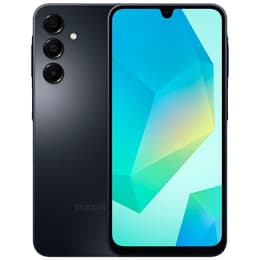
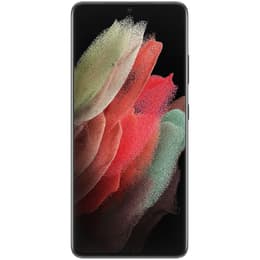


Galaxy A16 Vs Galaxy S21 Ultra 5G

Galaxy A16
Galaxy A16
Starting at

Refurbished price:134.00

Versus €250.00 new

See options
Galaxy S21 Ultra 5G
Galaxy S21 Ultra 5G
Starting at

Refurbished price:229.00

Versus €1,297.00 new

See options

Ratings

The Samsung Galaxy A16, released in late 2024 and early 2025, and the Samsung Galaxy S21 Ultra 5G, launched in early 2021, represent distinct offerings within Samsung's smartphone portfolio. While the A16 is a more recent entry-level to mid-range device focusing on extended software support and essential features, the S21 Ultra 5G was a flagship offering advanced camera capabilities, a premium display, and high performance. Both devices operate on the Android platform, but their core functionalities and target user experiences diverge significantly.

Scores

Durability

The longevity of a smartphone is influenced by its physical resilience and the duration of its software support.

  • Release Timeline and Software Support: The Galaxy A16 is a newer device, released in late 2024 and early 2025, and is notable for its extended software commitment, promising six generations of Android OS upgrades and six years of security updates, with support expected until October 2030. In contrast, the Galaxy S21 Ultra 5G, as a 2021 flagship, typically received four major OS updates and five years of security updates, meaning its major OS update cycle has likely concluded, and security updates are nearing their end.
  • Physical Durability: The Galaxy A16 features a plastic back and frame with a glass front, and it carries an IP54 rating for dust and splash resistance, offering protection against limited dust ingress and light water splashes. The Galaxy S21 Ultra 5G, built with Gorilla Glass Victus on both the front and back and an aluminum frame, boasts a higher IP68 rating, indicating greater resistance to dust and the ability to withstand submersion in water.
  • Repairability: While specific repairability scores can vary, the S21 Ultra's more complex flagship design and premium materials may present different repair challenges compared to the A16's more straightforward construction.

Year of Release

2024

2021

OS

Android

Android

Foldable

No

No

Performance

Smartphone performance dictates how smoothly applications run, how quickly tasks are completed, and the overall responsiveness of the device.

  • Processor Capabilities: The Galaxy A16 is powered by a processor designed for everyday tasks, offering solid performance for general use like social media, messaging, and video streaming. However, some users have reported stutters and slowdowns with heavy use or multiple demanding applications. The Galaxy S21 Ultra 5G, featuring a flagship-grade processor from its release year, delivers a significantly more powerful experience, handling demanding apps, multitasking, and graphics-intensive games with greater ease and responsiveness.
  • RAM and Storage: The A16 offers RAM options typically ranging from 4GB to 8GB, and storage options of 128GB or 256GB, with a microSD card slot for expansion. The S21 Ultra 5G comes with higher RAM configurations, typically 12GB or 16GB, and storage options up to 512GB, but lacks a microSD card slot.
  • Battery Behavior: Both devices feature a 5000mAh battery. The A16 is noted for its excellent battery life, often lasting at least two full days with light to moderate use and comfortably a full day with heavy use. The S21 Ultra 5G also provides all-day battery life, even with its more powerful components and high-resolution, high-refresh-rate display, though heavy usage of its advanced features can lead to more frequent charging.

Memory (GB)

4 GB

12 GB

Screen quality

The display is a primary interface for smartphone interaction, and its quality significantly impacts the viewing experience.

  • Display Technology and Resolution: The Galaxy A16 features a 6.7-inch Super AMOLED display with a Full HD+ resolution (1080 x 2340 pixels), offering vibrant colors and deep blacks suitable for everyday content consumption. The Galaxy S21 Ultra 5G boasts a 6.8-inch Dynamic AMOLED 2X display with a Quad HD+ resolution (3200 x 1440 pixels), providing a sharper and more detailed visual experience, especially noticeable with high-resolution media.
  • Brightness and Refresh Rate: The A16's display offers a 90Hz refresh rate for smoother scrolling and a peak brightness of around 800 nits, making it usable outdoors. The S21 Ultra 5G features an adaptive refresh rate that can scale from 10Hz to 120Hz, contributing to both smoothness and power efficiency, and reaches a significantly higher peak brightness of 1500 nits, ensuring excellent visibility even in bright sunlight.
  • Viewing Experience: The S21 Ultra 5G's display also supports HDR10+, offering enhanced contrast and color accuracy for compatible content, and has a higher pixel density (515 PPI) for finer detail.

Resolution

1080x2340

1440 x 3200

Screen type

Super AMOLED

Dynamic AMOLED 2X

Audiovisual

Camera capabilities are a significant factor for many users, influencing how they capture and share moments.

  • Rear Camera System: The Galaxy A16 features a triple-lens rear camera setup, including a 50MP main sensor, a 5MP ultrawide lens, and a 2MP macro lens. This system is designed for general photography, performing adequately in good lighting conditions. The Galaxy S21 Ultra 5G offers a more versatile quad-camera system, highlighted by a 108MP main sensor with optical image stabilization (OIS) and laser autofocus, a 12MP ultrawide lens, and two 10MP telephoto lenses providing 3x and 10x optical zoom with OIS.
  • Photography Performance: The S21 Ultra 5G excels in various photographic scenarios, offering superior low-light performance, advanced zoom capabilities, and features like 100x Space Zoom, providing greater flexibility and image quality. User feedback for the A16's camera often describes it as mediocre, particularly in low-light conditions.
  • Video Recording and Front Camera: The A16 supports video recording up to Full HD (1080p) at 30 frames per second and has a 13MP front camera. The S21 Ultra 5G can record 8K video at 24fps and 4K video at 60fps with all its cameras, including its 40MP front camera, offering significantly higher resolution and more professional video capabilities.

Miscellaneous

Beyond core specifications, several practical elements contribute to the overall user experience and device utility.

  • Connectivity and Ports: The Galaxy A16 supports 5G connectivity (in its 5G variant), Wi-Fi 5, and Bluetooth 5.3, along with a USB Type-C 2.0 port. The Galaxy S21 Ultra 5G also offers 5G, but includes more advanced Wi-Fi 6E and Bluetooth 5.2, and a USB Type-C port, providing faster and more stable wireless connections. Neither device includes a 3.5mm headphone jack.
  • Biometrics and Audio: The A16 features a side-mounted fingerprint scanner for secure unlocking and a mono speaker for audio output. The S21 Ultra 5G incorporates an in-display fingerprint sensor and offers stereo speakers for a more immersive audio experience.
  • Additional Features: The S21 Ultra 5G also supports S-Pen functionality (stylus sold separately) and reverse wireless charging, allowing it to charge other compatible devices. The A16 does not offer these features.

Weight

200 g

227 g

Screen size (in)

6.7

6.8

Network

4G

5G

SIM card

Physical SIM

Physical SIM + eSIM

Carrier compatibility

Unlocked

Unlocked

Connector

USB-C

USB-C

User sentiment for the Galaxy A16 often praises its exceptional battery life and the long-term software support commitment from Samsung, making it an appealing option for those who prioritize longevity and basic functionality. However, common criticisms revolve around its performance, with some users reporting lag and stutters, especially with the 4GB RAM variant, and its camera quality is frequently described as mediocre. The S21 Ultra 5G, despite being an older model, is still highly regarded for its premium display, powerful performance, and versatile camera system. Users frequently highlight its excellent photo and video capabilities, vibrant screen, and robust build quality. Some long-term users have noted that its battery life, while initially strong, can degrade over time, and the lack of a microSD card slot is a minor point of contention for some.

Users prioritizing extended software updates, strong battery life for everyday tasks, and a more recent release will find the Galaxy A16 well-suited to their needs, particularly if their usage is primarily for communication, social media, and media consumption. Conversely, users who demand a high-end camera system, a superior display, and robust performance for demanding applications, gaming, or creative work will likely prefer the Galaxy S21 Ultra 5G. Choosing a quality-assured refurbished option for either device can provide an eco-friendly alternative, extending the life of these electronics and offering a sustainable choice for consumers.


See all articles

Our recent comparisons