

Compare models

iPhone 15 Vs Xiaomi Redmi Note 13 4G

  • 1-year minimum warranty
  • Free delivery on all orders
  • Free 30-day returns
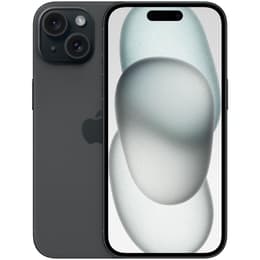
iPhone 15
Starting at

Refurbished price:401.00

Versus €879.00 new

See options
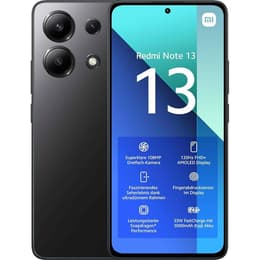
Xiaomi Redmi Note 13 4G
Starting at

Refurbished price:166.00

Versus €299.00 new

See options

Differences at a glance

The iPhone 15 (2023) and the Xiaomi Redmi Note 13 4G (2024) are popular smartphones tailored to distinct user preferences and platform ecosystems. While the iPhone 15 operates on Apple's streamlined iOS platform, the Xiaomi device runs on Android with custom interface layers. These two models diverge significantly in build materials, performance capabilities, and overall everyday user experience.

Available Models

Colour

Storage (GB)

Scores

Durability

When examining longevity and durability, both devices offer different timelines for support and physical resilience suited to varied daily environments.

  • Software Support: The iPhone 15 benefits from Apple's extended update cycles, typically receiving operating system updates for many years, whereas the Xiaomi Redmi Note 13 4G features a more limited Android security and version update schedule.
  • Build Resilience: The iPhone 15 utilizes robust glass and aluminum construction backed by a high water-resistance rating, while the Xiaomi model features plastic frames with splash resistance.
  • Expected Lifespan: Users can anticipate a long operational window from the iPhone due to hardware headroom, while the Xiaomi option provides reliable performance for standard daily communication tasks over a shorter multi-year horizon.

Year of Release

2023

2024

Compatible with latest Update

Yes

Yes

OS

iOS

Android

Foldable

No

No

Performance

Daily operation and speed profiles reflect the distinct internal hardware choices powering each smartphone model.

  • Multitasking and Execution: The iPhone 15 handles demanding applications, graphic-heavy gaming, and swift background task switching seamlessly, whereas the Xiaomi Redmi Note 13 4G manages everyday apps, messaging, and web browsing smoothly without heavy gaming ambitions.
  • Storage Configurations: Both devices offer ample internal storage variants to store photos and local media, though the Xiaomi model uniquely includes expandable storage via a microSD card slot.
  • Battery Behavior: The Xiaomi device features a larger capacity cell that frequently stretches across a full day and a half of moderate use, while the iPhone 15 delivers a dependable single day of mixed usage under typical conditions.

Screen quality

Visual output and display responsiveness create distinct viewing experiences for media consumption and navigation.

  • Refresh Rate and Fluidity: The Xiaomi Redmi Note 13 4G incorporates a high refresh rate panel that ensures smooth scrolling through menus and web pages, while the iPhone 15 relies on a standard refresh rate display.
  • Brightness and Outdoors: Both handsets deliver bright OLED panels capable of maintaining legibility under direct sunlight, though peak brightness metrics favor outdoor visibility on the Xiaomi screen.
  • Panel Technology: Each phone employs vibrant OLED technology providing deep contrast levels, rich colors, and sharp text rendering for daily reading and video playback.

Resolution

1179 x 2556

1080 x 2400

Screen type

Super Retina XDR OLED

AMOLED

Audiovisual

Photography capabilities and multimedia output cater to different styles of content creation and consumption.

  • Main Camera Output: The Xiaomi Redmi Note 13 4G utilizes a high-resolution sensor that captures sharp daylight stills, whereas the iPhone 15 relies on advanced computational photography to balance challenging lighting and dynamic range automatically.
  • Video Recording: The iPhone 15 excels in video stability, low-light video clarity, and cinematic recording formats, while the Xiaomi model provides standard definition video suitable for casual sharing.
  • Audio and Media: Both devices feature stereo speakers for media playback, but the Xiaomi model retains the traditional headphone jack alongside its speaker grid, a feature omitted on the Apple device.

Main camera

48 megapixels

108 megapixels

Front camera

12 megapixels

16 megapixels

Miscellaneous

Physical dimensions and connectivity options shape how each device fits into travel and accessory ecosystems.

  • Connectivity Standards: The iPhone 15 supports modern 5G networks and updated wireless protocols, whereas the Xiaomi Redmi Note 13 4G is strictly limited to 4G LTE network bands.
  • Charging Ports: Both smartphones utilize standard reversible USB-C ports for charging and data transfer, moving away from older proprietary connector types.
  • Physical Handling: The iPhone 15 offers a more compact, pocket-friendly footprint with balanced weight distribution, while the Xiaomi device presents a larger screen frame that requires two-handed reach for some users.

Weight

171 g

175 g

Screen size (in)

6.1

6.67

Network

5G

4G

SIM card

Physical SIM + eSIM

Dual Physical SIM

Carrier compatibility

Unlocked

Unlocked

Connector

USB-C (USB 2)

USB-C

What the community thinks

User feedback from online forums highlights distinct preferences for each device. Owners of the iPhone 15 frequently praise its long-term hardware reliability, video recording quality, and seamless ecosystem integration, though some note the higher initial tier of complexity. Conversely, users of the Xiaomi Redmi Note 13 4G often commend its smooth high-refresh-rate display, long battery endurance, and inclusion of expandable storage, while occasionally pointing out limitations in heavy gaming performance and maximum network speeds.

Users prioritizing long-term software updates, advanced video capabilities, and global 5G connectivity will find the iPhone 15 well-suited to their needs. Meanwhile, users prioritizing a fluid high-refresh display, extended battery staying power, and practical media inputs like a headphone slot may lean toward the Xiaomi Redmi Note 13 4G. Choosing a quality-assured refurbished option for either device provides an eco-friendly, sustainable choice that reduces electronic waste while offering fully tested hardware functionality.