

Compare models

Galaxy S23 Vs Galaxy Z Fold7

  • 1-year minimum warranty
  • Free delivery on all orders
  • Free 30-day returns
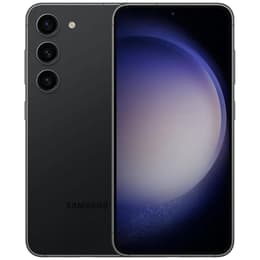
Galaxy S23
Starting at

Refurbished price:€269.00

Versus €959.00 new

See options
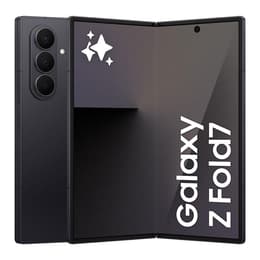
Galaxy Z Fold7
Starting at

Refurbished price:€907.00

Versus €2,236.37 new

See options

Differences at a glance

The Samsung Galaxy S23 (2023) and Samsung Galaxy Z Fold7 (2025) represent two entirely distinct approaches to modern mobile engineering, contrasting a traditional pocket-friendly smartphone design with an innovative foldable book-style format. While both devices run on the Android operating system with Samsung's custom interface, they target fundamentally different ways of interacting with technology through their unique physical structures.

Available Models

Colour

Storage

Scores

Durability

When examining structural longevity and software support, these two devices reflect different generations of hardware development and extended manufacturer timelines.

  • Release Timeline and Software Support: The Galaxy S23 launched earlier in 2023, while the Galaxy Z Fold7 arrived in 2025, meaning the foldable model benefits from a later starting point for its multi-year software update schedule.
  • Hardware Durability: The Galaxy S23 relies on a standard slate body with reinforced glass and aluminum, whereas the Galaxy Z Fold7 incorporates a complex folding hinge mechanism and dual-screen layout that requires careful handling despite modern protective materials.
  • Repairability and Lifespan: Traditional slate phones like the Galaxy S23 generally offer simpler long-term maintenance profiles, while foldable devices involve more intricate internal components that can influence long-term wear and tear under intensive daily use.

Year of Release

2023

2025

Compatible with latest Update

Yes

Yes

OS

Android

Android

Foldable

No

Yes

Performance

Both models deliver smooth daily navigation and handle heavy applications with ease, though their hardware capacities and multi-tasking architectures differ significantly.

  • Multitasking and Memory: The Galaxy Z Fold7 features larger RAM configurations designed to sustain heavy split-screen multitasking across multiple open windows, whereas the Galaxy S23 manages standard daily switching smoothly within a conventional single-screen workspace.
  • Storage and Battery Behavior: The Galaxy S23 relies on a smaller physical footprint with a more compact battery capacity that suits moderate daily routines, while the Galaxy Z Fold7 accommodates a larger battery to support its expansive dual-display configuration.
  • System Responsiveness: Both smartphones handle demanding mobile games and resource-heavy software without noticeable stutter, maintaining high system fluidity across everyday tasks.

Screen quality

Display architecture serves as the most prominent divergence between these two devices, shifting between a single conventional panel and a dual-screen transforming layout.

  • Display Technology: The Galaxy S23 utilizes a vibrant, compact OLED display panel optimized for single-handed navigation, while the Galaxy Z Fold7 opens up into a tablet-sized foldable OLED screen accompanied by an outer cover display.
  • Refresh Rate and Smoothness: Both devices support high refresh rates that ensure fluid scrolling, responsive touch input, and seamless animations during media consumption or web browsing.
  • Outdoor Visibility: Each model incorporates high peak brightness capabilities, allowing users to read notifications and view maps clearly under direct sunlight.

Resolution

1080 x 2340

1968x2184

Audiovisual

Optics and media playback capabilities vary to accommodate the distinct physical form factors and internal housing constraints of each device.

  • Camera System Capabilities: The Galaxy S23 features a versatile triple-lens rear setup well-suited for everyday photography and optical zoom, whereas the Galaxy Z Fold7 integrates high-resolution primary sensors that leverage its foldable frame for unique angles and preview modes.
  • Low-Light and Video Performance: Both smartphones capture crisp details and stable video footage in challenging lighting conditions, utilizing advanced computational processing to reduce noise.
  • Media and Audio Output: Stereo speakers on both models deliver clear sound reproduction for calls and video playback, with the larger unfolded body of the foldable providing an immersive widescreen environment for streaming content.

Miscellaneous

Physical dimensions, handling characteristics, and connectivity standards dictate how each device fits into travel and daily mobility routines.

  • Portability and Handling: The Galaxy S23 offers a lightweight, narrow slate form factor that slips easily into pockets, while the Galaxy Z Fold7 provides a compact folded profile that expands into a much wider surface area when needed.
  • Connectivity and Ports: Both models support current-generation 5G networks, rapid Wi-Fi standards, Bluetooth connectivity, and USB-C charging interfaces.
  • Authentication and Sensors: Secure unlocking is handled via responsive fingerprint sensors and facial recognition systems integrated directly into the hardware design.

Weight

167 g

215 g

Screen size (in)

6.1

8.0

Network

5G

5G

SIM card

Physical SIM + eSIM

Dual Physical SIM + eSIM

Carrier compatibility

Unlocked

Unlocked

What the community thinks

Choosing between the Galaxy S23 and the Galaxy Z Fold7 depends entirely on personal workflow preferences and physical design priorities. Users prioritizing a compact, lightweight device that fits comfortably in one hand for standard daily communication will find the Galaxy S23 well-suited to their needs. Conversely, users prioritizing expansive screen real estate for multitasking, reading, and productivity will lean toward the Galaxy Z Fold7 and its tablet-transforming capabilities.

For those mindful of environmental impact, exploring a quality-assured refurbished option provides a sustainable choice that extends device lifecycles without compromising on operational standards. Ultimately, evaluating how much you value a foldable workspace versus a traditional smartphone silhouette will guide you toward the right decision.








