

Compare models

Galaxy Z Fold7 Vs Google Pixel 8

  • 1-year minimum warranty
  • Free delivery on all orders
  • Free 30-day returns
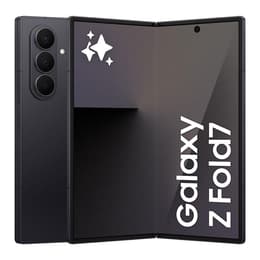
Galaxy Z Fold7
Starting at

Refurbished price:€907.00

Versus €2,236.37 new

See options
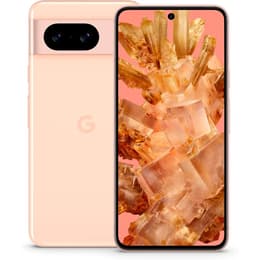
Google Pixel 8
Starting at

Refurbished price:€283.50

Versus €808.26 new

See options

Differences at a glance

The Samsung Galaxy Z Fold 7 (2025) and the Google Pixel 8 (2023) represent two entirely different approaches to modern smartphone engineering, contrasting a cutting-edge foldable book-style device with a traditional, compact candy-bar handset. While the Galaxy Z Fold 7 offers a transformative dual-screen workspace that expands into a tablet-sized canvas, the Google Pixel 8 focuses on streamlined pocketability, refined everyday utility, and intelligent software integration. Operating on distinct generations of Android software, these devices cater to users seeking vastly different physical formats and daily user experiences.

Available Models

Colour

Storage

Scores

Durability

When evaluating structural longevity and software support, both devices offer robust frameworks for extended use, though their physical designs present different maintenance considerations.

  • Software longevity: Both smartphones benefit from multi-year update commitments by their respective manufacturers, ensuring current security features and operating system enhancements remain active over long periods.
  • Physical durability: The Google Pixel 8 relies on a rigid glass-and-aluminum slab construction that is straightforward to protect, whereas the Galaxy Z Fold 7 features complex folding mechanics and flexible internal screens that require more careful handling during daily mobile use.
  • Practical lifespan: Choosing a quality-assured refurbished option provides a sustainable way to access these advanced technologies while reducing electronic waste.

Year of Release

2025

2023

Compatible with latest Update

Yes

Yes

OS

Android

Android

Foldable

Yes

No

Performance

Underneath their exteriors, these devices handle multitasking, storage management, and daily workloads through distinct hardware configurations tailored to their form factors.

  • App loading and multitasking: Both models transition smoothly between everyday applications, though the larger display environment of the foldable model allows for more complex multi-window workflows and split-screen tasks.
  • Battery behavior: The Google Pixel 8 manages its battery efficiently for standard daily usage, while the Galaxy Z Fold 7 balances power consumption across two separate displays, meaning heavy reliance on the expansive inner screen requires more frequent replenishment.
  • Storage configurations: Users can select from various capacity tiers to accommodate large media libraries, heavy applications, and offline files depending on individual storage needs.

Screen quality

The viewing experience constitutes one of the most significant distinctions between these two smartphones, shifting between a standard pocket-friendly panel and an expansive folding canvas.

  • Display technology: The Google Pixel 8 features a bright, vibrant OLED panel with a fluid refresh rate suited for comfortable media consumption, while the Galaxy Z Fold 7 deploys a dynamic folding AMOLED main display accompanied by a practical outer cover screen.
  • Outdoor visibility: Both screens reach high brightness thresholds, maintaining legibility and color accuracy under direct sunlight or bright ambient lighting conditions.
  • Viewing workspace: Users prioritizing a traditional single-screen format will find the Pixel 8 well-suited for one-handed navigation, whereas those desiring tablet-level screen real estate in a pocketable device will gravitate toward the folding capabilities of the Galaxy Z Fold 7.

Resolution

1968x2184

1080 x 2400

Audiovisual

Capturing photos and recording video involve versatile lens setups supported by sophisticated image processing software on both devices.

  • Camera systems: The Google Pixel 8 equips a dependable dual-lens rear array that excels at natural color science and computational photography, while the Galaxy Z Fold 7 utilizes a flexible triple-lens configuration capable of high-resolution detail.
  • Media and audio output: Stereo speakers on both smartphones deliver clear audio output for hands-free calling, video viewing, and casual music listening.
  • Video recording: Both models capture stable, high-definition video with effective stabilization features suitable for everyday memories and content creation.

Miscellaneous

Practical daily usability elements, including connectivity standards, physical dimensions, and security sensors, shape how each device fits into everyday routines.

  • Connectivity and ports: Both smartphones support modern 5G cellular networks, Wi-Fi standards, and Bluetooth pairing, utilizing reversible charging and data transfer ports.
  • Security features: Each device incorporates biometric authentication methods, including facial recognition and integrated fingerprint sensors, for quick and secure unlocking.
  • Handling and dimensions: The Google Pixel 8 offers a lightweight, narrow profile that rests easily in one hand, whereas the Galaxy Z Fold 7 is wider and heavier when unfolded to accommodate its expansive hinge and dual-screen assembly.

Weight

215 g

187 g

Screen size (in)

8.0

6.2

Network

5G

5G

SIM card

Dual Physical SIM + eSIM

Physical SIM + eSIM

Carrier compatibility

Unlocked

Unlocked

Connector

USB-C (USB 3)

USB-C

What the community thinks

Actual users frequently praise the Google Pixel 8 for its comfortable ergonomics, reliable daily snapshot capabilities, and straightforward software layout, though some note that its battery capacity requires mindful management during intensive navigation days. Conversely, owners of the Galaxy Z Fold 7 highlight the productivity advantages of the expansive folding screen and multitasking flexibility, while occasionally pointing out that the heavier chassis and specialized screen format require adjustment.

Users prioritizing compact handling, streamlined everyday performance, and effortless pocketability will find the Google Pixel 8 well-suited to their routines. Meanwhile, users looking for an expansive dual-screen workspace for multitasking, media viewing, and document editing may lean toward the Galaxy Z Fold 7. Exploring a quality-assured refurbished model provides an eco-friendly alternative for acquiring either device while supporting sustainable technology choices.