

Compare models
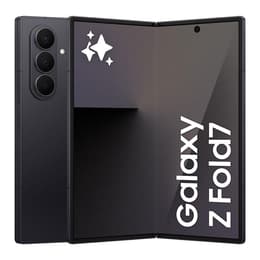
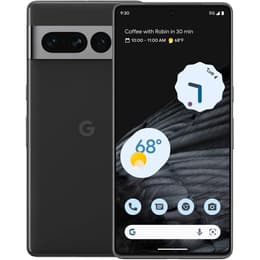
Galaxy Z Fold7 Vs Google Pixel 7 Pro
- 1-year minimum warranty
- Free delivery on all orders
- Free 30-day returns
Differences at a glance
The Samsung Galaxy Z Fold7 (2025) and the Google Pixel 7 Pro (2022) represent two entirely different approaches to modern smartphone design, contrasting a book-style foldable layout with a traditional candybar flagship configuration. While both run on the Android operating system, they cater to distinctly different form-factor preferences and hardware philosophies. Choosing between them involves balancing cutting-edge foldable versatility against established slab-style ergonomics.
Available Models
Colour
Storage (GB)
Scores
Durability
Device longevity and software support timelines differ significantly due to their respective release years, impacting how long each phone will remain current.
- Release timeline and age: The Galaxy Z Fold7 entered the market in 2025, providing a much newer hardware baseline compared to the Google Pixel 7 Pro, which launched in 2022.
- Software support duration: Samsung provides an extended multi-year update schedule for its newer flagship foldables, whereas the Pixel 7 Pro relies on Google's standard three-year OS upgrade window.
- Expected practical lifespan: Mechanical hinge durability on the Galaxy Z Fold7 requires careful handling over years of use, while the rigid, single-piece aluminum and glass body of the Pixel 7 Pro offers traditional long-term structural predictability.
Year of Release
2025
2022
Performance
Under-the-hood capabilities dictate how smoothly each device handles everyday multitasking, demanding applications, and battery management.
- Processor capabilities: The Galaxy Z Fold7 features a highly advanced, current-generation processor that executes intensive tasks, complex split-screen layouts, and high-end gaming without stuttering. The Pixel 7 Pro utilizes an older custom processor that manages daily messaging, browsing, and media streaming reliably, though heavy gaming sessions can induce noticeable warmth.
- Memory and storage: Both devices offer generous RAM configurations starting at 12GB, ensuring seamless background app management, alongside multiple internal storage tiers to suit various user needs.
- Battery behavior: The Pixel 7 Pro packs a larger single-cell battery that consistently delivers a full day of mixed use. The Galaxy Z Fold7 balances its power demands across two separate screens, though intensive use of the large inner display results in quicker battery depletion.
Screen quality
Display architecture is the defining differentiator here, contrasting a transformable dual-screen workspace with a conventional curved panel.
- Display technology: The Galaxy Z Fold7 deploys a foldable main display paired with a wide cover screen, both using vibrant dynamic OLED technology with high adaptive refresh rates for fluid motion. The Pixel 7 Pro features a single large curved OLED screen with sharp resolution and smooth 120Hz scrolling.
- Brightness and outdoor visibility: Both models reach high peak brightness levels, ensuring that text and images remain legible under direct sunlight.
- Viewing experience: The Fold7 expands into a near-tablet canvas ideal for productivity and media, whereas the Pixel 7 Pro provides a traditional, uninterrupted cinematic aspect ratio for standard video viewing.
Audiovisual
Imaging hardware and everyday photo processing styles vary to accommodate different creator and casual user preferences.
- Camera system capabilities: The Pixel 7 Pro equips a versatile triple-lens setup featuring a high-resolution main sensor, an ultra-wide lens, and a dedicated periscope telephoto lens with optical zoom. The Galaxy Z Fold7 incorporates an upgraded multi-lens array optimized for high-megapixel detail and flexible multi-angle framing.
- Low-light and everyday photography: Google relies on advanced computational processing to render balanced shadows and realistic skin tones in challenging lighting, while Samsung emphasizes crisp details and vibrant color saturation straight out of the box.
- Audio and media output: Both devices feature stereo speakers that deliver clear dialogue and adequate volume for hands-free calls and casual video watching.
Miscellaneous
Physical handling, connectivity standards, and daily convenience features shape the overall user experience of each handset.
- Connectivity and ports: Both smartphones support modern 5G networks, fast Wi-Fi standards, and Bluetooth pairing, utilizing reversible USB Type-C ports for charging and data transfer.
- Security and sensors: Fast biometric authentication is handled via responsive under-display fingerprint sensors and secure facial recognition features on both models.
- Dimensions and handling: The Pixel 7 Pro presents a standard large-phone footprint with curved edges, while the Galaxy Z Fold7 adopts a remarkably thin profile when folded, though it remains thicker and heavier in the hand than a conventional slab phone.
Screen size (in)
8.0
6.7
Network
5G
5G
SIM card
Dual Physical SIM + eSIM
Physical SIM + eSIM
Carrier compatibility
Unlocked
Unlocked
What the community thinks
Users evaluating these devices often highlight the Galaxy Z Fold7 for its innovative multi-tasking workspace and expansive inner screen, though some express standard caution regarding the long-term durability of foldable glass. Conversely, owners of the Pixel 7 Pro frequently praise its reliable point-and-shoot camera consistency and comfortable ergonomics, while noting that its processing hardware runs slightly behind newer generations.
Users prioritizing productivity, split-screen multitasking, and a tablet-sized canvas in a pocketable format will find the Galaxy Z Fold7 well-suited to their needs. Meanwhile, users prioritizing traditional slab-phone handling, advanced optical zoom photography, and a straightforward software experience may lean toward the Pixel 7 Pro. Selecting a quality-assured refurbished option provides an eco-friendly way to access these technologies while supporting sustainable consumption habits.