

Google Pixel 7 Pro Vs iPhone 11

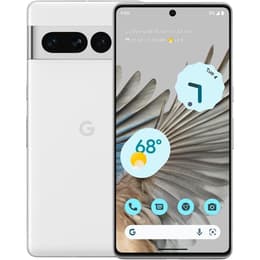
Google Pixel 7 Pro
Google Pixel 7 Pro
Starting at

Refurbished price:201.00

Versus €640.98 new

See options
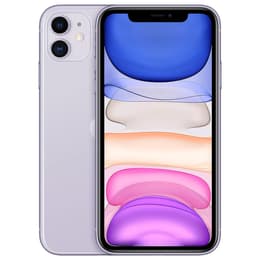
iPhone 11
iPhone 11
Starting at

Refurbished price:149.00

Versus €589.00 new

See options

Ratings

The Google Pixel 7 Pro, released in October 2022, and the Apple iPhone 11, launched in September 2019, represent distinct approaches to smartphone design and functionality from two major technology companies. While both devices offer a comprehensive smartphone experience, they cater to different user preferences through their respective operating systems and hardware philosophies. The Pixel 7 Pro operates on Google's Android platform, emphasizing advanced computational photography and AI-driven features, whereas the iPhone 11 runs on Apple's iOS, known for its streamlined user experience and robust ecosystem. Key differentiators include their display technologies, camera capabilities, and overall software longevity.

Scores

Durability

When considering the long-term usability of a smartphone, software support and physical resilience are key factors. The Pixel 7 Pro and iPhone 11 offer different timelines for updates and varying degrees of repairability.

  • Software Longevity: The Google Pixel 7 Pro, having launched in late 2022, is guaranteed to receive operating system updates for five years and security updates until October 2027. The iPhone 11, released in 2019, is expected to receive major iOS updates until the fall of 2026, with security patches continuing for at least another year or two beyond that.
  • Physical Durability: Both devices feature an IP68 rating for dust and water resistance, indicating protection against immersion in water. The Pixel 7 Pro incorporates Gorilla Glass Victus for screen protection, while the iPhone 11 uses dual-ion exchange-strengthened glass.
  • Repairability: Repairability scores vary, with the Pixel 7 Pro receiving ratings around 5.5 to 7.0 out of 10, noting challenges with soldered components and strong adhesives for the battery. The iPhone 11 has been rated around 4.6 to 6 out of 10, with critical display and battery repairs being prioritized in its design.

Year of Release

2022

2019

Compatible with latest Update

Yes

Yes

OS

Android

iOS

Foldable

No

No

Performance

The performance of a smartphone impacts everything from app responsiveness to multitasking efficiency. The Pixel 7 Pro and iPhone 11, separated by a few years in release, demonstrate different levels of processing power and memory configurations.

  • System Responsiveness: The Pixel 7 Pro, with its more recent processor and 12 GB of RAM, delivers a fluid experience for demanding applications and heavy multitasking. The iPhone 11, equipped with 4 GB of RAM, handles everyday tasks smoothly, though some users have noted potential slowdowns with numerous apps running simultaneously.
  • Storage Options: The Pixel 7 Pro offers internal storage options of 128 GB, 256 GB, or 512 GB. The iPhone 11 is available with 64 GB, 128 GB, or 256 GB of internal storage. Neither device supports expandable storage.
  • Battery Behavior: The Pixel 7 Pro features a 5000 mAh battery, generally providing ample power for a full day of use, though some users report increased drain with 5G connectivity. The iPhone 11 has a 3110 mAh battery, which typically offers reliable power for a standard day, with Apple claiming it lasts longer than its direct predecessor.

Memory (GB)

12 GB

4 GB

Screen quality

The display is a primary interface for any smartphone, and the visual experience can differ significantly between devices. The Pixel 7 Pro and iPhone 11 utilize distinct display technologies and specifications.

  • Display Technology and Clarity: The Pixel 7 Pro features a 6.7-inch LTPO AMOLED display with a resolution of 3120 x 1440 pixels, resulting in sharp images and deep blacks. The iPhone 11 has a 6.1-inch Liquid Retina HD IPS LCD display with a resolution of 1792 x 828 pixels, offering good color accuracy and viewing angles.
  • Brightness and Refresh Rate: The Pixel 7 Pro's display can reach a peak brightness of 1500 nits, making it highly visible in bright outdoor conditions, and boasts a 120 Hz refresh rate for smoother scrolling and animations. The iPhone 11 has a maximum brightness of 625 nits and a standard 60 Hz refresh rate.
  • Viewing Experience: The larger, higher-resolution, and higher refresh rate screen of the Pixel 7 Pro provides a more immersive and fluid visual experience, particularly for media consumption and gaming. The iPhone 11's display offers a consistent and clear viewing experience for everyday tasks, with a slightly thicker bezel compared to more modern designs.

Resolution

1440 x 3120

828 x 1792

Screen type

LTPO AMOLED

Liquid Retina IPS LCD

Audiovisual

Camera capabilities are often a deciding factor for smartphone users, and both the Pixel 7 Pro and iPhone 11 offer strong photographic tools, albeit with different strengths.

  • Rear Camera System: The Pixel 7 Pro features a versatile triple-camera setup, including a 50 MP wide lens, a 48 MP telephoto lens with 5x optical zoom, and a 12 MP ultrawide lens, excelling in computational photography and detail. The iPhone 11 comes with a dual 12 MP camera system, comprising a wide and an ultrawide lens, known for its consistent image quality and effective Night Mode.
  • Photography Performance: The Pixel 7 Pro is praised for its vibrant colors, HDR capabilities, and AI-powered features like Magic Eraser, which enhance photo editing. The iPhone 11's Deep Fusion technology improves texture and detail in medium-light conditions, and its camera is generally reliable for everyday photography.
  • Video and Audio: Both devices are capable of recording high-quality video. The Pixel 7 Pro offers detailed video capture, while the iPhone 11 supports 4K video recording at various frame rates with stereo sound recording. User feedback suggests the iPhone 11 may offer superior speaker quality for media consumption compared to the Pixel 7 Pro.

Main camera

50 megapixels

12 megapixels

Front camera

10.8 megapixels

12 megapixels

Miscellaneous

Beyond core features, several practical elements contribute to the overall user experience. The Pixel 7 Pro and iPhone 11 differ in their connectivity, physical design, and biometric security.

  • Connectivity and Ports: The Pixel 7 Pro supports 5G connectivity and Wi-Fi 6E, offering faster wireless speeds where available. The iPhone 11 is limited to 4G LTE and Wi-Fi 6. Both devices use a USB-C port for the Pixel 7 Pro and a Lightning port for the iPhone 11 for charging and data transfer.
  • Biometric Security: The Pixel 7 Pro incorporates an under-display optical fingerprint sensor and camera-based face unlock. The iPhone 11 relies on Apple's Face ID system for secure facial recognition.
  • Physical Characteristics: The Pixel 7 Pro is slightly larger and heavier, measuring 162.9 x 76.6 x 8.9 mm and weighing 212 grams. The iPhone 11 is more compact at 150.9 x 75.7 x 8.3 mm and weighs 194 grams. Both devices feature glass backs and aluminum frames.

Weight

212 g

194 g

Screen size (in)

6.7

6.1

Network

5G

4G

SIM card

Physical SIM + eSIM

Physical SIM + eSIM

Carrier compatibility

Unlocked

Unlocked

User sentiment from various online forums highlights distinct preferences for the Google Pixel 7 Pro and the iPhone 11. The Pixel 7 Pro is frequently praised for its advanced camera system, particularly its computational photography features and AI enhancements like Magic Eraser. Users often commend its vibrant, high-refresh-rate display and the overall fluidity of the Android operating system, especially for those seeking more control and customization.

Conversely, some Pixel 7 Pro users have noted concerns regarding app stability compared to iOS, potential battery drain when using 5G, and speaker quality that some perceive as less robust than the iPhone 11. The iPhone 11, despite its older release date, continues to be appreciated for its consistent app stability and reliable performance for everyday tasks. Its speaker quality is often highlighted positively. However, common criticisms include its lower-resolution LCD display and the 4 GB of RAM, which can lead to slowdowns with intensive multitasking.

Users prioritizing cutting-edge camera technology, a high-resolution, smooth display, and the flexibility of the Android ecosystem with Google's AI integrations may find the Pixel 7 Pro well-suited to their needs. Those who value a highly stable and integrated software experience, consistent performance for core applications, and a slightly more compact design might lean towards the iPhone 11. Both devices offer a quality smartphone experience, and choosing between them often comes down to individual priorities regarding operating system preference, camera innovation, and display technology. For those considering either device, exploring quality-assured refurbished options can be an eco-friendly alternative.


See all articles

Our recent comparisons