

Compare models
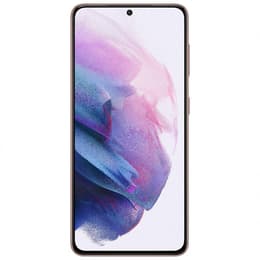
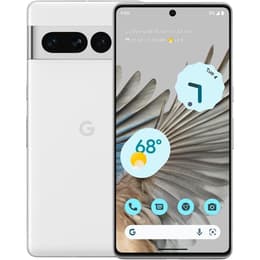
Galaxy S21 5G Vs Google Pixel 7 Pro
- 1-year minimum warranty
- Free delivery on all orders
- Free 30-day returns
Differences at a glance
The Samsung Galaxy S21 5G, released in January 2021, and the Google Pixel 7 Pro, launched in October 2022, are both high-end Android smartphones. While the Galaxy S21 5G offers a compact design and a versatile camera system, the Pixel 7 Pro distinguishes itself with a larger, higher-resolution display and advanced computational photography capabilities. Both devices run on the Android operating system, but they offer distinct user experiences through their respective software interfaces.
Available Models
Colour
Storage (GB)
Scores
Durability
When considering the long-term usability of these devices, their release timelines and software support policies are key factors.
- Release Timeline: The Galaxy S21 5G was released in January 2021, making it an older model compared to the Pixel 7 Pro, which launched in October 2022. This difference in age directly impacts their remaining software support.
- OS Support Duration: The Galaxy S21 series received four major Android OS updates, with its final major update (Android 15-based One UI 7.0) rolling out in the first half of 2025. Security updates for the S21 series concluded around January 2026. In contrast, the Pixel 7 Pro, launched with Android 13, is guaranteed to receive three generations of OS updates (up to Android 16) and five years of security updates, extending until October 2027. This means the Pixel 7 Pro offers a longer period of official software and security support.
- Repairability: The Galaxy S21 5G generally has a higher repairability score, with some sources giving it a 7.5/10, noting its ease of disassembly and modular components. The Pixel 7 Pro, on the other hand, typically receives a lower repairability score, around 5.5/10, due to challenges like strong adhesive for the battery and a glued-on rear panel.
Year of Release
2021
2022
Compatible with latest Update
Yes
Yes
OS
Android
Android
Foldable
No
No
Performance
The performance of both smartphones is driven by their respective internal components, influencing how smoothly they handle daily tasks and demanding applications.
- Processor Capabilities: The Pixel 7 Pro features a newer generation processor designed by Google, which enhances its machine learning capabilities, leading to faster processing for AI-driven tasks like photo editing and voice commands. The Galaxy S21 5G, while still capable, uses an earlier generation processor that provides solid performance for general use and multitasking.
- RAM and Storage: The Galaxy S21 5G typically comes with 8GB of RAM and storage options of 128GB or 256GB. The Pixel 7 Pro offers more flexibility with 8GB or 12GB of RAM and storage options up to 512GB, which can be beneficial for users who store large files or run many applications simultaneously.
- Overall Responsiveness: Users generally report both devices offer a smooth and responsive experience for everyday navigation and app usage. The Pixel 7 Pro's newer processor provides a noticeable advantage in tasks that leverage its advanced AI capabilities.
Screen quality
The visual experience on both devices is delivered through their displays, each offering distinct characteristics in terms of technology, size, and clarity.
- Display Technology and Size: The Galaxy S21 5G features a 6.2-inch Dynamic AMOLED 2X display, known for its vibrant colors and deep blacks. The Pixel 7 Pro boasts a larger 6.7-inch LTPO AMOLED display, providing more screen real estate for media consumption and multitasking.
- Resolution and Brightness: The Pixel 7 Pro offers a higher resolution of 1440 x 3120 pixels, resulting in a sharper image compared to the Galaxy S21 5G's 1080 x 2400 pixel resolution. Both displays offer high peak brightness, with the Galaxy S21 5G reaching 1300 nits and the Pixel 7 Pro reaching 1500 nits, ensuring good visibility in various lighting conditions.
- Refresh Rate: Both phones feature a 120Hz refresh rate, contributing to smoother scrolling and a more fluid visual experience. The Pixel 7 Pro's LTPO technology allows for a variable refresh rate, which can help with power efficiency.
Resolution
1080 x 2400
1440 x 3120
Screen type
Dynamic AMOLED 2X
LTPO AMOLED
Audiovisual
Both smartphones offer advanced camera systems, but they approach photography with different strengths and features.
- Camera System Capabilities: The Galaxy S21 5G features a triple-camera setup with a 12 MP main, 64 MP telephoto (with 3x hybrid zoom), and 12 MP ultrawide lens. The Pixel 7 Pro also has a triple-camera system, including a 50 MP main, 48 MP telephoto (with 5x optical zoom), and 12 MP ultrawide lens, with autofocus on the ultrawide.
- Photography Performance: The Pixel 7 Pro is widely praised for its computational photography, excelling in detail capture, color accuracy, and low-light performance across its lenses. The Galaxy S21 5G also delivers strong camera performance with versatile lenses and features like Director's View and improved focus. Users have noted the S21's camera is sharp and capable.
- Video Recording: Both devices are capable of recording high-quality video, with the Galaxy S21 5G supporting up to 8K at 24fps and 4K at 60fps. The Pixel 7 Pro also offers 4K video recording at 60fps across all its cameras, including the front-facing one, and supports 10-bit HDR video.
Main camera
12 megapixels
50 megapixels
Front camera
10 megapixels
10.8 megapixels
Miscellaneous
Beyond core performance and display, several practical elements contribute to the overall user experience of these smartphones.
- Connectivity: Both devices support 5G connectivity, ensuring access to the latest mobile network speeds. The Pixel 7 Pro includes Wi-Fi 6e and Bluetooth 5.2, offering slightly newer standards compared to the Galaxy S21 5G's Wi-Fi 6 and Bluetooth 5.0.
- Port Types and Sensors: Both phones utilize a USB-C port for charging and data transfer and lack a 3.5mm headphone jack. For security, both feature under-display fingerprint sensors, with the Galaxy S21 5G using an ultrasonic sensor and the Pixel 7 Pro an optical one, alongside face recognition.
- Design and Build Materials: The Galaxy S21 5G has a glass front (Gorilla Glass Victus), a plastic back, and an aluminum frame, contributing to a lighter feel. The Pixel 7 Pro features Gorilla Glass Victus on both the front and back, with an aluminum frame, giving it a more premium feel but also making it heavier. Both devices carry an IP68 rating for dust and water resistance.
Weight
169 g
212 g
Screen size (in)
6.2
6.7
Network
5G
5G
SIM card
Dual Physical SIM + eSIM
Physical SIM + eSIM
Carrier compatibility
Unlocked
Unlocked
What the community thinks
The Samsung Galaxy S21 5G and Google Pixel 7 Pro cater to slightly different user preferences, reflecting their respective release dates and design philosophies.
Users often praise the Galaxy S21 5G for its compact size, vibrant display, and capable camera system that delivers sharp photos and versatile video options. Its performance is generally considered smooth for everyday tasks, and its repairability score is noted as relatively high. However, a common concern for the S21 5G, especially in 2026, is its limited remaining software support, as it has reached the end of its major OS and security updates cycle. Some users also found its plastic back less premium than glass.
The Google Pixel 7 Pro is frequently lauded for its exceptional camera performance, particularly its computational photography and advanced zoom capabilities, making it a strong choice for photography enthusiasts. Its larger, higher-resolution display and longer software support timeline are also significant advantages. Criticisms sometimes point to its repairability being more challenging and its battery life, while solid, not always being class-leading for heavy users.
Users prioritizing a more compact device with a proven camera system and who are comfortable with an older software support cycle may find the Galaxy S21 5G suitable. Conversely, those who value cutting-edge camera technology, a larger and sharper display, and a longer period of software updates will likely lean towards the Pixel 7 Pro. Both devices, when considered as quality-assured refurbished options, offer an eco-friendly alternative for consumers seeking high-performance smartphones.