
Galaxy Z Fold6 Vs Xiaomi Redmi Note 14 Pro

Galaxy Z Fold6
Galaxy Z Fold6
Starting at

Refurbished price:750.00

Versus €1,973.53 new

See options
Xiaomi Redmi Note 14 Pro
Starting at

Refurbished price:260.77

Versus €349.99 new

See options

Ratings

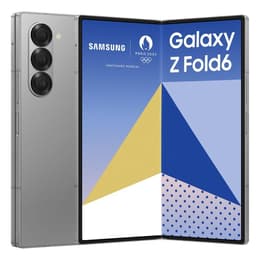
The Samsung Galaxy Z Fold6, released in July 2024, and the Xiaomi Redmi Note 14 Pro, launched in early 2025, represent distinct approaches to modern smartphone design and functionality. While the Galaxy Z Fold6 offers a unique foldable form factor that transforms from a traditional smartphone into a tablet-like experience, the Redmi Note 14 Pro provides a more conventional, yet feature-rich, slab design. Both devices operate on the Android platform, with the Galaxy Z Fold6 featuring Samsung's One UI and the Redmi Note 14 Pro running Xiaomi's HyperOS, each offering a customized user experience.

Scores

Durability

When considering the long-term usability of these devices, several factors contribute to their expected practical lifespan.

  • Release Timeline: The Galaxy Z Fold6 was released in July 2024, making it a slightly older model compared to the Redmi Note 14 Pro, which launched in early 2025. This difference in release year can influence the duration of future software support.
  • Software Longevity: Samsung typically provides extensive software support for its flagship devices, with the Galaxy Z Fold6 expected to receive up to seven years of operating system and security updates. The Redmi Note 14 Pro, while offering a modern Android version at launch, generally receives a shorter period of major OS updates, typically around two to three years, with security updates extending for a few more years.
  • Build Durability: The Galaxy Z Fold6 features an IP48 rating, indicating resistance to dust and water ingress, and utilizes Corning Gorilla Glass Victus 2 for its cover screen and back panel, alongside Ultra-Thin Glass for its foldable inner display. The Redmi Note 14 Pro boasts an IP68 rating for comprehensive dust and water resistance and also incorporates Corning Gorilla Glass Victus 2 on its front display. The foldable nature of the Z Fold6 introduces a mechanical hinge, which is designed for durability but is a moving part.

Year of Release

2024

2025

OS

Android

Android

Foldable

Yes

No

Performance

The performance capabilities of these two smartphones cater to different user expectations, driven by their internal hardware configurations.

  • Processing Power: The Galaxy Z Fold6 is equipped with a high-end processor designed for demanding tasks, enabling smooth operation across complex applications, intensive multitasking, and advanced gaming. This allows for rapid app loading and seamless transitions between multiple open programs. The Redmi Note 14 Pro, typically featuring a mid-range processor, handles everyday tasks efficiently, providing a responsive experience for general use, social media, and moderate gaming.
  • Multitasking and Storage: With 12 GB of RAM, the Galaxy Z Fold6 offers substantial capacity for running numerous applications simultaneously without slowdowns, complemented by storage options up to 1 TB. The Redmi Note 14 Pro comes with 8 GB or 12 GB of RAM and up to 512 GB of internal storage, which is ample for most users' app and media needs.
  • Battery Behavior: The Galaxy Z Fold6 houses a 4400 mAh battery, which typically provides a full day of use for many users, though heavy use of the larger inner display can impact longevity. The Redmi Note 14 Pro features a larger 5500 mAh battery, often resulting in extended usage times, with many users reporting it comfortably lasts through a full day, even with active use.

Memory (GB)

12 GB

8 GB

Screen quality

The display experience is a primary differentiator between the Galaxy Z Fold6 and the Redmi Note 14 Pro, largely due to their distinct form factors.

  • Display Technology and Size: The Galaxy Z Fold6 features two Dynamic AMOLED 2X displays: a 6.3-inch cover screen and a large 7.6-inch foldable inner screen. This allows users to switch between a compact phone experience and an expansive tablet-like view. The Redmi Note 14 Pro offers a single 6.67-inch AMOLED display, providing a generous viewing area in a traditional smartphone form.
  • Resolution and Clarity: Both devices offer high-resolution displays. The Z Fold6's main screen has a resolution of 2160 x 1856 pixels, and its cover screen is 2376 x 968 pixels, delivering sharp visuals. The Redmi Note 14 Pro features a 1.5K resolution (1220 x 2712 pixels), ensuring clear and detailed imagery for media consumption and daily tasks.
  • Brightness and Smoothness: Both phones feature adaptive refresh rates up to 120Hz, contributing to smooth scrolling and fluid animations. The Galaxy Z Fold6's displays can reach a peak brightness of 2600 nits, offering excellent visibility in bright outdoor conditions. The Redmi Note 14 Pro can achieve an impressive peak brightness of 3000 nits, providing strong outdoor readability.

Resolution

1856 x 2160

1080x2400

Audiovisual

Both smartphones offer capable camera systems, though they are designed with different photographic priorities and capabilities.

  • Rear Camera Systems: The Galaxy Z Fold6 features a versatile triple-camera setup on the rear, including a 50 MP wide-angle lens with optical image stabilization (OIS), a 12 MP ultra-wide lens, and a 10 MP telephoto lens with 3x optical zoom and OIS. This configuration provides flexibility for various shooting scenarios, from expansive landscapes to distant subjects. The Redmi Note 14 Pro is equipped with a high-resolution 200 MP main camera with OIS, an 8 MP ultra-wide lens, and a 2 MP macro camera. The high megapixel count of the main sensor allows for detailed images, particularly in good lighting.
  • Low-Light and Video Performance: The Galaxy Z Fold6's camera system is designed to perform well in various lighting conditions, with its main sensor and OIS contributing to clearer low-light shots and stable video recording. The Redmi Note 14 Pro's 200 MP main sensor with OIS also aims for strong low-light performance and detailed captures. For video, the Z Fold6 offers advanced recording capabilities, while the Redmi Note 14 Pro typically supports up to 1080p at 60fps from the rear camera, with some variants supporting 4K.
  • Front Cameras and Audio: The Z Fold6 includes a 10 MP camera on the cover screen and a 4 MP under-display camera on the main screen for video calls and selfies. The Redmi Note 14 Pro features a 32 MP front-facing camera, capable of capturing detailed selfies. Both devices offer stereo speakers, with the Redmi Note 14 Pro specifically mentioning Dolby Atmos support for an enhanced audio experience.

Front camera

4 megapixels

32 MP

Miscellaneous

Beyond the core specifications, several practical elements contribute to the overall user experience of these devices.

  • Connectivity and Ports: Both smartphones support 5G connectivity for fast mobile data. The Galaxy Z Fold6 includes Wi-Fi 6E and Bluetooth 5.3. The Redmi Note 14 Pro also supports modern Wi-Fi standards and Bluetooth 5.3. Both devices utilize a USB-C port for charging and data transfer. Some variants of the Redmi Note 14 Pro may retain a 3.5mm headphone jack, a feature less common on premium devices like the Z Fold6.
  • Biometrics and Sensors: The Galaxy Z Fold6 features a side-mounted fingerprint sensor and face recognition. The Redmi Note 14 Pro typically includes an in-screen fingerprint sensor and AI face unlock. Both devices incorporate essential sensors like accelerometers, gyroscopes, and ambient light sensors. The Redmi Note 14 Pro also includes an IR Blaster, allowing it to function as a universal remote control.
  • Dimensions and Handling: The Galaxy Z Fold6, when folded, measures 153.5 x 68.1 x 12.1 mm and weighs 239 g, offering a compact yet thicker profile. Unfolded, it expands to 153.5 x 132.6 x 5.6 mm, providing a thin, tablet-like experience. The Redmi Note 14 Pro has dimensions of approximately 162.33 x 74.42 x 8.24 mm and weighs around 190 g, presenting a lighter and slimmer traditional smartphone form factor.

Weight

239 g

180 g

Screen size (in)

7.6

6.67

Network

5G

4G

SIM card

Physical SIM + eSIM

Dual Physical SIM

Carrier compatibility

Unlocked

Unlocked

User feedback for the Samsung Galaxy Z Fold6 often highlights its innovative foldable design as a major advantage, providing the utility of both a smartphone and a small tablet in one device. Users appreciate the expansive inner display for media consumption and multitasking, along with the robust software experience offered by One UI and the integration of Galaxy AI features. Common criticisms sometimes point to the visible crease on the inner display, though it has become less prominent with each generation, and the device's overall thickness when folded.

The Xiaomi Redmi Note 14 Pro is frequently praised for its vibrant AMOLED display, long-lasting battery life, and capable main camera, especially considering its segment. Users often commend its solid build quality, including the IP68 rating and Gorilla Glass Victus 2 protection. Some common concerns revolve around the performance of its mid-range processor for very demanding applications or high-end gaming, and occasional software stutters.

Users prioritizing a versatile device that can transform between a compact phone and a larger screen for productivity and entertainment may find the Galaxy Z Fold6 well-suited to their needs. Its advanced processing power and extensive software support cater to those seeking a premium, long-term investment. Conversely, users who prefer a traditional smartphone form factor with a strong focus on display quality, battery endurance, and a high-resolution main camera for everyday photography will likely lean towards the Redmi Note 14 Pro. Both devices are available as quality-assured refurbished options, offering an eco-friendly alternative for consumers.


See all articles

Our recent comparisons