
Galaxy Z Fold6 Vs iPhone 15

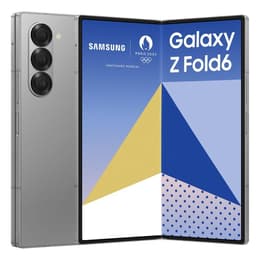
Galaxy Z Fold6
Galaxy Z Fold6
Starting at

Refurbished price:750.00

Versus €1,973.53 new

See options
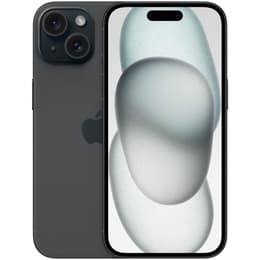
iPhone 15
iPhone 15
Starting at

Refurbished price:376.00

Versus €879.00 new

See options

Ratings

The Samsung Galaxy Z Fold6, released in July 2024, and the Apple iPhone 15, launched in September 2023, represent distinct approaches to modern smartphone design. The Galaxy Z Fold6 offers a unique foldable form factor, transforming from a traditional smartphone into a larger tablet-like display, running on Android. In contrast, the iPhone 15 maintains a conventional smartphone design, operating on Apple's iOS platform. These devices cater to different user preferences, primarily differing in their display configurations and operating system ecosystems.

Scores

Durability

When considering the longevity of these devices, both the Galaxy Z Fold6 and the iPhone 15 offer substantial software support and robust build qualities, though with different characteristics.

  • Software Updates: The iPhone 15 is guaranteed to receive a minimum of five years of software updates and security patches from its release date, extending through September 2028. Historically, Apple often provides updates for longer periods. The Galaxy Z Fold6, running Android, typically receives four to five years of major operating system updates and five years of security updates, aligning with Samsung's general policy for its flagship devices.
  • Physical Durability: The iPhone 15 features a Ceramic Shield front cover and an IP68 rating for water and dust resistance, indicating protection against immersion in water and dust ingress. The Galaxy Z Fold6 utilizes an enhanced Armor Aluminum frame and Gorilla Glass Victus 2 for its cover screen. Its inner foldable display, made of Ultra Thin Glass (UTG) combined with plastic layers, is more susceptible to scratches than the outer screen. The Z Fold6 carries an IP48 rating, offering resistance against water and larger solid particles, but some tests suggest its hinge can be vulnerable to fine dust ingress.
  • Practical Lifespan: Both devices are designed for extended use. The iPhone 15's battery is estimated to retain 80% of its original capacity after 1,000 charge cycles, an improvement over previous models. The Z Fold6's hinge is rated for 200,000 folds, suggesting a long mechanical lifespan under normal conditions.

Year of Release

2024

2023

Compatible with latest Update

Yes

Yes

OS

Android

iOS

Foldable

Yes

No

Performance

The performance of both devices is optimized for smooth operation, handling demanding applications and multitasking with efficiency, albeit through different hardware and software integrations.

  • Processing Power: The Galaxy Z Fold6 is equipped with a current-generation processor designed for high performance, enabling butter-smooth operation across various tasks and demanding applications. The iPhone 15 features a powerful chip that ensures responsive performance for everyday use, gaming, and complex applications.
  • Multitasking and Responsiveness: With 12 GB of RAM, the Galaxy Z Fold6 is well-suited for extensive multitasking, allowing users to run multiple applications simultaneously on its larger internal display without significant slowdowns. The iPhone 15, with 6 GB of RAM, provides a fluid user experience and efficient app switching within the iOS ecosystem.
  • Storage Options: Both devices offer various storage configurations to suit different user needs. The Galaxy Z Fold6 is available with 256 GB, 512 GB, or 1 TB of internal storage. The iPhone 15 comes with 128 GB, 256 GB, or 512 GB storage options.

Memory (GB)

12 GB

6 GB

Screen quality

The display experience on the Galaxy Z Fold6 and iPhone 15 differs significantly due to their fundamental design philosophies, offering distinct advantages for various viewing habits.

  • Display Technology and Size: The Galaxy Z Fold6 features two Dynamic AMOLED 2X displays: a 6.3-inch cover screen and a 7.6-inch main foldable screen. This allows for a compact phone experience that unfolds into a larger, tablet-like canvas. The iPhone 15 has a single 6.1-inch Super Retina XDR OLED display. Both OLED technologies deliver deep blacks and vibrant colors.
  • Resolution and Brightness: The Z Fold6's main display offers a resolution of 2160 x 1856 pixels, while its cover screen is 2376 x 968 pixels. Both screens achieve a peak brightness of up to 2,600 nits, ensuring good visibility even in bright outdoor conditions. The iPhone 15's display has a resolution of 2556 x 1179 pixels (460 ppi) and can reach a peak outdoor brightness of 2,000 nits.
  • Refresh Rate and Features: The Galaxy Z Fold6's displays both feature an adaptive refresh rate of up to 120Hz, contributing to smoother scrolling and more fluid animations. The iPhone 15 maintains a 60Hz refresh rate. The iPhone 15 also includes the Dynamic Island, an interactive area around the front camera that displays alerts and live activities.

Resolution

1856 x 2160

1179 x 2556

Audiovisual

Both devices offer capable camera systems designed to capture high-quality photos and videos, though their configurations and specific strengths vary.

  • Rear Camera Systems: The Galaxy Z Fold6 features a versatile triple-camera setup on its rear: a 50 MP wide-angle main lens with optical image stabilization (OIS), a 12 MP ultra-wide lens with a 123-degree field of view, and a 10 MP telephoto lens offering 3x optical zoom and OIS. The iPhone 15 is equipped with an advanced dual-camera system, including a 48 MP main camera with OIS and a 12 MP ultra-wide camera. The 48 MP main sensor also enables a 2x telephoto option through sensor cropping.
  • Photography Features: The Z Fold6 incorporates Samsung's ProVisual Engine for AI-enhanced image processing, offering features like Super HDR, Nightography for low-light conditions, and various AI editing tools. The iPhone 15 utilizes Apple's Photonic Engine, Deep Fusion, and Smart HDR 5 for improved image quality, alongside Night mode and next-generation portrait features.
  • Video Recording and Front Cameras: The Galaxy Z Fold6 can record video at up to 8K resolution at 30 frames per second. It has a 10 MP front camera on the cover screen and a 4 MP under-display camera on the main screen. The iPhone 15 supports 4K video recording at up to 60 frames per second and includes Cinematic mode for depth-of-field effects and Action mode for stabilized video. Its front-facing TrueDepth camera is 12 MP.

Front camera

4 megapixels

12 megapixels

Miscellaneous

Beyond their core functionalities, both the Galaxy Z Fold6 and iPhone 15 offer a range of practical features that enhance user experience, from connectivity to physical design.

  • Connectivity and Ports: Both devices support 5G cellular networks, Wi-Fi 6 (802.11ax), and Bluetooth 5.3 for wireless connectivity. The Galaxy Z Fold6 features a USB-C port, as does the iPhone 15, marking a transition for Apple's standard models. However, the iPhone 15's USB-C port operates at USB 2.0 speeds, while the Z Fold6's port typically supports faster data transfer.
  • Biometric Security and Stylus Support: The iPhone 15 relies on Face ID for secure facial recognition. The Galaxy Z Fold6 incorporates a fingerprint sensor for biometric authentication. The Z Fold6 also supports the S Pen Pro and S Pen Fold Edition for stylus input, though it does not include a built-in slot for storage.
  • Dimensions and Build Materials: The Galaxy Z Fold6, when folded, measures 153.5 mm in height, 68.1 mm in width, and 12.1 mm in depth, weighing 239 grams. Unfolded, it is 153.5 mm high, 132.6 mm wide, and 5.6 mm deep. The iPhone 15 measures 147.6 mm in height, 71.6 mm in width, and 7.8 mm in depth, with a weight of 171 grams. The Z Fold6 uses an Armor Aluminum frame, while the iPhone 15 features an aluminum design with a color-infused glass back.

Weight

239 g

171 g

Screen size (in)

7.6

6.1

Network

5G

5G

SIM card

Physical SIM + eSIM

Physical SIM + eSIM

Carrier compatibility

Unlocked

Unlocked

Connector

USB-C

USB-C (USB 2)

User feedback for the Galaxy Z Fold6 often highlights its innovative foldable design as a significant advantage, providing a large screen for productivity and media consumption. Users appreciate the smooth performance and the versatility offered by the dual displays. Some common criticisms revolve around the durability of the inner screen and the hinge's susceptibility to dust, as well as battery life, which, while good for a foldable, may not match the endurance of some traditional smartphones.

The iPhone 15 is generally praised for its excellent main camera, vibrant display, and reliable battery life for average use. Users also value its comfortable in-hand feel and overall system reliability. Frequent criticisms include the 60Hz refresh rate, which some users find less fluid compared to higher refresh rate displays on other devices, and occasional reports of overheating.

Users prioritizing a large, adaptable screen for multitasking, content creation, or immersive media viewing may find the Galaxy Z Fold6 well-suited to their needs. Its unique form factor and S Pen support cater to those seeking a device that blurs the line between a phone and a tablet. Conversely, users who prefer a more traditional, compact smartphone experience with a strong emphasis on camera performance, consistent software updates, and a streamlined ecosystem may lean towards the iPhone 15. Both devices offer compelling features, and for those considering a quality-assured refurbished option, Back Market provides an eco-friendly alternative to new purchases.

See all articles

Our recent comparisons