

Compare models
Galaxy A14 5G Vs iPhone Air
- 1-year minimum warranty
- Free delivery on all orders
- Free 30-day returns
Differences at a glance
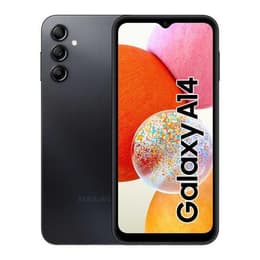
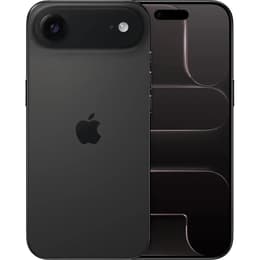
The Samsung Galaxy A14 5G (2023) and the Apple iPhone Air (2025) represent entirely different approaches to smartphone design, engineering timelines, and target categories. While the Galaxy A14 5G focuses on providing accessible daily mobile essentials within an Android environment, the iPhone Air introduces a minimalist, ultra-slim profile running iOS with high-end internal components. These two devices cater to contrasting user preferences regarding form factor, software ecosystems, and internal capabilities.
Available Models
Colour
Storage (GB)
Scores
Durability
When evaluating the long-term viability of these two devices, differences in their release timelines and software update schedules play an important role in expected practical lifespan.
- Release timeline and age: The Galaxy A14 5G debuted in early 2023, whereas the iPhone Air arrived in late 2025, placing them generations apart in hardware age and initial software support cycles.
- Software longevity expectations: The iPhone Air benefits from Apple's extended update timeline, while the Galaxy A14 5G operates closer to the midpoint of its structured security patch and Android version schedule.
- Repairability and build durability: Both models utilize standard manufacturing materials suited for daily wear, though choosing a quality-assured refurbished option provides a sustainable choice that extends device lifecycles responsibly.
Year of Release
2023
2025
Compatible with latest Update
Yes
Yes
OS
Android
iOS
Foldable
No
No
Performance
Daily operation and hardware capability differ substantially, driven by contrasting internal components, memory configurations, and energy management systems.
- Processor capabilities and multitasking: The iPhone Air handles demanding apps, heavy multitasking, and complex gaming smoothly thanks to its current-generation processor and generous RAM allocation, whereas the Galaxy A14 5G is optimized for standard daily tasks like web browsing and messaging.
- Storage and memory options: The iPhone Air provides expansive high-speed storage configurations starting at higher tiers without expansion slots, while the Galaxy A14 5G offers moderate internal capacity complemented by expandable storage via microSD cards.
- Battery behavior: The Galaxy A14 5G utilizes a large capacity cell suited for extended light usage, while the iPhone Air balances its high-efficiency processing with an ultra-thin physical battery footprint.
Screen quality
Visual output and display technologies reflect distinct engineering choices tailored to different viewing habits and media consumption styles.
- Display technology: The iPhone Air features a vibrant OLED display with deep blacks, high contrast, and a smooth refresh rate, whereas the Galaxy A14 5G employs a standard LCD panel suitable for everyday text and video viewing.
- Brightness and clarity: The iPhone Air offers higher peak brightness levels and sharper resolution for comfortable outdoor visibility, while the Galaxy A14 5G delivers clear readability under normal indoor lighting conditions.
- Physical dimensions: The iPhone Air presents a moderately sized screen within an ultra-thin frame, whereas the Galaxy A14 5G provides a slightly taller viewing area surrounded by more prominent borders.
Resolution
1080 x 2408
2736x1260
Screen type
PLS LCD
Super Retina XDR
Audiovisual
Multimedia capture and audio output capabilities vary significantly, impacting how each device records memories and plays back media.
- Camera system capabilities: The iPhone Air utilizes a high-resolution single rear lens backed by advanced computational photography for sharp everyday and low-light images, while the Galaxy A14 5G features a versatile multi-lens arrangement focused on standard and macro shots.
- Video recording: The iPhone Air supports high-definition video stabilization and advanced cinematic formats, whereas the Galaxy A14 5G covers basic recording needs for casual sharing.
- Audio output: The iPhone Air relies on a specialized speaker configuration for media playback, while the Galaxy A14 5G includes a traditional headphone jack alongside its built-in speaker.
Main camera
50 megapixels
48 megapixels
Front camera
13 megapixels
18 megapixels
Miscellaneous
Practical physical characteristics and connectivity standards define how each smartphone integrates into everyday routines and travel needs.
- Build and handling: The iPhone Air prioritizes an ultra-thin titanium and glass construction resulting in a remarkably lightweight feel, while the Galaxy A14 5G features a thicker plastic build that adds noticeable weight in the hand.
- Connectivity options: Both models support 5G networks for fast mobile data, though the iPhone Air incorporates modern wireless communication standards and an eSIM-only profile.
- Security features: The iPhone Air utilizes face recognition technology, while the Galaxy A14 5G provides a side-mounted fingerprint sensor integrated into the power button.
Weight
201 g
165 g
Screen size (in)
6.6
6.5
Network
5G
5G
SIM card
Dual Physical SIM
eSIM
Carrier compatibility
Unlocked
Unlocked
Connector
USB-C + Jack 3.5mm
USB-C
What the community thinks
Choosing between the Samsung Galaxy A14 5G and the Apple iPhone Air depends entirely on individual user priorities, preferred software ecosystems, and hardware expectations. Users prioritizing a lightweight, ultra-slim design, advanced processing power, and the iOS ecosystem will find the iPhone Air well-suited to their daily routines. Conversely, users seeking an accessible Android device with expandable storage and traditional wired headphone support may lean toward the Galaxy A14 5G.
Reviewers often praise the iPhone Air for its breakthrough slim profile and responsive system performance, though some note its limited physical speaker setup and premium entry tier. Meanwhile, the Galaxyredit A14 5G earns recognition for dependable everyday essentials, though users frequently mention its heavier body and basic display technology. Exploring a quality-assured refurbished option offers an eco-friendly alternative for acquiring either model while supporting sustainable technology consumption.