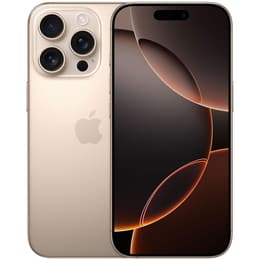


Galaxy Z Flip4 Vs iPhone 16 Pro

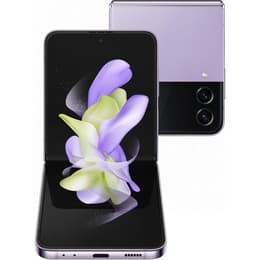
Galaxy Z Flip4
Galaxy Z Flip4
Starting at

Refurbished price:288.00

Versus €1,289.99 new

See options
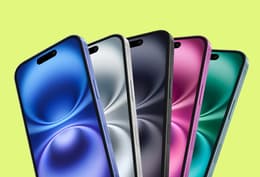
iPhone 16 Pro
iPhone 16 Pro
Starting at

Refurbished price:669.00

Versus €1,239.00 new

See options

Ratings

The Samsung Galaxy Z Flip4, released in August 2022, offers a unique foldable design that transforms a standard-sized smartphone into a compact, pocketable device. In contrast, the iPhone 16 Pro, launched in September 2024, represents Apple's traditional flagship smartphone approach, focusing on advanced performance, camera capabilities, and a premium build. The primary differentiators between these two devices lie in their form factor and their respective operating systems, Android and iOS, which shape their user experience and ecosystem.

Scores

Durability

When considering the long-term usability of a smartphone, factors like software support, physical resilience, and overall build quality are important. The Galaxy Z Flip4 and iPhone 16 Pro offer different approaches to longevity.

  • Software Support: The Galaxy Z Flip4 launched with Android 12 and is eligible for four major Android OS updates, extending its software support up to Android 16, alongside five years of security updates, expected to last until 2027. The iPhone 16 Pro, running on iOS 18 at launch, benefits from Apple's typically longer software support, often receiving major iOS updates for six to seven years from its release.
  • Physical Durability: The Galaxy Z Flip4 features an Armor Aluminum frame and Gorilla Glass Victus+ on its cover screen, with an IPX8 water resistance rating, meaning it can withstand submersion in water but lacks official dust resistance. Its foldable main screen, protected by Ultra-Thin Glass (UTG) with a plastic layer, is rated for 200,000 folds, equivalent to about five years of typical use, though the inner screen's surface can be susceptible to scratches from fingernails or sharp objects. The iPhone 16 Pro utilizes a titanium alloy frame and Ceramic Shield front, offering enhanced scratch and drop resistance.
  • Expected Lifespan: While both devices are built to last, the iPhone 16 Pro's newer release date and Apple's extended software update policy generally suggest a longer period of receiving the latest operating system features and security patches compared to the Galaxy Z Flip4.

Year of Release

2022

2024

Compatible with latest Update

Yes

Yes

Foldable

Yes

No

Performance

The performance of a smartphone impacts everything from app responsiveness to gaming and multitasking. The Galaxy Z Flip4 and iPhone 16 Pro offer distinct performance profiles due to their different hardware and software optimizations.

  • Processing Power: The Galaxy Z Flip4 is powered by the Qualcomm Snapdragon 8+ Gen 1 processor, which provides a responsive experience for everyday tasks and handles demanding applications smoothly. The iPhone 16 Pro features Apple's A18 Pro chip, designed for high-end performance, offering substantial power for intensive gaming, professional-grade applications, and complex multitasking.
  • Multitasking and Responsiveness: Both devices come with 8GB of RAM, enabling efficient multitasking and quick switching between applications. However, the iPhone 16 Pro's newer processor generally provides a performance advantage, resulting in faster app loading times and a more fluid overall system responsiveness, particularly noticeable in graphically intensive tasks.
  • Battery Behavior: The Galaxy Z Flip4 has a 3700 mAh battery, which, while an improvement over its predecessor, typically provides around 8.5 to 9 hours of continuous web browsing, often requiring daily charging for heavy users. The iPhone 16 Pro is equipped with a 3577 mAh battery, and with Apple's power-efficient hardware and software integration, it is designed to offer extended usage throughout the day, often surpassing the battery life of its predecessors.
  • Storage Options: The Galaxy Z Flip4 is available with 128GB, 256GB, or 512GB of internal storage. The iPhone 16 Pro offers more expansive storage configurations, including 128GB, 256GB, 512GB, and up to 1TB, catering to users with extensive storage needs for media and applications.

Memory (GB)

8 GB

8 GB

Screen quality

The display is a primary interface for any smartphone, and both the Galaxy Z Flip4 and iPhone 16 Pro offer high-quality viewing experiences, albeit with different characteristics.

  • Display Technology and Form Factor: The Galaxy Z Flip4 features a 6.7-inch Foldable Dynamic AMOLED 2X main display with a 120Hz adaptive refresh rate, providing vibrant colors and deep blacks. Its unique folding mechanism allows it to become highly compact. It also includes a 1.9-inch Super AMOLED cover screen for quick interactions when folded. The iPhone 16 Pro sports a 6.3-inch Super Retina XDR OLED display with ProMotion technology, offering an adaptive refresh rate up to 120Hz for smooth scrolling and responsive visuals.
  • Resolution and Clarity: The Galaxy Z Flip4's main display has a resolution of 2640 x 1080 pixels. The iPhone 16 Pro offers a resolution of 2622 x 1206 pixels with a pixel density of 460 pixels per inch (PPI), contributing to sharp text and detailed images.
  • Brightness Levels: For outdoor visibility and HDR content, the iPhone 16 Pro's display can reach a typical brightness of 1000 nits, a peak HDR brightness of 1600 nits, and an impressive peak outdoor brightness of 2000 nits. The Galaxy Z Flip4's display also offers good brightness with a peak of 1200 nits.
  • Viewing Experience: The iPhone 16 Pro features thinner bezels, maximizing the screen-to-body ratio for an immersive viewing experience. The Galaxy Z Flip4's foldable nature provides a distinct advantage for portability, while its main screen offers a full smartphone experience when unfolded.

Resolution

1080 x 2640

1206 x 2622

Screen type

Foldable Dynamic AMOLED 2X

LTPO Super Retina XDR OLED

Audiovisual

Camera capabilities are a significant consideration for many users, and both devices offer advanced systems for capturing photos and videos, though with different strengths and configurations.

  • Rear Camera Systems: The Galaxy Z Flip4 features a dual-camera setup on the rear, consisting of two 12MP lenses: a wide-angle and an ultra-wide-angle. This system is capable of capturing good images in most lighting conditions, with improved low-light performance compared to its predecessor. The iPhone 16 Pro boasts a versatile triple-camera system, including a 48MP main wide camera, a 48MP ultra-wide camera that also functions for macro photography, and a 12MP telephoto lens with 5x optical zoom, utilizing a tetraprism design.
  • Photography Performance: The Galaxy Z Flip4 delivers images with vibrant colors and good detail, and its unique form factor allows for creative shooting angles using 'Flex Mode' and the cover screen as a viewfinder for high-quality selfies with the main cameras. The iPhone 16 Pro's advanced sensors and computational photography capabilities result in sharp, detailed photos across various conditions, with particular strengths in low-light environments and dynamic range. It also supports ProRAW for greater editing flexibility.
  • Video Recording: The Galaxy Z Flip4 can record 4K video at 30 or 60 frames per second (fps). The iPhone 16 Pro offers more advanced video capabilities, including 4K video recording at up to 120fps and support for Apple Log video, providing more headroom for professional video editing.
  • Front Camera and Audio: The Galaxy Z Flip4 has a 10MP selfie camera, and its ability to use the main cameras for selfies via the cover screen offers higher quality. The iPhone 16 Pro features a 12MP front-facing camera. Both devices offer good microphone quality for calls and recording, and stereo speakers for media consumption.

Main camera

12 megapixels

48 megapixels

Front camera

10 megapixels

12 megapixels

Miscellaneous

Beyond core features, several practical elements contribute to the overall user experience and daily utility of a smartphone. The Galaxy Z Flip4 and iPhone 16 Pro present different options in these areas.

  • Connectivity Standards: The Galaxy Z Flip4 supports 5G cellular networks, Wi-Fi 6 (802.11ax), and Bluetooth 5.2. The iPhone 16 Pro offers more advanced connectivity with 5G, Wi-Fi 7 (802.11be), and Bluetooth 5.3, providing faster wireless speeds and improved network efficiency.
  • Ports and Biometrics: The Galaxy Z Flip4 uses a USB-C 2.0 port for charging and data transfer and features a side-mounted fingerprint sensor for secure unlocking. The iPhone 16 Pro utilizes a USB-C port and relies on Face ID for biometric authentication, along with a LiDAR scanner for enhanced augmented reality experiences and improved low-light focusing.
  • Physical Design and Handling: The Galaxy Z Flip4, when folded, measures 84.9 x 71.9 x 15.9-17.1 mm and weighs 187g, making it exceptionally compact and easy to carry in smaller pockets. Unfolded, it measures 165.2 x 71.9 x 6.9 mm. The iPhone 16 Pro has dimensions of 149.6 × 71.5 × 8.25 mm and weighs 199g, offering a traditional slab form factor with a premium feel due to its titanium alloy construction.
  • Additional Features: The iPhone 16 Pro includes a dedicated Camera Control button for quick access and control over camera functions.

Weight

187 g

199 g

Screen size (in)

6.7

6.3

Network

5G

5G

SIM card

Physical SIM + eSIM

eSIM

Carrier compatibility

Unlocked

Unlocked

Connector

USB-C

USB-C (USB 3)

The Samsung Galaxy Z Flip4 and iPhone 16 Pro cater to different user preferences, each excelling in distinct areas. The Galaxy Z Flip4 is often praised for its innovative foldable design, offering unparalleled portability and a unique user experience that stands out in the smartphone market. Users appreciate its ability to become compact while still providing a full-sized screen when unfolded. Some common criticisms, however, include concerns about the long-term durability of the foldable screen and its battery life, which, while improved, may still require daily charging for heavy use.

The iPhone 16 Pro, on the other hand, is frequently lauded for its powerful performance, advanced camera system, and the robust iOS ecosystem. Users often highlight its exceptional photo and video capabilities, smooth operation, and the reliability of Apple's software updates. While generally well-received, some users might find its traditional form factor less innovative compared to foldable alternatives, and its larger size might be a consideration for those preferring a more compact device.

Users prioritizing a highly portable device with a unique, compact form factor and a vibrant foldable display may find the Galaxy Z Flip4 well-suited to their needs. Its ability to fold in half makes it ideal for those who value pocketability and a distinctive design. Conversely, users who prioritize cutting-edge camera technology, top-tier processing power for demanding tasks, and a longer software support lifespan within a traditional smartphone design will likely lean towards the iPhone 16 Pro. Both devices offer a quality-assured refurbished option, providing an eco-friendly alternative for consumers.


See all articles

Our recent comparisons