

Galaxy Z Flip3 5G Vs Google Pixel 8

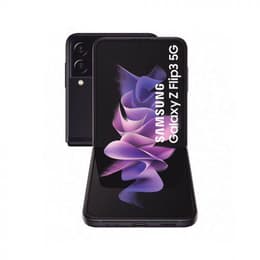
Galaxy Z Flip3 5G
Galaxy Z Flip3 5G
Starting at

Refurbished price:290.88

Versus €1,299.00 new

See options
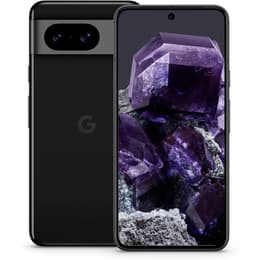
Google Pixel 8
Google Pixel 8
Starting at

Refurbished price:235.00

Versus €999.00 new

See options

Ratings

The Samsung Galaxy Z Flip3 5G, released in August 2021, and the Google Pixel 8, launched in October 2023, represent distinct approaches to smartphone design and functionality. While both operate on the Android platform, the Z Flip3 offers a unique foldable form factor, contrasting with the Pixel 8's traditional slab design. Key differentiators lie in their physical design, software support timelines, and camera philosophies, catering to different user preferences.

Scores

Durability

The practical lifespan of a smartphone is influenced by its release date, software support, and physical durability. These two devices offer different propositions in terms of longevity.

  • Release Timeline & OS Support: The Galaxy Z Flip3 5G, released in August 2021, initially ran Android 11 and is upgradable to Android 14, with a commitment of 4 years of OS updates and 5 years of security updates, meaning support until approximately August 2026 for security. In contrast, the Google Pixel 8, launched in October 2023 with Android 14, boasts an extended support policy of seven years for both OS and security updates, extending its lifespan until at least October 2030.
  • Software Longevity: Users prioritizing the longest possible software support and access to the latest Android features will find the Pixel 8's seven-year commitment a significant advantage, ensuring it remains current for a considerably longer period than the Z Flip3.
  • Physical Durability & Repairability: The Z Flip3 features an aluminum frame and Gorilla Glass Victus on its cover display, with an IPX8 water resistance rating, meaning it can withstand submersion in water. However, its foldable screen introduces a unique point of potential wear, with some users reporting screen protector issues and slight creases over time. The Pixel 8 features an aluminum frame and Gorilla Glass Victus 2 on both the front and back, along with an IP68 rating for dust and water resistance. The Pixel 8 has received decent repairability scores, with some sources giving it a 7 out of 10, indicating that self-repairs are possible for those with experience.

Year of Release

2021

2023

Compatible with latest Update

Yes

Yes

OS

Android

Android

Foldable

Yes

No

Performance

Both devices are equipped to handle daily tasks, but their underlying hardware and optimization strategies lead to different performance characteristics.

  • Processor Capabilities: The Galaxy Z Flip3 5G is powered by a capable processor from its release year, which handles everyday applications and multitasking smoothly. The Pixel 8 features a modern, high-performance processor designed for efficient operation and advanced AI capabilities, resulting in fluid navigation and quick app launches.
  • System Responsiveness & Multitasking: Both phones offer 8GB of RAM, which is sufficient for managing multiple applications simultaneously. The Pixel 8's newer processor generally provides a snappier overall experience, especially with more demanding applications or complex computational tasks.
  • Battery Behavior: The Z Flip3 5G has a 3300 mAh battery, which some users have noted can require more frequent charging, particularly with heavy use or when utilizing the 120Hz display. The Pixel 8 comes with a larger 4575 mAh battery. User experiences with the Pixel 8's battery life are varied, with some finding it sufficient for a full day of mixed use, while others report faster drain, especially when using mobile data or with heavy usage.

Memory (GB)

8 GB

8 GB

Screen quality

The display is a primary interaction point, and these two phones offer distinct visual experiences due to their form factors and display technologies.

  • Display Technology & Clarity: The Galaxy Z Flip3 5G features a 6.7-inch Foldable Dynamic AMOLED 2X main display, offering vibrant colors and deep blacks. When folded, it utilizes a 1.9-inch Super AMOLED cover display for quick notifications and controls. The Pixel 8 sports a 6.2-inch Actua OLED display, also known for its rich colors and contrast. Both displays provide clear visuals with resolutions of 1080 x 2640 pixels for the Z Flip3 and 1080 x 2400 pixels for the Pixel 8.
  • Brightness & Refresh Rate: Both devices feature a 120Hz refresh rate on their main displays, contributing to smooth scrolling and responsive interactions. The Z Flip3's main display can reach a peak brightness of 1200 nits, while the Pixel 8's display can achieve a peak brightness of 2000 nits, making it potentially brighter for outdoor visibility.
  • Screen Size & Viewing Experience: The Z Flip3's foldable design allows for a large screen experience in a compact form factor when closed. The Pixel 8 offers a slightly smaller, flat display, which some users may find more comfortable for one-handed use.

Resolution

1080 x 2640

1080 x 2400

Screen type

Foldable Dynamic AMOLED 2X

OLED

Audiovisual

Both smartphones offer capable camera systems, but they approach photography with different strengths and features.

  • Camera System Capabilities: The Galaxy Z Flip3 5G features a dual-camera setup on the rear, consisting of a 12 MP main sensor with optical image stabilization (OIS) and a 12 MP ultrawide sensor. It lacks a dedicated telephoto lens. The Pixel 8 comes with a 50 MP main camera with OIS and a 12 MP ultrawide camera with autofocus, which also enables macro photography.
  • Photography Performance: The Z Flip3's cameras perform well in good lighting conditions, producing solid still shots, but some reviews note that its dynamic range can suffer, and it doesn't match the performance of other flagship cameras from its era, especially in low light or for zoom. The Pixel 8 is highly regarded for its computational photography, delivering excellent exposure, good detail, and natural colors across various lighting conditions, including strong low-light performance.
  • Video Recording & Audio: Both phones are capable of recording high-quality video. The Pixel 8 offers strong stabilization and clean sound recording, with features like Audio Magic Eraser to reduce background noise in videos. The Z Flip3's unique form factor allows for creative shooting angles, such as using the main cameras for selfies with the cover screen as a viewfinder.

Main camera

12 megapixels

50 megapixels

Front camera

10 megapixels

10.5 megapixels

Miscellaneous

Beyond the core features, several practical elements differentiate these two devices in terms of daily usability and design.

  • Connectivity & Ports: Both phones support 5G connectivity for fast mobile data. The Z Flip3 5G supports Wi-Fi 6 and Bluetooth 5.1, featuring a USB-C port. The Pixel 8 offers more advanced connectivity with Wi-Fi 7 and Bluetooth 5.3, also utilizing a USB-C port. Neither device includes a traditional 3.5mm headphone jack.
  • Sensors & Biometrics: The Z Flip3 features a side-mounted fingerprint sensor and face recognition for unlocking. The Pixel 8 incorporates an under-display optical fingerprint sensor and enhanced face unlock capabilities.
  • Weight, Dimensions & Build: The Z Flip3, when unfolded, measures 166 x 72.2 x 6.9 mm and weighs 183g. When folded, it becomes significantly more compact at 86.4 x 72.2 x 15.9-17.1 mm. This compact folded size is a primary appeal. The Pixel 8 has dimensions of 150.5 x 70.8 x 8.9 mm and weighs 187g, offering a more traditional smartphone feel. The Z Flip3's build includes an aluminum frame and Gorilla Glass Victus on the cover display, while the Pixel 8 uses an aluminum frame and Gorilla Glass Victus 2 on both front and back.

Weight

183 g

187 g

Screen size (in)

6.7

6,2

Network

5G

5G

SIM card

Physical SIM + eSIM

Physical SIM + eSIM

Carrier compatibility

Unlocked

Unlocked

The Samsung Galaxy Z Flip3 5G and Google Pixel 8 cater to different user priorities, each offering a distinct set of advantages. User sentiment for the Z Flip3 often highlights its unique, compact, and stylish foldable design as a major draw, making it a conversation starter and enjoyable to use. Its ability to act as its own tripod in Flex Mode is also frequently praised for creative photography. However, common criticisms revolve around its battery life, which many users find to be sub-par for a full day of heavy use, and its camera performance, which, while decent, is not considered top-tier compared to other flagships.

The Google Pixel 8 receives consistent praise for its exceptional camera system, particularly its computational photography capabilities that deliver impressive results in various conditions, including low light. Users also appreciate its clean Android experience, smooth performance, and the promise of extended software updates. Battery life on the Pixel 8 is generally considered adequate, though some users report faster drain on mobile data.

Users prioritizing a compact, stylish device with a unique form factor and who are willing to manage battery life may prefer the Galaxy Z Flip3 5G. Its foldable nature offers a different interaction experience and portability. Conversely, users who value a consistently excellent camera, long-term software support, and a streamlined Android experience will find the Google Pixel 8 to be a strong contender. Both devices can be excellent choices, and considering a quality-assured refurbished option can be an eco-friendly alternative for either model, allowing users to make informed and sustainable choices.


See all articles

Our recent comparisons