

Compare models
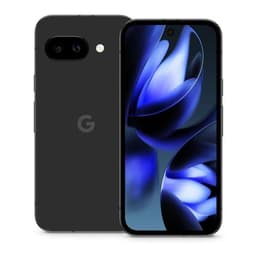
Galaxy Z Fold4 Vs Google Pixel 9a
- 1-year minimum warranty
- Free delivery on all orders
- Free 30-day returns
Differences at a glance
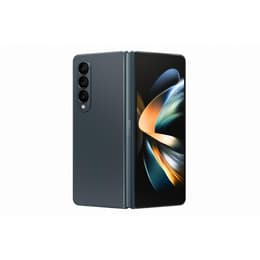
The Samsung Galaxy Z Fold4 (2022) and the Google Pixel 9a (2025) represent two entirely different approaches to modern smartphone design. While the Galaxy Z Fold4 offers a foldable dual-screen layout that transforms from a standard phone into a tablet-sized workspace, the Google Pixel 9a provides a conventional, lightweight slate form factor centered around reliable everyday usability. Operating on Android systems tailored uniquely to their hardware architectures, these two devices cater to distinctly contrasting user preferences.
Available Models
Colour
Storage
Scores
Durability
When examining longevity and durability, both devices handle software support and physical wear differently based on their launch timelines and engineering structures.
- Software support timelines: The Google Pixel 9a benefits from an extended multi-year update schedule typical of newer hardware releases, while the Galaxy Z Fold4 has progressed further into its software support lifecycle.
- Build engineering and repairs: The Galaxy Z Fold4 relies on complex hinge mechanisms and flexible inner screens requiring specialized care, whereas the Pixel 9a features a conventional unibody construction with standard water and dust resistance ratings.
- Expected practical lifespan: Both units maintain strong processing capability for daily tasks, though traditional slate designs like the Pixel 9a generally present fewer mechanical considerations over years of continuous handling.
Year of Release
2022
2025
Performance
Underneath their exteriors, both handsets deliver smooth daily operation, managing multitasking, application switching, and media playback through distinct hardware configurations.
- System responsiveness: Both devices handle daily web browsing, streaming, and demanding applications fluidly, ensuring that switching between multiple open windows or tools feels immediate and seamless.
- Memory and storage management: The Galaxy Z Fold4 offers generous multi-tasking headroom paired with high-capacity storage tiers, while the Pixel 9a provides optimized memory allocation suited for everyday workflows and reliable background app retention.
- Battery behavior: The Pixel 9a features a large internal power cell designed to comfortably clear a full day of mixed use, whereas the Galaxy Z Fold4 balances power distribution across two separate displays depending on whether the foldable screen is active.
Screen quality
Visual output differs significantly due to the physical layout choices implemented by each manufacturer.
- Display technology: The Galaxy Z Fold4 features a folding inner OLED panel alongside a secondary outer cover screen for versatile multitasking, while the Pixel 9a utilizes a single, flat, high-brightness OLED panel with smooth refresh rates.
- Outdoor visibility: Both models incorporate bright display panels capable of maintaining clear legibility under direct sunlight, ensuring text and images remain sharp during outdoor use.
- Viewing experience: Users watching media or reviewing documents on the Galaxy Z Fold4 can expand their view onto a tablet-sized canvas, whereas the Pixel 9a provides a traditional, pocket-friendly viewing area optimized for single-handed navigation.
Audiovisual
Imaging hardware and audio outputs cater well to everyday photography, video recording, and media consumption across both devices.
- Camera capabilities: The Galaxy Z Fold4 includes a versatile triple-lens array featuring dedicated zoom capabilities, while the Pixel 9a employs a dual-lens setup paired with advanced computational photography software for detailed everyday snapshots.
- Video and low-light performance: Both handsets record crisp video with steady stabilization and capture balanced exposures in challenging lighting conditions.
- Audio output: Built-in stereo speakers on both models deliver clear sound reproduction for hands-free calls, podcasts, and casual video viewing.
Miscellaneous
Practical everyday handling is shaped by distinct physical dimensions, connectivity standards, and biometric security features.
- Physical dimensions and weight: The Pixel 9a offers a lightweight, slender profile that rests easily in one hand or a small pocket, while the Galaxy Z Fold4 is heavier and thicker when folded due to its dual-screen assembly.
- Biometric security: Both devices incorporate modern authentication methods, utilizing facial recognition and fingerprint sensors for quick, secure device unlocking.
- Connectivity and ports: Each model supports fast wireless standards, 5G cellular networks, and standard USB-C connectivity for charging and data transfer.
Screen size (in)
7.6
6.3
Network
5G
5G
SIM card
Dual Physical SIM + eSIM
Physical SIM + eSIM
Carrier compatibility
Unlocked
Unlocked
Connector
USB-C
USB-C
What the community thinks
Deciding between the Samsung Galaxy Z Fold4 and the Google Pixel 9a depends largely on how you intend to use your device on a daily basis. Users who prioritize multitasking, expansive screen workspace, and innovative folding mechanics will find the Galaxy Z Fold4 well-suited to their needs. Conversely, users who value a lightweight traditional build, straightforward handling, and long-term software support will likely lean toward the Google Pixel 9a. For shoppers exploring sustainable choices, a quality-assured refurbished option provides an eco-friendly alternative to purchasing newly manufactured hardware.