


Compare models

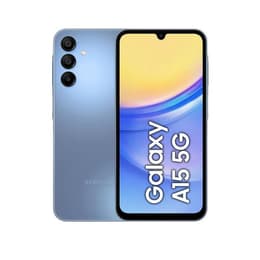
Galaxy A15 5G Vs Google Pixel 9a

  • 1-year minimum warranty
  • Free delivery on all orders
  • Free 30-day returns
Galaxy A15 5G
Starting at

Refurbished price:€196.00

Versus €249.20 new

See options
Google Pixel 9a
Starting at

Refurbished price:€360.00

Versus €586.09 new

See options

Differences at a glance

The Samsung Galaxy A15 5G (2023) and the Google Pixel 9a (2025) represent two different approaches to modern smartphone design, targeting users looking for reliable everyday communication tools. While the Galaxy A15 5G serves as an entry-level option focusing on essential daily capabilities, the Pixel 9a positions itself as a more current mid-range device with advanced software features. Both models operate on the Android platform, though they deliver distinct interface experiences and update timelines that influence how long each device remains current.

Available Models

Colour

Storage

Scores

Durability

When examining longevity and support, both smartphones offer distinct timelines based on their respective release years and software update commitments.

  • Software support lifecycle: The Google Pixel 9a benefits from a multi-year update commitment extending deep into the decade, whereas the Galaxy A15 5G provides a shorter remaining window of major system updates due to its 2023 launch date.
  • Repairability and build maintenance: Both devices feature sealed architectures that rely on professional service centers for internal component replacements, though standard screen and battery repairs remain widely accessible.
  • Expected practical lifespan: Users selecting the Pixel 9a can anticipate extended software currency for advanced applications, while the Galaxy A15 5G suits users with standard, less demanding long-term update requirements.

Year of Release

2023

2025

Compatible with latest Update

Yes

Yes

OS

Android

Android

Foldable

No

No

Performance

Handling daily tasks, multitasking, and battery longevity differ notably between these two options based on their underlying hardware configurations.

  • Multitasking and app execution: The Google Pixel 9a handles demanding applications, complex background processes, and modern gaming smoothly with its advanced processor architecture, while the Galaxy A15 5G manages standard web browsing, messaging, and media streaming reliably.
  • Battery behavior and endurance: Both devices comfortably complete a full day of mixed usage, though the Pixel 9a incorporates power management features that optimize standby efficiency during heavy work days.
  • Storage configurations: Users can select from various internal storage tiers depending on media storage needs, with both models supporting daily file management without noticeable system lag.

Screen quality

Visual output and display responsiveness vary between the two models, impacting media consumption and outdoor readability.

  • Display panel technology: The Google Pixel 9a features a vibrant OLED screen with deep black levels and high contrast, while the Galaxy A15 5G utilizes a bright Super AMOLED display that ensures clear text visibility and rich colors.
  • Outdoor visibility: Peak brightness levels on the Pixel 9a allow for easier viewing under direct sunlight, whereas the Galaxy A15 5G remains legible during casual outdoor use.
  • Refresh rate and fluidity: Both devices offer smooth scrolling and fluid interface animations, enhancing the overall tactile feel during web browsing and menu navigation.

Resolution

1080 x 2340

2424 x 1080

Audiovisual

Photography, video recording, and audio output capabilities cater to different user expectations for capturing memories and consuming media.

  • Camera system versatility: The Google Pixel 9a utilizes computational photography algorithms to deliver detailed low-light shots and balanced everyday images, whereas the Galaxy A15 5G provides a reliable multi-lens setup suitable for standard daylight photography.
  • Video recording quality: The Pixel 9a records stable, high-resolution video with advanced stabilization features, while the Galaxy A15 5G handles casual video capture adequately for social sharing.
  • Audio and media output: Both smartphones feature built-in speakers adequate for hands-free calls and casual video viewing, supplemented by clear microphone performance during voice calls.

Front camera

13 megapixels

13 megapixels

Miscellaneous

Physical dimensions, connectivity standards, and daily handling characteristics establish distinct user experiences for each phone.

  • Connectivity standards: Both models support modern 5G cellular networks, Wi-Fi connectivity, and Bluetooth pairing for wireless accessories.
  • Physical handling and weight: The Galaxy A15 5G and Google Pixel 9a offer balanced form factors with comfortable grip profiles, though variations in weight and bezel thickness influence one-handed operation.
  • Security and authentication: Both devices incorporate biometric security features, utilizing fingerprint sensors and facial recognition for quick device unlocking.

Weight

200 g

186 g

Screen size (in)

6.5

6.3

Network

5G

5G

SIM card

Dual Physical SIM

Physical SIM + eSIM

Carrier compatibility

Unlocked

Unlocked

What the community thinks

Community discussions and user feedback indicate that buyers appreciate the dependable daily battery life and straightforward interface of the Galaxy A15 5G. At the same time, users frequently highlight the advanced camera processing and extended software support found on the Google Pixel 9a as significant advantages for long-term ownership.

Users prioritizing basic communication, reliable media playback, and standard daily utility will find the Galaxy A15 5G well-suited to their needs. Conversely, users prioritizing sophisticated photography tools, extended software lifecycles, and high-performance multitasking may prefer the Google Pixel 9a. For those looking at sustainable choices, a quality-assured refurbished option provides a practical way to acquire either model while minimizing environmental impact.

Evaluating personal daily requirements and software longevity expectations remains the most effective approach to selecting the right smartphone for individual usage patterns.









