

Compare models
Galaxy S10 Vs Galaxy S10+
- 1-year minimum warranty
- Free delivery on all orders
- Free 30-day returns
Differences at a glance
The Samsung Galaxy S10 and Galaxy S10 Plus, both released in March 2019, represent two closely related smartphones from the same generation. While they share a foundational design and many core features, the S10 Plus distinguishes itself with a larger display, a more substantial battery, and an enhanced front-facing camera system. Both devices launched with Android 9 (Pie) and received official software updates up to Android 12, offering a consistent software experience for their active support period.
Available Models
Colour
Storage (GB)
Scores
Durability
When considering the long-term usability of these devices, several factors come into play, particularly their release timeline and software support.
- Release Timeline: Both the Galaxy S10 and S10 Plus were launched in March 2019, placing them at the same point in their lifecycle.
- Software Longevity: Official Android operating system updates for both models concluded with Android 12 (One UI 4). While they may still receive security patches, major feature updates are no longer provided by the manufacturer.
- Physical Durability: Both devices feature Corning Gorilla Glass 6 on the front for screen protection and Gorilla Glass 5 on the back, encased in an aluminum frame. They also carry an IP68 rating, indicating resistance to dust and water immersion up to 1.5 meters for 30 minutes.
Year of Release
2019
2019
Compatible with latest Update
No
No
OS
Android
Android
Foldable
No
No
Performance
The performance of the Galaxy S10 and S10 Plus is largely similar, as they share the same underlying processing hardware, though differences emerge in available configurations and battery endurance.
- Processing Power: Both models are equipped with a capable current-generation processor for their release year, ensuring smooth operation for everyday applications, multitasking, and graphics-intensive gaming. Users can expect responsive app launches and efficient handling of demanding tasks.
- Memory and Storage: The Galaxy S10 typically comes with 8GB of RAM and storage options of 128GB or 512GB. The S10 Plus offers more flexibility, with 8GB or 12GB of RAM, and storage configurations up to 1TB. Both devices support expandable storage via a microSD card.
- Battery Endurance: The Galaxy S10 houses a 3400 mAh battery, while the S10 Plus features a larger 4100 mAh battery. This difference translates to the S10 Plus generally offering noticeably longer battery life, particularly for users with heavy usage patterns such as extended streaming or gaming.
Screen quality
Both the Galaxy S10 and S10 Plus offer a premium visual experience, featuring high-quality displays with minor distinctions primarily in size.
- Display Technology and Resolution: Both smartphones utilize Dynamic AMOLED display technology, providing vibrant colors, deep blacks, and excellent contrast. They share the same Quad HD+ resolution of 1440 x 3040 pixels, resulting in sharp and clear visuals.
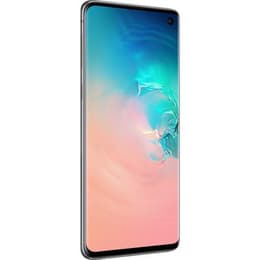
- Screen Size and Viewing Experience: The Galaxy S10 features a 6.1-inch display, offering a balanced size for one-handed use and content consumption. The S10 Plus, with its larger 6.4-inch screen, provides a more expansive viewing area, which can enhance the experience for media consumption, gaming, and multitasking.
- Brightness and Refresh Rate: Both displays support HDR10+ for improved dynamic range in compatible content. The brightness levels are comparable, offering good visibility in various lighting conditions. Both devices feature a standard 60Hz refresh rate.
Resolution
1440 x 3040
1440 x 3040
Screen type
Dynamic AMOLED
Dynamic AMOLED
Audiovisual
The camera systems on the Galaxy S10 and S10 Plus are largely identical for rear photography, with a key difference in their front-facing capabilities.
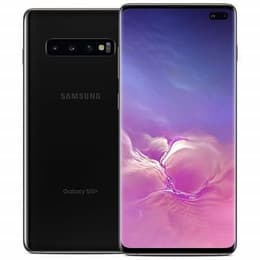
- Rear Camera System: Both models are equipped with a versatile triple-camera setup on the rear. This includes a 12-megapixel wide-angle lens with a variable aperture, a 12-megapixel telephoto lens offering 2x optical zoom, and a 16-megapixel ultrawide lens. This configuration allows for a range of photographic styles, from expansive landscapes to detailed zoomed-in shots.
- Front Camera Capabilities: The Galaxy S10 features a single 10-megapixel front camera. In contrast, the Galaxy S10 Plus includes a dual front camera system, combining a 10-megapixel main sensor with an 8-megapixel depth sensor. This additional depth sensor on the S10 Plus enables more refined portrait-style selfies with enhanced background blur effects.
- Video and Audio: Both devices are capable of recording video at up to 4K resolution at 60 frames per second and include features like Super Steady mode for smoother video capture. For audio, both phones offer stereo speakers and retain a 3.5mm headphone jack, providing flexibility for media consumption.
Main camera
12 megapixels
12 megapixels
Front camera
10 megapixels
10 megapixels
Miscellaneous
Beyond core specifications, several practical elements differentiate the user experience between these two Galaxy S10 models.
- Connectivity and Ports: Both the Galaxy S10 and S10 Plus support modern connectivity standards, including Wi-Fi 6, Bluetooth 5.0, and utilize a USB-C port for charging and data transfer. Notably, both models also retain the 3.5mm headphone jack, a feature that has become less common in newer smartphones.
- Biometric Security: For secure unlocking and authentication, both devices incorporate an ultrasonic fingerprint sensor embedded beneath the display, alongside face recognition capabilities.
- Physical Characteristics: The Galaxy S10 is the more compact and lighter of the two, measuring 149.9 x 70.4 x 7.8 mm and weighing 157 grams. The S10 Plus is larger and slightly heavier, with dimensions of 157.6 x 74.1 x 7.8 mm and a weight of 175 grams, with a ceramic option weighing 198 grams for certain configurations. This size difference impacts one-handed usability and pocketability.
Weight
157 g
175 g
Screen size (in)
6.1
6.4
Network
4G
4G
SIM card
Dual Physical SIM
Dual Physical SIM
Carrier compatibility
Unlocked
Unlocked
What the community thinks
The Samsung Galaxy S10 and S10 Plus, while sharing a strong foundation, cater to slightly different user preferences. User feedback often highlights the S10 Plus for its extended battery life and larger display, making it a preferred choice for those who prioritize media consumption and prolonged usage without frequent charging. The dual front camera on the S10 Plus is also frequently praised by users who value enhanced selfie capabilities, particularly for portrait effects.
Conversely, the standard Galaxy S10 is often favored by users seeking a more compact and manageable device that is easier for one-handed operation and pocketability, without significantly compromising on core performance or rear camera quality. Both devices are generally well-regarded for their vibrant Dynamic AMOLED displays and robust build quality, including IP68 water and dust resistance.
Users prioritizing a larger screen and maximum battery endurance for heavy daily use will find the Galaxy S10 Plus well-suited to their needs. Those who prefer a more portable form factor that is comfortable to handle, while still offering a premium smartphone experience, may lean towards the Galaxy S10. For individuals considering either of these models, exploring quality-assured refurbished options can be a sustainable choice, offering an eco-friendly alternative to new purchases.