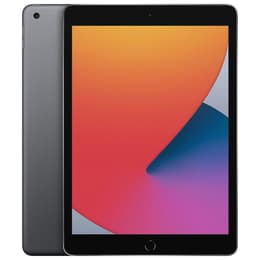


Galaxy Tab S9 Ultra (14.6", 2023) Vs iPad 8 (2020, A12 series)

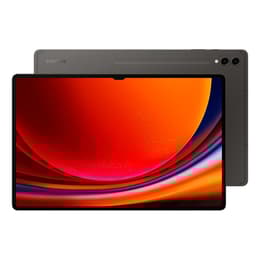
Galaxy Tab S9 Ultra (14.6", 2023)
Starting at

Refurbished price:754.00

Versus €1,800.00 new

See options
iPad 8 (2020, A12 series)
Starting at

Refurbished price:127.00

Versus €399.00 new

See options

Ratings

The Samsung Galaxy Tab S9 Ultra, released in August 2023, and the Apple iPad (8th Generation), launched in September 2020, represent distinct approaches to tablet computing. While both devices offer robust platforms for digital interaction, they cater to different user needs through their design philosophies, operating systems, and core capabilities. The Tab S9 Ultra operates on Android, emphasizing a large, expansive display and advanced multitasking features, whereas the iPad (8th Gen) runs on iPadOS, focusing on a streamlined user experience within Apple's ecosystem.

Scores

Durability

The expected practical lifespan of a tablet is influenced by its release timeline, software support, and physical durability features. These two devices, released years apart, offer different outlooks on longevity.

  • Release Timeline and Software Support: The Galaxy Tab S9 Ultra, being a 2023 release, benefits from Samsung's commitment to providing four major Android OS updates and five years of security updates, extending its software relevance well into the future. The iPad (8th Gen), released in 2020, typically receives 5-6 years of major iPadOS updates from Apple, meaning its software support cycle is nearing its later stages.
  • Physical Durability: The Galaxy Tab S9 Ultra features an IP68 rating for dust and water resistance, offering a higher level of protection against environmental elements. The iPad (8th Gen) does not carry an official IP rating, suggesting less resistance to dust and water exposure.
  • Repairability: While specific repairability scores can vary, both devices are designed with internal components that require specialized tools and expertise for repair. The newer design and larger form factor of the Tab S9 Ultra might present different repair challenges compared to the more compact and older design of the iPad (8th Gen).

Year of Release

2023

2020

Compatible with latest Update

Yes

Yes

OS

Android

iPadOS

Performance

Performance is a key differentiator, with the newer Galaxy Tab S9 Ultra offering a more powerful and contemporary hardware foundation compared to the iPad (8th Gen).

  • Processing Power and Responsiveness: The Galaxy Tab S9 Ultra is equipped with a current-generation processor designed for demanding tasks, enabling smooth operation across multiple applications, intensive gaming, and professional-grade creative work without noticeable slowdowns. The iPad (8th Gen) features a capable processor that provides a significant performance boost over its predecessor, handling everyday tasks, web browsing, video streaming, and many games with fluidity.
  • Multitasking and RAM: The Tab S9 Ultra offers higher RAM configurations, typically 12GB or 16GB, which significantly enhances its ability to manage numerous applications simultaneously and handle complex workflows, especially when utilizing its desktop-like DeX mode. The iPad (8th Gen) comes with 3GB of RAM, which is sufficient for general multitasking within iPadOS but may show limitations with a large number of demanding applications open concurrently.
  • Storage Options: The Tab S9 Ultra provides more generous internal storage options, ranging from 256GB up to 1TB, and supports expandable storage via a microSD card, offering extensive space for large files and media. The iPad (8th Gen) offers 32GB or 128GB of internal storage, with the 32GB option often considered restrictive for modern usage, particularly for users who download many apps or store large media files.

Memory (GB)

12 GB

3 GB

Screen quality

The visual experience on these tablets differs significantly due to their display technologies, size, and refresh rates.

  • Display Technology and Size: The Galaxy Tab S9 Ultra boasts a large 14.6-inch Dynamic AMOLED 2X display, providing deep blacks, vibrant colors, and excellent contrast, making it highly suitable for media consumption and detailed creative work. The iPad (8th Gen) features a 10.2-inch Retina IPS LCD, which offers good color accuracy and clarity for general use, though it does not match the contrast levels of an OLED panel.
  • Resolution and Clarity: With a resolution of 2960 x 1848 pixels, the Tab S9 Ultra delivers sharp images and text across its expansive screen. The iPad (8th Gen) has a resolution of 2160 x 1620 pixels, providing a clear viewing experience on its smaller display.
  • Brightness and Refresh Rate: The Tab S9 Ultra offers a high peak brightness of 930 nits and an adaptive refresh rate of up to 120Hz, resulting in smooth scrolling and excellent visibility even in bright outdoor conditions. The iPad (8th Gen) has a typical brightness of 500 nits and a standard 60Hz refresh rate, which is adequate for most indoor environments but may be less comfortable for extended outdoor use or for users sensitive to motion smoothness.

Resolution

1848 x 2960

2160 x 1620

Screen type

Dynamic AMOLED 2X

Retina display

Pixel density

240ppp

264ppp

Audiovisual

The camera systems on both tablets are designed for different primary uses, with the Tab S9 Ultra offering a more versatile setup.

  • Camera System Capabilities: The Galaxy Tab S9 Ultra features a dual rear camera setup (13MP wide and 8MP ultrawide) and a dual front camera system (two 12MP sensors, one wide and one ultrawide), providing flexibility for various photography and video conferencing scenarios. The iPad (8th Gen) includes an 8MP rear camera and a 1.2MP front-facing camera, suitable for basic photography and video calls.
  • Photography and Video Quality: The Tab S9 Ultra's cameras are capable of producing detailed photos with good dynamic range in well-lit conditions, and its front cameras support features like auto framing for video calls. It also supports 4K video recording. The iPad (8th Gen)'s rear camera performs adequately for casual shots, and its front camera is designed for clear video calls, supporting 1080p HD video recording for the rear and 720p HD for the front.
  • Audio for Media and Communication: The Tab S9 Ultra is equipped with a quad-speaker array that delivers loud, clear audio with good bass and stereo separation, enhancing the media consumption experience. The iPad (8th Gen) features stereo speakers and dual microphones, providing clear sound for video playback and communication.

Miscellaneous

Beyond core performance and display, several practical features contribute to the overall user experience and device utility.

  • Connectivity Options: The Galaxy Tab S9 Ultra supports modern connectivity standards including Wi-Fi 6E and Bluetooth 5.3, with optional 5G, ensuring fast and reliable wireless connections. The iPad (8th Gen) supports Wi-Fi 5 (802.11ac) and Bluetooth 4.2, with optional LTE, which are sufficient for most current wireless needs but represent older standards.
  • Port Types and Accessories: The Tab S9 Ultra features a versatile USB-C 3.2 port, allowing for fast data transfer and external display connectivity. It also includes an S Pen stylus in the box, which is IP68 rated. The iPad (8th Gen) uses Apple's proprietary Lightning connector and retains a 3.5mm headphone jack. It supports the first-generation Apple Pencil and Smart Keyboard, which are sold separately.
  • Biometric Security and Handling: The Tab S9 Ultra incorporates an under-display fingerprint sensor for secure unlocking. The iPad (8th Gen) uses Touch ID, an integrated fingerprint sensor within its home button. The Tab S9 Ultra is a larger and heavier device at 732g and 5.5mm thin, while the iPad (8th Gen) is more compact at 490g (Wi-Fi model) and 7.5mm thick, impacting portability and one-handed use.

Weight

732 g

490 g

Screen size (in)

14.6

10.2

Network

Wi-Fi

Wi-Fi

Carrier compatibility

Without SIM Port

Without SIM Port

User feedback for the Galaxy Tab S9 Ultra frequently praises its expansive and vibrant display, powerful performance for demanding applications, and the included S Pen, which enhances productivity and creative tasks. Its desktop-like DeX mode is often highlighted as a significant advantage for those seeking a more laptop-like experience. Common criticisms revolve around its considerable size, which can make it less portable or unwieldy for some users, and the ongoing challenge of Android app optimization for such a large screen.

For the iPad (8th Gen), users consistently commend its reliable performance for everyday tasks, its robust battery life, and the extensive ecosystem of iPadOS applications. It is often seen as a dependable and straightforward tablet for general use, education, and media consumption. Frequent concerns include its older design with larger bezels, the more limited storage options (especially the 32GB base model), and the use of the Lightning port instead of the more universal USB-C.

Users prioritizing a large, high-quality display for immersive media, advanced multitasking, and creative work with an included stylus will find the Galaxy Tab S9 Ultra well-suited to their needs. Its robust performance and extended software support make it a strong choice for power users and professionals. Conversely, users seeking a more compact, user-friendly tablet for general productivity, web browsing, and media consumption within a well-established app ecosystem may lean towards the iPad (8th Gen). Both devices are available as quality-assured refurbished options, providing an eco-friendly alternative for consumers.


See all articles

Our recent comparisons