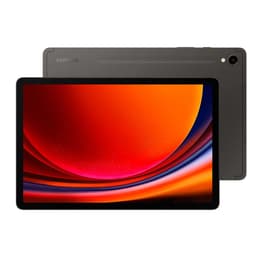
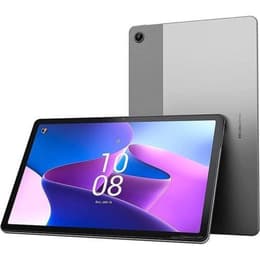


Galaxy Tab S9 (11.0", 2023) Vs Lenovo Tab M10 Gen 3 (10.1", 2022)

Galaxy Tab S9 (11.0", 2023)
Starting at

Refurbished price:491.00

Versus €1,219.00 new

See options
Lenovo Tab M10 Gen 3 (10.1", 2022)
Starting at

Refurbished price:141.48

Versus €299.99 new

See options

Ratings

The Samsung Galaxy Tab S9, released in 2023, and the Lenovo Tab M10 Gen 3, launched in 2022, represent distinct offerings in the Android tablet market. While both operate on the Android platform, they cater to different user expectations, with the Galaxy Tab S9 positioned as a higher-performance device and the Lenovo Tab M10 Gen 3 focusing on essential tablet functionalities. Key differentiators include display technology, processing power, and overall build quality.

Scores

Durability

When considering the long-term usability of these tablets, their release timelines and software support policies are important factors. The Galaxy Tab S9, being a more recent release from 2023, benefits from a longer expected period of software updates compared to the Lenovo Tab M10 Gen 3, which launched in 2022.

  • Software Longevity: Samsung typically provides four generations of Android operating system updates and five years of security updates for its flagship S-series tablets, extending the functional life of the Galaxy Tab S9. Lenovo generally offers two major Android OS updates and four years of security patches for its M-series tablets.
  • Physical Durability: The Galaxy Tab S9 features an aluminum chassis and boasts an IP68 rating for water and dust resistance, offering enhanced protection against environmental elements. The Lenovo Tab M10 Gen 3 also incorporates a metal chassis for a solid feel but lacks an official IP certification, suggesting less resistance to water and dust exposure.
  • Repairability: The Galaxy Tab S9 has a moderate repairability score, with an accessible battery but a delicate screen removal process involving adhesive. Information on the specific repairability score for the Lenovo Tab M10 Gen 3 is less readily available, but its construction is generally considered straightforward for common repairs like screen replacement.

Year of Release

2023

2022

Compatible with latest Update

Yes

No

OS

Android

Android

Performance

The performance capabilities of these two tablets vary significantly, impacting how smoothly they handle different tasks, from everyday browsing to more demanding applications.

  • Processing Power: The Galaxy Tab S9 is equipped with a high-performance processor designed for demanding applications and multitasking, ensuring smooth operation even with intensive workloads and graphic-rich games. The Lenovo Tab M10 Gen 3 utilizes a processor suitable for daily tasks such as web browsing, social media, and light gaming, though it may experience occasional slowdowns with more intensive applications or heavy multitasking.
  • Multitasking and Responsiveness: With higher available RAM configurations, the Galaxy Tab S9 offers a more fluid multitasking experience, allowing users to switch between numerous applications without noticeable delays. The Lenovo Tab M10 Gen 3, typically featuring less RAM, is better suited for managing a few applications simultaneously rather than extensive multitasking.
  • Storage Options: Both tablets offer internal storage options that can be expanded using a microSD card, providing flexibility for users to store a large volume of media and applications. The Galaxy Tab S9 starts with higher internal storage capacities.
  • Battery Behavior: The Galaxy Tab S9 features a larger battery capacity, which, combined with an efficient processor, generally provides sufficient power for a full day of varied use, though heavy video streaming might consume power more quickly. The Lenovo Tab M10 Gen 3, with its 5100 mAh battery, is noted for its long battery life under moderate usage, often lasting 8-10 hours for video playback.

Memory (GB)

8 GB

3 GB

Processor

Qualcomm SM8550-AC Snapdragon 8 Gen 2

Unisoc T610

Screen quality

The visual experience on these tablets is a major distinguishing factor, primarily due to differences in their display technology and specifications.

  • Display Technology and Clarity: The Galaxy Tab S9 features an 11.0-inch Dynamic AMOLED 2X display, known for its deep blacks, vibrant colors, and high contrast, providing a rich viewing experience. The Lenovo Tab M10 Gen 3 comes with a 10.1-inch Full HD IPS LCD panel, which offers good color reproduction and wide viewing angles suitable for general media consumption.
  • Resolution and Sharpness: The Galaxy Tab S9 boasts a higher resolution of 2560 x 1600 pixels, resulting in sharper images and finer detail, particularly noticeable when viewing high-resolution content or text. The Lenovo Tab M10 Gen 3's 1920 x 1200 pixel resolution provides clear visuals for its screen size, adequate for streaming and browsing.
  • Refresh Rate and Smoothness: The Galaxy Tab S9 offers an adaptive refresh rate of up to 120Hz, contributing to smoother scrolling, more fluid animations, and a more responsive feel during gaming. The Lenovo Tab M10 Gen 3 has a standard 60Hz refresh rate, which is typical for its category and provides a consistent visual experience for most tasks.
  • Brightness and Outdoor Visibility: The Galaxy Tab S9's AMOLED display can achieve high brightness levels, enhancing visibility in bright environments and outdoors. The Lenovo Tab M10 Gen 3's display has a typical brightness of 320 nits, which is suitable for indoor use but may be less visible under direct sunlight.

Resolution

1600 x 2560

1200 x 1920

Screen type

Dynamic AMOLED 2X

IPS LCD

Pixel density

280ppp

230ppp

Audiovisual

The camera systems on these tablets are designed with different priorities, reflecting their intended use cases, from casual snapshots to more detailed photography and video calls.

  • Rear Camera Capabilities: The Galaxy Tab S9 is equipped with a 13 MP autofocus rear camera, capable of capturing detailed photos and recording video at up to 4K resolution at 30 frames per second. The Lenovo Tab M10 Gen 3 features an 8 MP autofocus rear camera, which is suitable for basic photography, document scanning, and casual snapshots, with video recording up to Full HD at 30 frames per second.
  • Front Camera for Video Calls: For video conferencing and selfies, the Galaxy Tab S9 includes a 12 MP ultra-wide front camera, providing clear images and a wider field of view. The Lenovo Tab M10 Gen 3 has a 5 MP front-facing camera, which is adequate for video calls and basic self-portraits.
  • Low-Light Performance: The Galaxy Tab S9's camera system generally performs better in varied lighting conditions, offering more detail and less noise in low-light scenarios. The Lenovo Tab M10 Gen 3's cameras, while functional, show limitations in low-light environments, which is common for tablets in its segment.
  • Audio for Media and Calls: The Galaxy Tab S9 features quad stereo loudspeakers tuned by AKG, delivering a rich and immersive audio experience for media consumption. The Lenovo Tab M10 Gen 3 includes dual speakers with Dolby Atmos support, providing a surprisingly immersive sound for its category.

Miscellaneous

Beyond core performance and display, several practical features and design elements differentiate these two tablets, influencing their everyday usability and handling.

  • Connectivity Standards: The Galaxy Tab S9 supports Wi-Fi 6E and Bluetooth 5.3, offering faster and more stable wireless connections, which is beneficial for high-bandwidth activities like large file transfers and streaming. The Lenovo Tab M10 Gen 3 supports Wi-Fi 5 (802.11 a/b/g/n/ac) and Bluetooth 5.0, providing reliable connectivity for most wireless needs.
  • Physical Ports: The Galaxy Tab S9 includes a USB Type-C 3.2 port with DisplayPort support, allowing for high-speed data transfer and external display connectivity. The Lenovo Tab M10 Gen 3 features a USB-C port for charging and data, along with a 3.5mm headphone jack, offering traditional audio connectivity.
  • Biometric Security: For secure access, the Galaxy Tab S9 offers both facial recognition and an in-display fingerprint reader. The Lenovo Tab M10 Gen 3 typically relies on facial recognition for quick unlocking.
  • Dimensions and Handling: The Galaxy Tab S9 is slightly larger and thinner at 254.3 x 165.8 x 5.9 mm and weighs 500g, offering a premium and sleek feel. The Lenovo Tab M10 Gen 3 measures 239.8 x 158.6 x 8.5 mm and weighs 460g, making it a comfortable and portable device for extended use.
  • Included Accessories: The Galaxy Tab S9 comes with an S Pen stylus included in the box, enhancing its utility for note-taking and creative tasks. The Lenovo Tab M10 Gen 3 supports stylus input, but the stylus is typically sold separately.

Weight

129 g

460 g

Screen size (in)

11.0

10.1

Network

Wi-Fi

Wi-Fi

Carrier compatibility

Unlocked

Unlocked

Connector

USB Type-C

USB Type-C

User feedback for the Samsung Galaxy Tab S9 frequently highlights its exceptional AMOLED display, robust performance for demanding tasks, and the versatility offered by the included S Pen. Some users have noted that while its battery life is generally good, it might not always surpass its predecessor in certain usage scenarios. The Lenovo Tab M10 Gen 3 is often praised for its impressive battery longevity and its clean software experience, making it a reliable device for everyday media consumption and light productivity. However, some users find its performance middling for heavy multitasking or graphically intensive applications, and its cameras are considered basic.

Users prioritizing a premium visual experience, high-end performance for productivity and creative work, and a durable, water-resistant build will find the Galaxy Tab S9 well-suited to their needs. Its included S Pen further enhances its appeal for those who value precise input. Conversely, individuals seeking a dependable tablet for general browsing, streaming, and educational purposes, with a focus on extended battery life and a comfortable viewing experience, may lean toward the Lenovo Tab M10 Gen 3. For those looking for an eco-friendly and quality-assured alternative, considering refurbished options for either model can provide access to these features sustainably.


See all articles

Our recent comparisons