


Galaxy Tab S9 FE (10.9", 2023) Vs Lenovo Tab M10 Gen 3 (10.1", 2022)

Galaxy Tab S9 FE (10.9", 2023)
Starting at

Refurbished price:390.00

Versus €499.00 new

See options
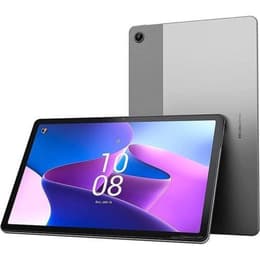
Lenovo Tab M10 Gen 3 (10.1", 2022)
Starting at

Refurbished price:141.48

Versus €299.99 new

See options

Ratings

The Samsung Galaxy Tab S9 FE, released in October 2023, and the Lenovo Tab M10 Gen 3, launched in September 2022, are both Android-based tablets designed for general use. While the Galaxy Tab S9 FE offers a more refined experience with a focus on creative and productivity features, the Lenovo Tab M10 Gen 3 positions itself as a straightforward device for media consumption and basic tasks. Both run on the Android operating system, providing access to a wide ecosystem of applications.

Scores

Durability

The longevity of a tablet is influenced by its release date, software support, and physical durability. These two tablets, while both running Android, offer different expectations in terms of their practical lifespan and update cycles.

  • Release Timeline: The Galaxy Tab S9 FE is a newer device, released in October 2023, giving it an inherent advantage in terms of its lifecycle compared to the Lenovo Tab M10 Gen 3, which was released in September 2022.
  • OS Support Duration: Samsung generally provides a robust update policy for its Galaxy Tab S series, including FE models, typically offering four major Android OS updates and five years of security updates. The Lenovo Tab M10 Gen 3 shipped with Android 11 and was upgradable to Android 12, with Lenovo promising three years of security updates from its release. This suggests the Galaxy Tab S9 FE will receive software support for a longer period.
  • Repairability: While specific repairability scores are not readily available for both models, the general design of tablets often makes them challenging to repair. However, a newer device like the Galaxy Tab S9 FE may benefit from more readily available parts for a longer duration.

Year of Release

2023

2022

Compatible with latest Update

Yes

No

OS

Android

Android

Performance

Performance is a key differentiator, impacting how smoothly applications run and how effectively a tablet handles multitasking and demanding operations.

  • Processor Capabilities: The Galaxy Tab S9 FE features a capable octa-core processor that handles demanding applications and multitasking smoothly, providing a responsive user experience. The Lenovo Tab M10 Gen 3 is equipped with an octa-core processor that is suitable for everyday tasks like web browsing, streaming, and light applications, though it may exhibit occasional stutters with more intensive use.
  • Multitasking and Responsiveness: With options for 6GB or 8GB of RAM, the Galaxy Tab S9 FE offers more headroom for running multiple applications simultaneously and switching between them without significant slowdowns. The Lenovo Tab M10 Gen 3, available with 3GB or 4GB of RAM, is better suited for less demanding multitasking.
  • Storage Options: The Galaxy Tab S9 FE comes with 128GB or 256GB of internal storage, expandable via microSD, offering ample space for apps and media. The Lenovo Tab M10 Gen 3 provides 32GB or 64GB of internal storage, also expandable, which might require more frequent management for users with extensive media libraries.

Memory (GB)

6 GB

3 GB

Processor

Exynos 1380

Unisoc T610

Screen quality

The display is a primary interface for tablets, and differences in screen technology, resolution, and refresh rate significantly affect the visual experience.

  • Display Technology and Resolution: The Galaxy Tab S9 FE features a 10.9-inch IPS LCD display with a resolution of 2304x1440 pixels, offering clear and vibrant visuals. The Lenovo Tab M10 Gen 3 has a 10.1-inch IPS LCD display with a resolution of 1920x1200 pixels, providing a good viewing experience for its class.
  • Refresh Rate and Smoothness: The Galaxy Tab S9 FE benefits from a 90Hz refresh rate, resulting in smoother scrolling and a more fluid visual experience, particularly noticeable during gaming or fast-paced content. The Lenovo Tab M10 Gen 3 features a standard 60Hz refresh rate.
  • Brightness and Viewing Experience: Both tablets utilize IPS LCD technology, which offers good color reproduction and wide viewing angles. User reviews for the Galaxy Tab S9 FE often highlight its vibrant and sharp display, suitable for media consumption and browsing. The Lenovo Tab M10 Gen 3's display is also noted as decent for media consumption.

Resolution

1440 x 2304

1200 x 1920

Screen type

IPS LCD

IPS LCD

Pixel density

250ppp

230ppp

Audiovisual

While tablets are not typically primary photography devices, their cameras are useful for video calls, document scanning, and casual photography. Audio quality also plays a role in media consumption and communication.

  • Camera System Capabilities: The Galaxy Tab S9 FE is equipped with an 8-megapixel rear camera and a 12-megapixel front camera, offering higher resolution for selfies and video calls. The Lenovo Tab M10 Gen 3 features an 8-megapixel rear camera and a 5-megapixel front camera.
  • Video Recording Quality: The Galaxy Tab S9 FE can record video at UHD 4K resolution at 30 frames per second, providing clearer video capture. The Lenovo Tab M10 Gen 3 records video at 1080p at 30 frames per second.
  • Audio Output: Both tablets offer stereo speakers. The Galaxy Tab S9 FE provides a good audio experience for media, while the Lenovo Tab M10 Gen 3 also includes Dolby Atmos support for an immersive sound experience, though some users note its speakers can be weaker.

Miscellaneous

Beyond core performance and display, various practical elements contribute to the overall user experience, including connectivity, physical design, and additional features.

  • Connectivity and Ports: The Galaxy Tab S9 FE supports Wi-Fi 6 and Bluetooth 5.3, offering faster and more stable wireless connections, and includes a USB Type-C port. It also has optional 5G connectivity. The Lenovo Tab M10 Gen 3 supports Wi-Fi 5 and Bluetooth 5.0, with a USB Type-C 2.0 port and an optional LTE variant.
  • Design and Handling: The Galaxy Tab S9 FE weighs 524g and features an aluminum back and frame, contributing to a premium feel. The Lenovo Tab M10 Gen 3 is lighter at 460g and has an aluminum chassis with a dual-tone finish.
  • Additional Features: A notable inclusion with the Galaxy Tab S9 FE is the S-Pen, which enhances productivity and creative tasks. It also features a fingerprint sensor for secure unlocking. The Lenovo Tab M10 Gen 3 offers a relatively clean Android experience and includes Google Kids Space for family-friendly use.

Weight

524 g

460 g

Screen size (in)

10.9

10.1

Network

Wi-Fi

Wi-Fi

Carrier compatibility

Unlocked

Unlocked

Connector

USB Type-C

USB Type-C

User feedback for the Galaxy Tab S9 FE frequently praises its vibrant screen, fast performance for everyday tasks, and impressive battery life. The inclusion of the S-Pen is a significant advantage for those who enjoy note-taking or creative work. Some users have noted that while performance is generally good, it may not match higher-end tablets for extremely demanding applications. For the Lenovo Tab M10 Gen 3, common praise points include its decent display for media consumption and its lightweight, portable design. Criticisms often revolve around its more modest performance for multitasking and its battery life, which some users find could be better for heavy use.

Users prioritizing a more premium feel, a smoother display with a higher refresh rate, and advanced features like an included stylus will find the Galaxy Tab S9 FE well-suited to their needs. It is a strong option for students, artists, or professionals who benefit from precise input and a more responsive interface. Conversely, users primarily seeking a reliable device for casual web browsing, video streaming, and light applications will find the Lenovo Tab M10 Gen 3 to be a practical choice. It caters well to families or individuals looking for a straightforward tablet experience. Both devices offer a gateway to the Android ecosystem, and considering a quality-assured refurbished option for either can be an eco-friendly alternative to purchasing new.


See all articles

Our recent comparisons