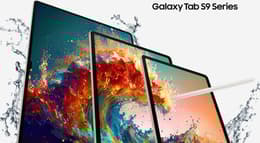

Galaxy Tab S9 (11.0", 2023) Vs iPad Air 7 (2025, M3 series)

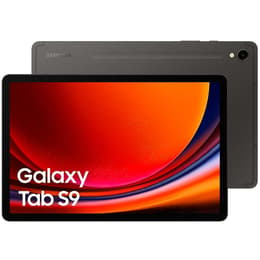
Galaxy Tab S9 (11.0", 2023)
Starting at

Refurbished price:491.00

Versus €1,219.00 new

See options
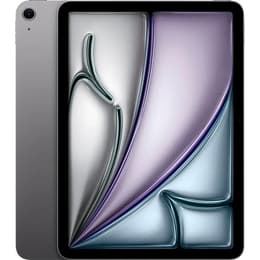
iPad Air 7 (2025, M3 series)
Starting at

Refurbished price:438.00

Versus €729.00 new

See options

Ratings

The Samsung Galaxy Tab S9, released in 2023, and the Apple iPad Air (M3 series), launched in 2025, represent two distinct approaches to premium tablet computing. While both devices offer robust performance and versatile functionality, they cater to different user preferences through their operating systems, display technologies, and accessory ecosystems. The Galaxy Tab S9 operates on Android with Samsung's One UI, emphasizing customization and productivity features like DeX mode, while the iPad Air runs on iPadOS, known for its streamlined interface and strong app optimization. These core differences shape the user experience, making each tablet uniquely suited for various tasks and workflows.

Scores

Durability

Evaluating the practical lifespan of a tablet involves considering its physical resilience and the duration of its software support. Both the Galaxy Tab S9 and the iPad Air (M3) are built with quality materials designed for daily use, but their long-term usability is also heavily influenced by ongoing updates and repairability.

  • Software Longevity: The Galaxy Tab S9, launched with Android 13, is guaranteed to receive four major Android OS updates, extending its software support up to Android 17, alongside five years of security patches. The iPad Air (M3), shipping with iPadOS 18, typically receives major iPadOS updates for at least five years, often longer, ensuring a prolonged period of new features and security enhancements.
  • Physical Durability: The Galaxy Tab S9 features an aluminum chassis and boasts an IP68 rating for dust and water resistance, providing a higher level of protection against environmental elements. The iPad Air (M3) also utilizes a unibody aluminum casing, offering a sturdy and premium feel, though Apple does not typically provide an official IP rating for its Air series tablets.
  • Repairability and Updates: Both manufacturers offer repair services, and the availability of parts and support can influence how long a device remains practical to maintain. Users often find that opting for a quality-assured refurbished option for either model can extend the lifecycle of these devices, contributing to a more sustainable choice.

Year of Release

2023

2025

Compatible with latest Update

Yes

Yes

OS

Android

iPadOS

Performance

The performance of a tablet is central to its utility, dictating how smoothly applications run, how efficiently multitasking is handled, and the overall responsiveness of the system. Both the Galaxy Tab S9 and the iPad Air (M3) are equipped with powerful internal components designed to manage demanding tasks.

  • Processing Power: The Galaxy Tab S9 is powered by a current-generation processor optimized for its ecosystem, enabling smooth operation across various applications, from web browsing to more intensive creative work and gaming. The iPad Air (M3) integrates a highly advanced chip, delivering substantial performance gains for complex workflows, graphics-intensive applications, and advanced AI features, making it particularly adept at professional-grade tasks and high-fidelity gaming.
  • Multitasking and Responsiveness: The Galaxy Tab S9, with its Android and One UI interface, offers robust multitasking capabilities, including multi-window support and Samsung DeX, which provides a desktop-like experience for enhanced productivity. The iPad Air (M3) leverages iPadOS's refined multitasking features, such as Stage Manager, which allows for flexible window management, and its powerful chip ensures that numerous applications can run concurrently without significant slowdowns.
  • Storage and Memory: Both tablets offer various storage configurations, with the Galaxy Tab S9 providing options up to 256GB internally and expandable storage via microSD card up to 1TB, offering flexibility for users with large media libraries or extensive document needs. The iPad Air (M3) comes with storage options ranging from 128GB up to 1TB, coupled with a consistent amount of unified memory across all configurations, which benefits demanding applications and large file handling.

Memory (GB)

8 GB

8 GB

Screen quality

The display is a primary interface for any tablet, and the quality of the screen significantly impacts the viewing and interaction experience. The Galaxy Tab S9 and the iPad Air (M3) employ different display technologies, each with distinct characteristics.

  • Display Technology and Clarity: The Galaxy Tab S9 features an 11-inch Dynamic AMOLED 2X display, known for its deep blacks, vibrant colors, and excellent contrast ratios. It offers a resolution of 2560 x 1600 pixels, resulting in sharp and detailed visuals. In contrast, the 11-inch iPad Air (M3) utilizes a Liquid Retina IPS LCD display with a resolution of 2360 x 1640 pixels, providing accurate color reproduction and wide viewing angles.
  • Refresh Rate and Smoothness: A key difference lies in the refresh rate. The Galaxy Tab S9 boasts a 120Hz refresh rate, which contributes to exceptionally smooth scrolling, fluid animations, and a more responsive feel during gaming and fast-paced content consumption. The iPad Air (M3) maintains a standard 60Hz refresh rate, which is sufficient for most tasks but does not offer the same level of visual fluidity as a higher refresh rate display.
  • Brightness and Outdoor Visibility: Both tablets offer ample brightness for indoor use. The Galaxy Tab S9's AMOLED panel can achieve high peak brightness, particularly for HDR content, enhancing outdoor visibility and media consumption. The iPad Air (M3) provides up to 500 nits of brightness, which is generally adequate for various lighting conditions, though it may be less effective in direct sunlight compared to displays with higher peak brightness capabilities.

Resolution

1600 x 2560

2360 x 1640

Screen type

Dynamic AMOLED 2X

Liquid Retina display

Pixel density

280ppp

264ppp

Audiovisual

While tablets are not typically primary photography devices, their cameras are increasingly important for video calls, document scanning, and casual content creation. Both the Galaxy Tab S9 and the iPad Air (M3) offer capable camera systems for these purposes.

  • Rear Camera Capabilities: The Galaxy Tab S9 is equipped with a 13-megapixel wide-angle rear camera, suitable for capturing clear photos and scanning documents. It includes features like a Pro mode for manual adjustments. The iPad Air (M3) features a 12-megapixel wide-angle rear camera that delivers consistent image quality for general photography and video recording.
  • Front Camera for Communication: For video conferencing and selfies, the Galaxy Tab S9 includes a 12-megapixel ultrawide front camera, which is beneficial for group calls and offers a wider field of view. The iPad Air (M3) also has a 12-megapixel front camera, positioned in landscape orientation, and supports Center Stage, which automatically keeps the user in the frame during video calls.
  • Video Recording and Audio: Both tablets are capable of recording high-quality video. The Galaxy Tab S9's cameras can record up to 4K resolution at 30 frames per second. The iPad Air (M3) also supports 4K video recording at up to 60 frames per second, and its M3 chip enhances video processing capabilities. Both devices feature multiple microphones for clear audio capture during calls and recordings, and stereo speakers for an immersive media consumption experience.

Miscellaneous

Beyond the core specifications, several practical elements contribute to the overall user experience and differentiate these two tablets. These include connectivity, physical design, and unique features.

  • Connectivity and Ports: Both tablets offer modern connectivity options. The Galaxy Tab S9 supports Wi-Fi 6E and Bluetooth 5.3, with optional 5G connectivity, and features a USB Type-C 3.2 port for data transfer and charging. The iPad Air (M3) also includes Wi-Fi 6E, Bluetooth 5.3, and optional 5G, utilizing a USB-C port for versatile connectivity with accessories and external displays.
  • Stylus and Biometrics: A significant distinction is the included stylus with the Galaxy Tab S9; the S Pen comes in the box and is IP68 water and dust resistant, offering a natural writing and drawing experience. The iPad Air (M3) supports the Apple Pencil (Pro and USB-C versions), which is purchased separately, providing precise input for creative and note-taking tasks. For security, the Tab S9 features an under-display fingerprint sensor, while the iPad Air (M3) integrates Touch ID into its power button.
  • Design and Handling: The Galaxy Tab S9 measures 165.8 x 254.3 x 5.9mm and weighs around 498g, presenting a slim and portable profile. The 11-inch iPad Air (M3) has dimensions of 9.74 x 7.02 x 0.24 inches and weighs 461g, making it slightly lighter and compact for handling. Both devices feature quad stereo speakers, enhancing the audio experience for media consumption.

Weight

129 g

460 g

Screen size (in)

11.0

11

Network

Wi-Fi

Wi-Fi

Carrier compatibility

Unlocked

Without SIM Port

Choosing between the Samsung Galaxy Tab S9 and the Apple iPad Air (M3) involves weighing distinct strengths against individual user needs. User sentiment often highlights the Galaxy Tab S9's vibrant AMOLED display and the included S Pen as significant advantages, particularly for those who value rich visuals and out-of-the-box stylus functionality. Its robust multitasking with Samsung DeX is frequently praised by users seeking a more desktop-like experience from their tablet. However, some users note that while the Tab S9's performance is strong, the app ecosystem on Android for tablets, though improving, may not always match the breadth or optimization found on iPadOS for certain professional applications.

Conversely, the iPad Air (M3) is consistently lauded for its exceptional processing power, which translates to incredibly smooth performance across demanding applications and games. Users appreciate the seamless integration within the Apple ecosystem and the extensive library of tablet-optimized applications. Criticisms sometimes point to the 60Hz LCD display, which, while high-quality, doesn't offer the same fluidity as the Tab S9's 120Hz AMOLED panel. The separate purchase of the Apple Pencil is also a consideration for many.

Users prioritizing a vibrant, high-refresh-rate display, an included stylus, and a versatile desktop-like mode for productivity may find the Galaxy Tab S9 well-suited to their needs. This device is particularly appealing to those already invested in the Android ecosystem or seeking greater customization. On the other hand, users who prioritize raw processing power for creative tasks, a highly optimized app ecosystem, and seamless integration with other Apple devices will likely lean towards the iPad Air (M3). Both tablets offer excellent performance and features, and for those considering a more environmentally conscious purchase, a quality-assured refurbished option for either model provides a sustainable alternative without compromising on functionality.


See all articles

Our recent comparisons