

Galaxy Tab S8+ (12.4", 2022) Vs Xiaomi Pad 6 (11.0", 2023)

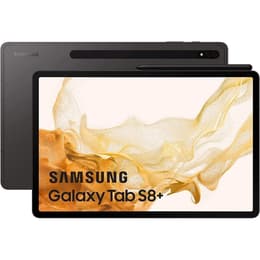
Galaxy Tab S8+ (12.4", 2022)
Starting at

Refurbished price:479.00

Versus €999.00 new

See options
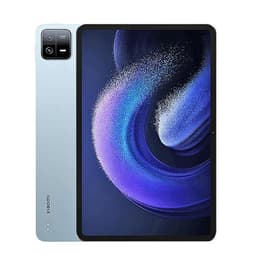
Xiaomi Pad 6 (11.0", 2023)
Starting at

Refurbished price:235.39

Versus €699.00 new

See options

Ratings

The Samsung Galaxy Tab S8+ (2022) and the Xiaomi Pad 6 (2023) are two Android tablets offering distinct experiences for users. While the Galaxy Tab S8+ features a larger, premium display and comes with an included stylus, the Xiaomi Pad 6, released a year later, provides a high-refresh-rate screen and a capable processor in a slightly more compact form factor. Both devices run on the Android operating system, offering a wide range of applications and customizability.

Scores

Durability

Comparing the longevity of these tablets involves looking at their release timelines, software support, and physical construction.

  • Software Longevity: The Galaxy Tab S8+ (February 2022) is expected to receive four major Android OS updates and five years of security updates, likely until 2027. The Xiaomi Pad 6 (April 2023) launched with Android 13 and is anticipated to receive at least one major Android update to Android 14 (HyperOS) and three years of security updates, potentially until 2026.
  • Physical Construction: The Galaxy Tab S8+ features an aluminum body and Gorilla Glass 5 on the front. The Xiaomi Pad 6 also boasts an aluminum unibody design with Gorilla Glass 3 protecting its display.
  • Repairability: Samsung tablets generally have a fix rate of around 42.9%, with repair guides available for the Tab S8+. Disassembly guides are also available for the Xiaomi Pad 6.

Year of Release

2022

2023

Compatible with latest Update

Yes

No

OS

Android

Android

Performance

The performance of these tablets is influenced by their internal components, affecting how smoothly they handle applications and multitasking.

  • Processing Power: The Galaxy Tab S8+ features a processor known for its high-end performance, capable of handling demanding applications, intensive gaming, and complex multitasking with ease. The Xiaomi Pad 6 utilizes a processor that delivers strong performance for everyday tasks, smooth navigation, and competent handling of most games and applications.
  • Multitasking and Responsiveness: The Galaxy Tab S8+ provides a highly responsive experience, allowing users to run multiple applications simultaneously and switch between them fluidly. The Xiaomi Pad 6 also offers a smooth user experience for multitasking, though some users have noted occasional stutters with very heavy loads.
  • Battery Behavior: The Galaxy Tab S8+ includes a larger 10,090 mAh battery, which generally provides acceptable battery life for a full day of mixed usage. The Xiaomi Pad 6 has an 8,840 mAh battery, offering good battery life for typical usage, with a full day possible with moderate to heavy activity.

Memory (GB)

8 GB

6 GB

Processor

Qualcomm SM8450 Snapdragon 8 Gen 1

Qualcomm SM8250-AC Snapdragon 870 5G

Screen quality

The display is a primary interaction point for tablets, and both models offer high-quality viewing experiences with distinct characteristics.

  • Display Technology and Size: The Galaxy Tab S8+ features a 12.4-inch Super AMOLED display, known for its deep blacks, high contrast, and vibrant colors. The Xiaomi Pad 6 comes with an 11-inch IPS LCD panel, which offers accurate colors and good viewing angles.
  • Resolution and Refresh Rate: The Tab S8+ has a resolution of 2800 x 1752 pixels and a 120Hz refresh rate, ensuring sharp images and smooth scrolling. The Xiaomi Pad 6 offers a slightly higher resolution of 2880 x 1800 pixels on its smaller screen, resulting in a higher pixel density, and boasts a faster 144Hz refresh rate for exceptionally fluid visuals.
  • Brightness and Clarity: The Super AMOLED panel on the Tab S8+ delivers excellent brightness and clarity, making it suitable for various lighting conditions. The Xiaomi Pad 6's LCD screen provides good brightness, with a peak of 550 nits, generally sufficient for indoor use.

Resolution

1752 x 2800

1800 x 2880

Screen type

Super AMOLED

IPS LCD

Pixel density

270ppp

310ppp

Audiovisual

The camera systems and audio capabilities contribute to the overall multimedia and communication experience on these tablets.

  • Camera System: The Galaxy Tab S8+ features a dual-camera setup on the rear with a 13MP main sensor and a 6MP ultrawide lens, alongside a 12MP ultrawide front camera, well-suited for video conferencing and casual photography. The Xiaomi Pad 6 has a single 13MP rear camera and an 8MP front camera, which performs adequately for document scanning and video calls.
  • Photography and Video Quality: The Tab S8+ cameras capture decent photos in good lighting and record quality video, though not matching flagship smartphones. The Xiaomi Pad 6's cameras are passable for daylight photos and video recording up to 4K at 30fps, with the front camera offering a wide field of view.
  • Audio Experience: Both tablets offer a strong audio experience. The Galaxy Tab S8+ is equipped with quad speakers, providing rich and clear sound. The Xiaomi Pad 6 also features a quad speaker setup with Dolby Atmos support, delivering immersive audio.

Miscellaneous

Beyond core features, several practical elements differentiate these tablets, impacting their usability and overall experience.

  • Connectivity and Ports: The Galaxy Tab S8+ supports Wi-Fi 6E and Bluetooth 5.2, with optional 5G connectivity, and includes a USB-C 3.2 port. The Xiaomi Pad 6 supports Wi-Fi 6 and Bluetooth 5.2, also featuring a USB-C 3.2 port.
  • Dimensions and Handling: The Tab S8+ is larger and slightly heavier at 285 x 185 x 5.7 mm and around 567g, offering an expansive workspace. The Xiaomi Pad 6 is more compact and lighter at 254 x 165.2 x 6.5 mm and 490g, making it easier to hold for extended periods.
  • Stylus and Biometrics: The Galaxy Tab S8+ comes with the S Pen included and features an in-display fingerprint sensor. The Xiaomi Pad 6 supports an optional Xiaomi Smart Pen 2nd Gen, purchased separately, and lacks a fingerprint sensor, relying on face unlock or traditional security.

Weight

567 g

490 g

Screen size (in)

12.4

11.0

Network

Wi-Fi

Wi-Fi

Carrier compatibility

Without SIM Port

Without SIM Port

Connector

USB Type-C

USB Type-C

The Samsung Galaxy Tab S8+ and the Xiaomi Pad 6 cater to different user priorities, each excelling in specific areas. User feedback for the Galaxy Tab S8+ often praises its exceptional Super AMOLED display, the included and highly functional S Pen, and its robust performance for demanding tasks and multitasking. Some common criticisms include its battery life being acceptable rather than outstanding for its size, and its larger dimensions making it less portable for some users.

The Xiaomi Pad 6 is frequently lauded for its sharp, high-refresh-rate LCD screen, solid performance for its category, and good battery endurance for typical use. Users appreciate its premium build quality. However, some users have noted the absence of an included stylus and a fingerprint sensor as potential drawbacks, and there have been discussions regarding its software update policy.

Users prioritizing a large, vibrant AMOLED display, an integrated stylus for productivity and creativity, and longer software support will find the Galaxy Tab S8+ well-suited to their needs. Its powerful performance makes it ideal for heavy multitasking and professional applications. Conversely, users who prefer a slightly more compact and lighter tablet with a very smooth high-refresh-rate LCD screen, and who primarily use their tablet for media consumption, browsing, and moderate productivity, may lean towards the Xiaomi Pad 6. It offers a strong overall experience for general use, especially if the optional stylus is acquired separately.

For those considering either of these devices, exploring quality-assured refurbished options can provide an eco-friendly alternative, extending the life cycle of these capable tablets.


See all articles

Our recent comparisons