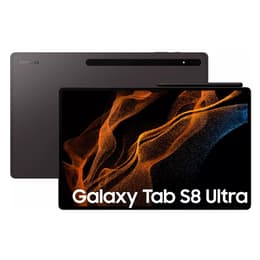
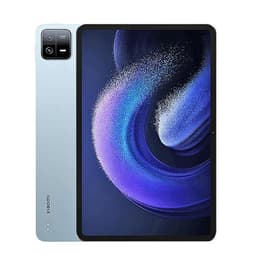


Galaxy Tab S8 (11.0", 2022) Vs Xiaomi Pad 6 (11.0", 2023)

Galaxy Tab S8 (11.0", 2022)
Starting at

Refurbished price:332.00

Versus €745.19 new

See options
Xiaomi Pad 6 (11.0", 2023)
Starting at

Refurbished price:235.39

Versus €699.00 new

See options

Ratings

The Samsung Galaxy Tab S8, released in March 2022, and the Xiaomi Pad 6, launched in April 2023, are both 11-inch Android tablets designed to offer a blend of productivity and entertainment. While both devices provide a robust Android experience, they differentiate themselves through their core processing power, display characteristics, and long-term software commitment.

Scores

Durability

When considering the longevity of these tablets, several factors come into play, including their release timelines, software support, and general build quality.

  • Release Timeline: The Galaxy Tab S8 was released in March 2022, making it approximately one year older than the Xiaomi Pad 6, which launched in April 2023. This difference in release date can impact the duration of future software support.
  • Software Support: Samsung has a strong commitment to software updates, promising up to four major Android OS upgrades and five years of security updates for the Galaxy Tab S8 series. This means the Tab S8 is expected to receive Android updates until 2026 and security patches until 2027. In contrast, the Xiaomi Pad 6 typically receives one major Android update and three years of Google security maintenance, with its last significant software update expected to be HyperOS 2 based on Android 14, due before May 2025.
  • Practical Lifespan: Both tablets feature durable aluminum frames and backs, contributing to their physical longevity. However, the Galaxy Tab S8's extended software support offers a longer period of official feature updates and security patches, which can be a significant advantage for users planning to keep their device for many years.

Year of Release

2022

2023

Compatible with latest Update

Yes

No

OS

Android

Android

Performance

The performance of a tablet is crucial for handling applications, multitasking, and demanding tasks. Both devices offer capable hardware, but with distinct differences in their processing power and storage configurations.

  • Processing Power: The Galaxy Tab S8 is equipped with a processor that offers superior performance and efficiency compared to the Xiaomi Pad 6's processor. This translates to smoother operation for demanding applications, more fluid gaming experiences, and better future-proofing for upcoming software. The Xiaomi Pad 6, while not matching the peak performance of the Tab S8, still provides solid performance for everyday tasks, multitasking, and most games.
  • Multitasking and Responsiveness: The Galaxy Tab S8, with its more powerful internal components and options for 8GB or 12GB of RAM, handles intensive multitasking and quick app switching with ease. The Xiaomi Pad 6, available with 6GB or 8GB of RAM, also offers a responsive experience for typical usage, including split-screen multitasking, though it may show slight hesitations with extremely heavy workloads.
  • Storage Options: Both tablets offer internal storage options of 128GB and 256GB. A notable difference is that the Galaxy Tab S8 includes a microSD card slot for expandable storage up to 1TB, providing flexibility for users with large media libraries or extensive document collections. The Xiaomi Pad 6 does not feature a microSD card slot.
  • Battery Behavior: The Galaxy Tab S8 features an 8,000 mAh battery, providing a full day's worth of use for many users. The Xiaomi Pad 6 comes with a larger 8,840 mAh battery, which also offers extended usage, though real-world battery life can vary significantly based on usage patterns and display settings.

Memory (GB)

8 GB

6 GB

Processor

Qualcomm SM8450 Snapdragon 8 Gen 1

Qualcomm SM8250-AC Snapdragon 870 5G

Screen quality

The display is a primary interaction point for any tablet, and both the Galaxy Tab S8 and Xiaomi Pad 6 offer large, high-resolution screens with distinct characteristics.

  • Display Technology and Resolution: Both devices feature 11-inch LCD panels. The Galaxy Tab S8 uses an LTPS TFT LCD with a resolution of 2560x1600 pixels. The Xiaomi Pad 6 sports an IPS LCD with a higher resolution of 2880x1800 pixels, resulting in a slightly sharper image and higher pixel density.
  • Refresh Rate and Smoothness: The Galaxy Tab S8 offers a smooth viewing experience with a 120Hz refresh rate. The Xiaomi Pad 6 surpasses this with a refresh rate of up to 144Hz, which can provide an even more fluid scrolling and gaming experience. This higher refresh rate is particularly noticeable during fast-paced content or when navigating the user interface.
  • Brightness and Clarity: The Xiaomi Pad 6 offers a typical brightness of 550 nits, which contributes to good visibility in various lighting conditions. Both tablets provide clear and vibrant visuals, suitable for media consumption, web browsing, and productivity tasks. The Xiaomi Pad 6 also includes hardware-level blue light reduction for eye protection and Corning Gorilla Glass 3 for screen durability.

Resolution

1600 x 2560

1800 x 2880

Screen type

TFT LCD

IPS LCD

Pixel density

280ppp

310ppp

Audiovisual

While tablets are not typically chosen for their camera capabilities, they are increasingly used for video calls and occasional photography. Both the Galaxy Tab S8 and Xiaomi Pad 6 offer functional camera systems and strong audio experiences.

  • Camera System: The Galaxy Tab S8 features a dual rear camera setup with a 13MP wide lens and a 6MP ultrawide lens, alongside a 12MP ultrawide front camera. The Xiaomi Pad 6 has a single 13MP rear camera and an 8MP ultrawide front camera. For video calls, the ultrawide front cameras on both devices are beneficial for including more participants or surroundings.
  • Photography and Video: Both tablets are capable of recording video at 4K resolution at 30 frames per second with their rear cameras. For everyday photography, both perform adequately in good lighting conditions, but neither is designed to replace a dedicated smartphone camera.
  • Audio Experience: Both the Galaxy Tab S8 and Xiaomi Pad 6 excel in audio, featuring quad stereo speakers with Dolby Atmos support. This setup provides an immersive listening experience for media consumption, gaming, and video calls, with impressive volume and clarity.

Miscellaneous

Beyond the core specifications, several practical elements contribute to the overall user experience and differentiate these two tablets.

  • Connectivity: The Galaxy Tab S8 supports Wi-Fi 6E and Bluetooth 5.2, with an optional 5G cellular variant available for constant connectivity. The Xiaomi Pad 6 supports Wi-Fi 6 and Bluetooth 5.2, but it does not offer a cellular connectivity option, limiting its internet access to Wi-Fi networks.
  • Ports and Sensors: Both tablets are equipped with a USB-C 3.2 port for charging and data transfer. The Galaxy Tab S8 includes a fingerprint sensor integrated into the power key for secure and convenient unlocking, along with facial recognition. The Xiaomi Pad 6, however, does not feature a fingerprint sensor.
  • Stylus Support: A significant differentiator is the included S Pen with the Galaxy Tab S8, offering a natural writing and drawing experience right out of the box. The Xiaomi Pad 6 supports the Xiaomi Smart Pen, but it is sold separately.
  • Design and Handling: Both tablets share similar dimensions and weights, with the Galaxy Tab S8 weighing 503 grams and measuring 6.3mm thick, and the Xiaomi Pad 6 weighing 490 grams and measuring 6.51mm thick. Both feature a premium aluminum build, providing a solid and comfortable feel in hand.

Weight

507 g

490 g

Screen size (in)

11.0

11.0

Network

Wi-Fi + 5G

Wi-Fi

Carrier compatibility

Unlocked

Without SIM Port

Connector

USB Type-C

USB Type-C

The Samsung Galaxy Tab S8 and Xiaomi Pad 6 both offer compelling Android tablet experiences, each with strengths that cater to different user priorities. User feedback often praises the Galaxy Tab S8 for its premium Android experience, the versatility of the included S Pen, robust performance, and solid build quality. Common criticisms sometimes point to its LCD screen compared to the OLED panels found in some higher-end tablets, and the general state of Android tablet app optimization compared to other ecosystems.

The Xiaomi Pad 6 is frequently lauded for its excellent, smooth display, capable performance for its class, and impressive build quality, making it a strong contender for entertainment and light productivity. However, users have noted concerns regarding its shorter software update policy, the absence of a fingerprint sensor, and the lack of a cellular connectivity option.

Users prioritizing long-term software support, an included stylus for creative or productivity tasks, and higher peak performance for demanding applications may find the Samsung Galaxy Tab S8 to be a more suitable choice. Its extended update timeline ensures a longer period of feature and security updates. Conversely, users who prioritize a smoother display experience, solid everyday performance for media consumption and general use, and a slightly more recent release date may lean toward the Xiaomi Pad 6. Both devices represent excellent options, and considering a quality-assured refurbished option for either tablet can be an eco-friendly alternative to purchasing new.


See all articles

Our recent comparisons