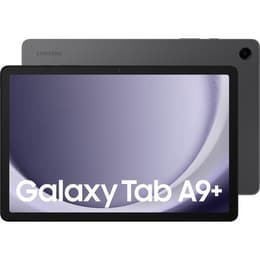
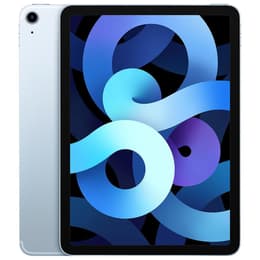


Galaxy Tab A9+ (11.0", 2023) Vs iPad Air 4 (2020, A14 series)

Galaxy Tab A9+ (11.0", 2023)
Starting at

Refurbished price:135.00

Versus €259.00 new

See options
iPad Air 4 (2020, A14 series)
Starting at

Refurbished price:273.00

Versus €679.00 new

See options

Ratings

The Samsung Galaxy Tab A9+ (released in October 2023) and the Apple iPad Air 4 (released in October 2020) are two distinct tablet offerings, each catering to different user preferences and ecosystems. While both provide a portable computing experience, they differ significantly in their operating systems, core hardware, and overall feature sets. The Galaxy Tab A9+ runs on Android, offering a customizable experience, whereas the iPad Air 4 operates on Apple's iPadOS, known for its streamlined interface and robust app ecosystem.

Scores

Durability

The longevity of a tablet is often determined by its software support and physical durability. These two devices, released three years apart, present different timelines for expected usability.

  • Release Timeline: The Galaxy Tab A9+ is a more recent device, launched in October 2023. The iPad Air 4, released in October 2020, has been on the market for a longer period.
  • Software Support: The Galaxy Tab A9+ launched with Android 13 and is typically expected to receive 2-3 major Android OS updates and around four years of security updates from its release. This suggests software support likely extending into late 2027. The iPad Air 4, which launched with iPadOS 14, benefits from Apple's generally longer software support, often receiving 5-6 major OS updates. As of March 2026, it is still receiving updates (iPadOS 26.4), indicating continued support for a few more years, potentially aligning its end-of-life with the Tab A9+ despite its earlier release.
  • Practical Lifespan: Both tablets are constructed with aluminum bodies, contributing to their durability. The practical lifespan for both devices, considering both hardware and software, is expected to be several years, with the iPad Air 4's robust software ecosystem potentially offsetting its earlier release date.

Year of Release

2023

2020

Compatible with latest Update

Yes

Yes

OS

Android

iPadOS

Performance

Performance is a key differentiator, influencing how smoothly applications run and how effectively a tablet handles demanding tasks. Both devices offer capable performance for their respective categories.

  • Processing Power: The iPad Air 4, powered by its internal chip, delivers strong performance, enabling smooth multitasking, efficient handling of demanding applications, and responsive gaming experiences. The Galaxy Tab A9+, featuring its processor, provides good performance for everyday tasks, streaming media, and light gaming. Users often report smooth operation even with several applications open, particularly with the higher RAM configuration.
  • Multitasking and Responsiveness: The iPad Air 4's processing capabilities allow for a highly responsive user experience, making it well-suited for productivity and creative workflows that involve multiple applications. The Galaxy Tab A9+ also handles multitasking effectively, especially the models equipped with 8GB of RAM, which users find beneficial for running several apps simultaneously without significant slowdowns.
  • Storage and RAM: The Galaxy Tab A9+ offers configurations with 4GB or 8GB of RAM and internal storage options of 64GB or 128GB, with the added flexibility of expandable storage via a microSD card. The iPad Air 4 comes with 4GB of RAM and internal storage choices of 64GB or 256GB, but it does not offer expandable storage.

Memory (GB)

4 GB

4 GB

Screen quality

The display is a primary interface for any tablet, influencing everything from media consumption to productivity. Both tablets offer large, clear screens, but they utilize different technologies and features that impact the visual experience.

  • Display Technology and Resolution: The iPad Air 4 features a 10.9-inch Liquid Retina IPS LCD display with a resolution of 2360 x 1640 pixels, resulting in a pixel density of 264 pixels per inch (ppi). This display offers wide color support (P3) and True Tone technology for adaptive white balance. The Galaxy Tab A9+ has an 11.0-inch LCD display with a resolution of 1920 x 1200 pixels.
  • Refresh Rate and Brightness: The Galaxy Tab A9+ features a 90Hz refresh rate, which provides smoother scrolling and a more fluid visual experience compared to standard 60Hz displays. The iPad Air 4 has a 60Hz refresh rate but offers a peak brightness of 500 nits, which contributes to better visibility in various lighting conditions.
  • Viewing Experience: The iPad Air 4's display is fully laminated and includes an anti-reflective coating, which can improve outdoor usability and reduce glare. While the Galaxy Tab A9+ offers a slightly larger screen, the iPad Air 4's higher resolution and color accuracy make it well-suited for tasks requiring precise visual detail.

Resolution

1200 x 1920

2360 x 1640

Screen type

TFT LCD

Liquid Retina display

Pixel density

210ppp

264ppp

Audiovisual

While tablets are not typically primary photography devices, their cameras are important for video calls, document scanning, and casual photo capture. Both tablets include camera systems suitable for these purposes.

  • Rear Camera Capabilities: The iPad Air 4 is equipped with a 12MP wide rear camera with an f/1.8 aperture, capable of recording 4K video at up to 60 frames per second. This camera performs well in everyday lighting conditions. The Galaxy Tab A9+ features an 8MP rear camera with autofocus and supports 1080p HD video recording at 30 frames per second. Users generally find the A9+'s rear camera adequate for scanning documents and basic photography in good lighting, though its low-light performance is less notable.
  • Front Camera for Video Calls: For video conferencing and selfies, the iPad Air 4 includes a 7MP FaceTime HD front camera that records 1080p video. The Galaxy Tab A9+ has a 5MP front camera, which is suitable for video calls. The iPad Air 4's front camera is noted for better low-light performance and overall clarity in video calls.
  • Audio Experience: The Galaxy Tab A9+ features quad speakers with Dolby Atmos support, providing a more immersive audio experience for media consumption. The iPad Air 4 offers stereo speakers, which deliver clear audio for videos and music.

Miscellaneous

Beyond core specifications, several practical elements contribute to the overall user experience of a tablet, including connectivity, physical design, and additional features.

  • Connectivity Options: The Galaxy Tab A9+ supports Wi-Fi 5 (802.11ac) and Bluetooth 5.1, with an optional 5G cellular variant for mobile connectivity. The iPad Air 4 features more advanced Wi-Fi 6 (802.11ax) and Bluetooth 5.0, with an optional 4G LTE cellular model. Wi-Fi 6 generally offers faster and more efficient wireless performance in compatible environments.
  • Ports and Biometrics: Both tablets utilize a USB-C port for charging and data transfer. A notable difference is the inclusion of a 3.5mm headphone jack on the Galaxy Tab A9+, which is absent on the iPad Air 4. For biometric security, the iPad Air 4 integrates Touch ID into its top button, offering secure fingerprint authentication. The Galaxy Tab A9+ relies on face recognition for unlocking, lacking a dedicated fingerprint sensor.
  • Design and Accessories: The iPad Air 4 measures 247.6 x 178.5 x 6.1 mm and weighs approximately 458g (Wi-Fi model), offering a slim and relatively light profile. The Galaxy Tab A9+ measures 257.1 x 168.7 x 6.9 mm and weighs around 480g (Wi-Fi model), making it slightly thicker and heavier. The iPad Air 4 also supports the second-generation Apple Pencil and the Magic Keyboard, expanding its utility for creative and productivity tasks. The Galaxy Tab A9+ does not support the S-Pen.

Weight

250 g

460 g

Screen size (in)

11.0

10.9

Network

Wi-Fi

Wi-Fi + 4G

Carrier compatibility

Without SIM Port

Unlocked

When evaluating the Samsung Galaxy Tab A9+ and the Apple iPad Air 4, user feedback highlights distinct strengths for each device. Users often praise the Galaxy Tab A9+ for its accessible Android ecosystem, expandable storage, and the inclusion of a headphone jack, making it a practical choice for media consumption and everyday tasks. Criticisms sometimes point to its camera performance in low light and the absence of a fingerprint sensor.

The iPad Air 4 is frequently lauded for its powerful performance, premium design, and the robust iPadOS app ecosystem, which is particularly beneficial for creative professionals and those seeking a streamlined user experience. Its compatibility with accessories like the Apple Pencil 2nd Gen and Magic Keyboard is also a significant advantage. Some users note the 60Hz display as a point of comparison with higher refresh rate tablets and the lack of Face ID.

Users prioritizing a highly customizable Android experience, expandable storage for media, and a traditional headphone jack may find the Galaxy Tab A9+ well-suited to their needs. Conversely, individuals who value a powerful and fluid operating system, a wider range of professional accessories, and a more refined display for creative work might lean towards the iPad Air 4. Both tablets offer reliable performance for their intended use cases, and considering a quality-assured refurbished option for either device can be an eco-friendly alternative to purchasing new.


See all articles

Our recent comparisons