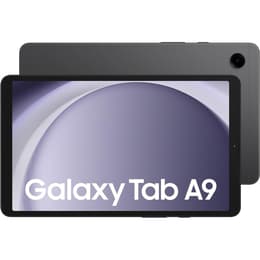
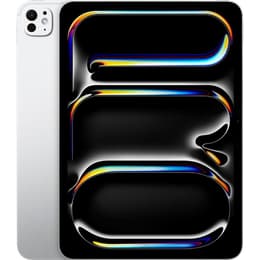


Galaxy Tab A9 (8.7", 2023) Vs iPad Pro (2024, M4 series)

Galaxy Tab A9 (8.7", 2023)
Starting at

Refurbished price:153.00

Versus €255.86 new

See options
iPad Pro (2024, M4 series)
Starting at

Refurbished price:767.00

Versus €1,229.00 new

See options

Ratings

The Samsung Galaxy Tab A9, released in October 2023, and the Apple iPad Pro M4 Series, launched in May 2024, represent distinct approaches to the tablet experience. While both are portable computing devices, they cater to different user needs, primarily differentiated by their operating systems – Android for the Tab A9 and iPadOS for the iPad Pro – and their intended performance tiers. The Galaxy Tab A9 is positioned as an accessible option for everyday tasks, whereas the iPad Pro M4 is engineered for high-performance professional workflows and advanced media consumption.

Scores

Durability

The longevity of a tablet is influenced by its release timeline, software support, and physical construction. These two devices offer different expectations in terms of their practical lifespan and ongoing support.

  • Release Timeline and Software Support: The Galaxy Tab A9 was released in October 2023 and runs on Android 13, with expectations for software updates extending to Android 15, providing approximately two major OS upgrades. The iPad Pro M4 Series, released in May 2024, shipped with iPadOS 17.4 or 17.5 and is anticipated to receive operating system updates for a longer duration, typically 5-6 years from its release, aligning with Apple's historical support for its devices. This difference means the iPad Pro M4 will likely maintain software compatibility and security updates for a more extended period.
  • Physical Durability and Design: The Galaxy Tab A9 features a sturdy, smooth metal body, contributing to its overall durability. The iPad Pro M4 Series boasts an aluminum frame and a remarkably thin design, with the 13-inch model being noted as Apple's thinnest device to date. While both offer robust builds, the iPad Pro's advanced construction aims for a balance of portability and resilience.
  • Expected Practical Lifespan: Users can expect the Galaxy Tab A9 to remain functional and supported for general use for several years, particularly for less demanding applications. The iPad Pro M4, with its more powerful internal components and longer software support cycle, is designed to handle intensive tasks and remain a capable device for a more extended period, making it a suitable choice for users who prioritize long-term performance and feature access.

Year of Release

2023

2024

Compatible with latest Update

Yes

Yes

OS

Android

iPadOS

Performance

Performance is a key differentiator, with each tablet offering capabilities suited to its target user base, impacting app responsiveness, multitasking, and handling demanding software.

  • Processor Capabilities and Responsiveness: The Galaxy Tab A9 is powered by an octa-core processor, which provides sufficient performance for casual use, web browsing, and streaming media. It handles everyday applications smoothly, and some demanding games can run well on default or medium settings. In contrast, the iPad Pro M4 Series features a highly advanced processor, delivering exceptional power that allows for seamless multitasking, rapid app loading, and smooth operation of professional-grade applications like 4K video editing and graphically intensive games. Its performance is often compared to that of high-end laptops, indicating a significant capability for complex computational tasks.
  • Storage and Memory Configurations: The Galaxy Tab A9 offers storage options of 64GB or 128GB, with the flexibility to expand storage up to 1TB using a microSD card, which is beneficial for users with large media libraries or documents. The iPad Pro M4 Series provides more substantial internal storage options, ranging from 256GB up to 2TB, catering to professionals who require vast amounts of space for large project files and applications. Memory configurations also differ, with the iPad Pro offering 8GB of RAM for lower storage models and 16GB for higher capacities, enabling more intensive multitasking and handling of larger datasets compared to the Tab A9's typical 4GB or 8GB RAM options.
  • Battery Behavior: The Galaxy Tab A9, equipped with a 5100mAh battery, generally provides around 6.75 to 8 hours of use for tasks like video playback or general browsing. The iPad Pro M4, with its 31.29-watt-hour (11-inch) or 38.99-watt-hour (13-inch) battery, is designed for up to 10 hours of web browsing or video playback, and around 6-7 hours under heavy, demanding workloads. Both devices aim for all-day usability under typical conditions, but the iPad Pro's power efficiency allows it to sustain demanding tasks for a considerable duration.

Memory (GB)

4 GB

8 GB

Screen quality

The visual experience on a tablet is largely defined by its display, with significant differences in technology, resolution, and responsiveness between these two models.

  • Display Technology and Clarity: The Galaxy Tab A9 features an 8.7-inch TFT LCD display with a resolution of 1340 x 800 pixels. This display offers good brightness for its category, suitable for general media consumption, though some users may notice individual pixels due to its pixel density. The iPad Pro M4 Series, in contrast, utilizes an Ultra Retina XDR display with Tandem OLED technology, available in 11-inch (2420x1668 pixels) and 13-inch (2752x2064 pixels) sizes. This advanced display technology provides deep blacks, vibrant colors, and exceptional clarity, making it ideal for detailed visual work and immersive entertainment.
  • Brightness and Refresh Rate: The Galaxy Tab A9 operates at a standard 60Hz refresh rate, which is adequate for most everyday interactions. The iPad Pro M4 features ProMotion technology, offering an adaptive refresh rate that can dynamically adjust from 10Hz to 120Hz. This results in smoother scrolling, more fluid animations, and a more responsive touch experience, particularly noticeable in fast-paced content or creative applications. In terms of brightness, the iPad Pro M4 can reach up to 1000 nits for standard content and a peak of 1600 nits for HDR content, ensuring excellent visibility even in bright environments.
  • Viewing Experience: The Galaxy Tab A9's display is well-suited for casual viewing and portability, offering a comfortable experience for browsing and watching videos. The iPad Pro M4's display, with its high resolution, wide color support, and superior brightness and contrast, provides a premium viewing experience for professional content creation, detailed graphic design, and cinematic media consumption. The option for nano-texture display glass on higher-capacity iPad Pro models further enhances the viewing experience by reducing glare in various lighting conditions.

Resolution

800 x 1340

2420 x 1668

Screen type

TFT LCD

Ultra Retina XDR display

Pixel density

180ppp

264ppp

Audiovisual

The camera systems on these tablets reflect their different design philosophies, with the iPad Pro focusing on advanced imaging capabilities for creative and professional use, while the Tab A9 provides functional cameras for general purposes.

  • Rear Camera Capabilities: The Galaxy Tab A9 is equipped with an 8MP rear camera that includes autofocus, which is suitable for capturing documents and casual photos in well-lit conditions. Its performance is considered adequate for a tablet in its category, though it may struggle in low-light environments. The iPad Pro M4 features a more advanced 12MP Wide camera with an f/1.8 aperture, digital zoom up to 5x, adaptive True Tone flash, and autofocus with Focus Pixels, along with Smart HDR 4 for improved image quality. It also includes a LiDAR scanner, which enhances depth sensing for augmented reality applications and assists with autofocus.
  • Front Camera and Video Quality: For video calls and selfies, the Galaxy Tab A9 has a 2MP front camera (some sources indicate 5MP). It records video at up to 1080p at 30fps. The iPad Pro M4 features a 12MP landscape front camera with Center Stage, which automatically keeps the user in the frame during video calls, a significant advantage for virtual meetings and presentations. Its video recording capabilities are extensive, supporting up to 4K at 60fps and ProRes video recording at up to 4K at 30fps, offering professional-grade video capture.
  • Audio Experience: The Galaxy Tab A9 includes dual speakers, providing a decent audio experience for media consumption. The iPad Pro M4 enhances the audio experience with multiple speakers, supporting Dolby Atmos, which delivers a more immersive sound for media and calls. Both devices offer stereo recording for video, but the iPad Pro's overall audio system is designed for higher fidelity and a more expansive soundstage.

Miscellaneous

Beyond core performance and display, practical features like connectivity, ports, and physical design contribute to the overall user experience and suitability for different lifestyles.

  • Connectivity and Ports: The Galaxy Tab A9 supports Wi-Fi 5 (802.11 a/b/g/n/ac) and Bluetooth 5.3, along with an optional 4G LTE variant for mobile data access. It includes a USB-C port for charging and data transfer, and notably, retains a 3.5mm headphone jack, which is convenient for wired audio accessories. The iPad Pro M4 Series features more advanced connectivity, including Wi-Fi 6E and Bluetooth 5.3, with cellular models offering 5G (sub-6 GHz) for faster wireless speeds. Its USB-C port is highly versatile, supporting Thunderbolt 3 and USB 4, enabling data transfer speeds up to 40Gbps and compatibility with a wide range of high-performance accessories. However, it does not include a 3.5mm headphone jack.
  • Sensors and Biometrics: The Galaxy Tab A9 incorporates essential sensors such as an accelerometer, proximity sensor, compass, and ambient light sensor. It does not feature a fingerprint sensor for biometric authentication. The iPad Pro M4, on the other hand, offers advanced biometric security with Face ID for secure unlocking and authentication. It also includes a LiDAR scanner, which enhances augmented reality experiences and improves depth perception for photography.
  • Physical Design and Handling: The Galaxy Tab A9 has dimensions of 211 x 124.7 x 8mm and weighs approximately 332g for the Wi-Fi model, making it a compact and lightweight device suitable for easy portability. The iPad Pro M4 Series is available in 11-inch (249.7 x 177.5 x 5.3mm) and 13-inch (281.6 x 215.5 x 5.1mm) models, with weights ranging from 444g to 582g. The 13-inch iPad Pro M4 is particularly notable for being Apple's thinnest device ever, contributing to a sleek profile, though some users might find its thinness makes it harder to grip without a case.

Weight

332 g

444 g

Width

21,1 cm

17.7 cm

Height

12,47 cm

24.9 cm

Depth

0,8 cm

0.5 cm

Screen size (in)

8.7

11

Network

Wi-Fi

Wi-Fi

Carrier compatibility

Without SIM Port

Without SIM Port

User feedback and expert reviews highlight distinct strengths and weaknesses for both the Galaxy Tab A9 and the iPad Pro M4 Series, guiding potential buyers toward the most suitable device for their needs.

The Samsung Galaxy Tab A9 is frequently praised for its accessible nature, offering a good display and solid performance for its category, making it a capable device for general use and media consumption. Users often appreciate its build quality and its suitability as a family or travel tablet. However, common criticisms include its relatively short battery life in some usage scenarios, the absence of S Pen support, a standard 60Hz display (compared to the A9+'s 90Hz), and basic camera performance.

Conversely, the iPad Pro M4 Series garners significant acclaim for its stunning OLED display, exceptionally powerful performance, and sleek, durable design. Its long battery life under typical conditions and the repositioned front camera for video calls are also frequently highlighted as major advantages. Some users, however, note that its advanced performance might be excessive for casual use, and the overall cost of the device and its accessories can be a consideration. Additionally, while iPadOS is highly capable, some power users seeking a full laptop replacement find its operating system to be a limiting factor for certain professional workflows.

Users prioritizing a compact, easy-to-use tablet for everyday tasks such as web browsing, streaming, and light gaming, or those seeking an eco-friendly, quality-assured refurbished option for a family device, may find the Galaxy Tab A9 well-suited to their requirements. On the other hand, professionals, creative individuals, and power users who demand top-tier performance for demanding applications, advanced media creation, and a premium visual experience will likely lean towards the iPad Pro M4 Series. The decision ultimately hinges on the balance between advanced capabilities and specific usage patterns.


See all articles

Our recent comparisons