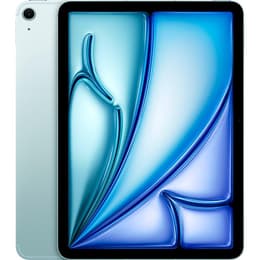
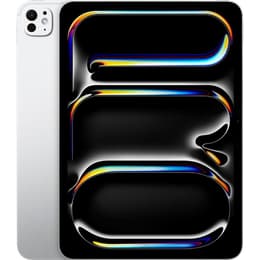


iPad Air 6 (2024, M2 series) Vs iPad Pro (2024, M4 series)

iPad Air 6 (2024, M2 series)
Starting at

Refurbished price:400.00

Versus €729.00 new

See options
iPad Pro (2024, M4 series)
Starting at

Refurbished price:767.00

Versus €1,229.00 new

See options

Ratings

The iPad Air (M2) and iPad Pro (M4) represent Apple's 2024 tablet offerings, each designed for distinct user needs. While both devices deliver a premium tablet experience, the iPad Pro (M4) introduces a more advanced display technology and a newer, more powerful processor, setting it apart from the capable iPad Air (M2). Both run on iPadOS, ensuring a consistent software experience across the ecosystem.

Scores

Durability

Both the iPad Air (M2) and iPad Pro (M4) were released in 2024, meaning they will benefit from Apple's consistent software updates for an extended period. The iPad Pro (M4), featuring the newer M4 chip, may receive software support for a slightly longer duration than the iPad Air (M2) with its M2 chip, though both are expected to offer many years of functional use. Apple typically provides 5-6 years of major OS updates for its tablets.

  • Software Longevity: Both models are new for 2024, ensuring a long lifespan for software updates and compatibility with future iPadOS versions. The M4 chip in the Pro model might offer a marginal advantage in long-term software support.
  • Build Quality: Both devices feature robust aluminum constructions. The iPad Pro (M4) is notably thinner and lighter, particularly the 13-inch model, which is Apple's thinnest device to date. This thinness, while impressive, could be a consideration for some users regarding perceived durability, though Apple maintains high build standards.
  • Practical Lifespan: Given the powerful processors in both, users can expect these tablets to remain highly capable for demanding tasks for several years, making them suitable for long-term use.

Year of Release

2024

2024

Compatible with latest Update

Yes

Yes

OS

iPadOS

iPadOS

Maximum Operating System supported

iPadOS 18

iPadOS 18

Performance

The performance difference between the iPad Air (M2) and iPad Pro (M4) is a key distinguishing factor, primarily due to their respective processors. The iPad Air (M2) is equipped with a powerful chip that handles demanding applications and multitasking with ease, offering a significant performance boost over previous generations. The iPad Pro (M4), however, features a next-generation processor designed for even more intensive professional workflows and advanced AI capabilities.

  • Processing Power: The iPad Air (M2) provides ample power for most users, excelling in everyday tasks, creative applications, and gaming without lag. The iPad Pro (M4) offers a substantial leap in processing power, making it exceptionally well-suited for professional-grade video editing, 3D rendering, and complex computational tasks.
  • Multitasking and Responsiveness: Both devices offer smooth multitasking experiences. The iPad Pro (M4) with its more advanced chip and higher RAM configurations (up to 16GB for 1TB/2TB models) provides greater headroom for running numerous demanding applications simultaneously without slowdowns. The iPad Air (M2) typically comes with 8GB of RAM.
  • Battery Behavior: Both models are designed to deliver up to 10 hours of web browsing or video playback on Wi-Fi. User experiences suggest consistent battery performance for general use, though intensive tasks will naturally consume power more quickly.

Memory (GB)

8 GB

8 GB

Processor

Apple M2

Apple M4

Screen quality

The display technology is one of the most significant differences between these two tablets. The iPad Air (M2) features a Liquid Retina IPS LCD display, offering vibrant colors and good clarity for general use. The iPad Pro (M4), on the other hand, boasts an Ultra Retina XDR display, which utilizes tandem OLED technology for superior visual performance.

  • Display Technology: The iPad Air (M2) uses an LED-backlit IPS display, providing a clear and colorful viewing experience suitable for most content consumption and productivity tasks. The iPad Pro (M4) features a tandem OLED display, which delivers deeper blacks, higher contrast ratios (2,000,000:1), and more vibrant colors, making it ideal for professional creative work and media consumption.
  • Brightness and Clarity: The iPad Air (M2) offers up to 500 nits of brightness (600 nits for the 13-inch model), which is sufficient for indoor and most outdoor use. The iPad Pro (M4) reaches up to 1000 nits of full-screen brightness for standard content and an impressive 1600 nits peak brightness for HDR content, ensuring excellent visibility even in bright environments and stunning HDR playback.
  • Refresh Rate: The iPad Air (M2) has a standard 60Hz refresh rate. The iPad Pro (M4) features ProMotion technology, offering an adaptive refresh rate from 10Hz to 120Hz, resulting in smoother scrolling, more responsive interactions, and a more fluid visual experience, particularly noticeable in fast-paced content and drawing.

Resolution

2360 x 1640

2420 x 1668

True Tone

Yes

Yes

Pro-Motion

No

Yes

Screen type

Liquid Retina display

Ultra Retina XDR display

Pixel density

264ppp

264ppp

Brightness

500 nits brightness

1000 nits brightness max

Sound quality

Speakers

Stereo speakers (landscape)

Four speaker audio

Audiovisual

Both the iPad Air (M2) and iPad Pro (M4) are equipped with capable camera systems, though the Pro model offers more advanced features tailored for professional use cases. Both feature a 12MP Wide rear camera and a 12MP Ultra Wide front camera with Center Stage.

  • Rear Camera System: The iPad Air (M2) includes a 12MP Wide rear camera capable of 4K video recording, suitable for general photography and document scanning. The iPad Pro (M4) also has a 12MP Wide rear camera but adds a LiDAR Scanner, which enhances augmented reality experiences and improves autofocus in low-light conditions.
  • Front Camera and Video Calls: Both tablets feature a 12MP Ultra Wide front camera with Center Stage, which keeps subjects in frame during video calls. A notable improvement in both 2024 models is the relocation of the front camera to the landscape edge, making video calls more natural when the tablet is used horizontally.
  • Audio Experience: The iPad Air (M2) offers landscape stereo speakers, with the 13-inch model providing enhanced bass. The iPad Pro (M4) features a four-speaker audio system and four studio-quality microphones, delivering a richer sound experience and clearer audio capture for recordings and calls.

Miscellaneous

Beyond core performance and display, several practical elements differentiate the iPad Air (M2) and iPad Pro (M4), influencing their suitability for various users. Both support the new Apple Pencil Pro.

  • Connectivity and Ports: Both models support Wi-Fi 6E for faster wireless internet and Bluetooth 5.3 for accessories. The iPad Air (M2) features a USB-C port with USB 3 speeds (up to 10 Gb/s). The iPad Pro (M4) elevates connectivity with a USB-C port that supports Thunderbolt / USB 4, offering significantly faster data transfer speeds (up to 40 Gb/s) and broader external display support, which is beneficial for professional setups.
  • Biometric Security: The iPad Air (M2) utilizes Touch ID integrated into the top button for secure authentication. The iPad Pro (M4) features Face ID, offering convenient facial recognition for unlocking and purchases.
  • Design and Handling: The iPad Pro (M4) is remarkably thin and light, with the 13-inch model being Apple's thinnest device ever. This makes it highly portable and comfortable to hold for extended periods. The iPad Air (M2) is also slim and lightweight, but not to the same extent as the Pro. Both are available in 11-inch and 13-inch display sizes.

Weight

462 g

444 g

Width

17.8 cm

17.7 cm

Height

24 cm

24.9 cm

Depth

0.61 cm

0.5 cm

Screen size (in)

11

11

Network

Wi-Fi

Wi-Fi

Carrier compatibility

Without SIM Port

Without SIM Port

Wi-Fi technology

Wi-Fi 6E 802.11ax

Wi-Fi 6E 802.11ax

Bluetooth Version

Bluetooth 5.3

Bluetooth 5.3

Face ID

No

Yes

Touch ID

Yes

No

Connector

USB Type-C

USB Type-C

The iPad Air (M2) and iPad Pro (M4) cater to different user priorities, despite both offering a premium tablet experience. The iPad Air (M2) stands out as a highly capable device for a broad audience, delivering excellent performance for everyday tasks, creative pursuits, and entertainment. Users who prioritize a balance of performance, a quality display, and long-term software support for general productivity, content consumption, and light creative work will find the iPad Air (M2) well-suited to their needs. Its M2 chip provides ample power for most applications, and the availability of a 13-inch model offers a larger screen experience without the Pro's advanced display technology.

Conversely, the iPad Pro (M4) is designed for users who demand the absolute pinnacle of tablet performance and display technology. Creative professionals, power users, and those engaged in intensive tasks like 3D rendering, advanced video editing, or complex graphic design will benefit significantly from the M4 chip's enhanced processing power and the stunning Ultra Retina XDR OLED display with ProMotion. The Thunderbolt port and advanced camera system with LiDAR further solidify its position as a tool for professional workflows. Users who require the fastest performance, the most vibrant and responsive screen, and advanced connectivity options will lean towards the iPad Pro (M4).

Ultimately, the choice depends on the intensity of your usage and your budget. Both devices offer a robust and reliable experience, and considering a quality-assured refurbished option for either model can be a sustainable choice for extending their lifecycle.


See all articles

Our recent comparisons